Manila Bulletin
 Environment and Sustainability
The Philippine flag doesn't have to end in flames: DOST-PTRI pushes for sustainable flag retirement
Environment and Sustainability
The Philippine flag doesn't have to end in flames: DOST-PTRI pushes for sustainable flag retirement
Environment and Sustainability
The Philippine flag doesn't have to end in flames: DOST-PTRI pushes for sustainable flag retirement
The Philippine flag doesn't have to end in flames: DOST-PTRI pushes for sustainable flag retirement
Published May 30, 2026 12:11 pm
|
Updated May 30, 2026 11:29 am



The Philippines holds one of the highest forms of reverence for its national flag. Under the Republic Act No. 8491, or the Flag and Heraldic Code of the Philippines, worn-out or damaged flags must not be casually discarded. Instead, they must be “solemnly burned” to prevent misuse or desecration, with the ashes subsequently collected and buried.
While the ritual embodies patriotism and respect, science now suggests that the practice may also carry unintended environmental consequences.
Most Philippine flags sold today are made from nylon, a petroleum-based synthetic material that does not burn cleanly. When incinerated, nylon releases carbon dioxide, nitrous oxide—a greenhouse gas nearly 300 times more potent than CO₂—and hydrogen cyanide. A single standard 3’ x 5’ nylon flag, weighing approximately 300 grams, can release an estimated 0.72 kilograms of carbon dioxide when burned, equivalent to the emissions produced by a vehicle traveling roughly 3 to 4 kilometers.
The environmental impact does not end there. Once buried, the remaining synthetic residues gradually degrade into microplastics that can persist in soil for up to 30-40 years. What appears to be a dignified farewell ritual may also become a long-term source of contamination.

For the Department of Science and Technology - Philippine Textile Research Institute (DOST-PTRI), the issue presents a difficult contradiction: how can the country uphold patriotic reverence while remaining aligned with environmental responsibility and sustainability laws such as the Philippine Clean Air Act of 1999 and the Ecological Solid Waste Management Act of 2000?
Retire the flag, preserve the fiber
DOST-PTRI believes the solution may already exist within the country’s own textile science innovations.
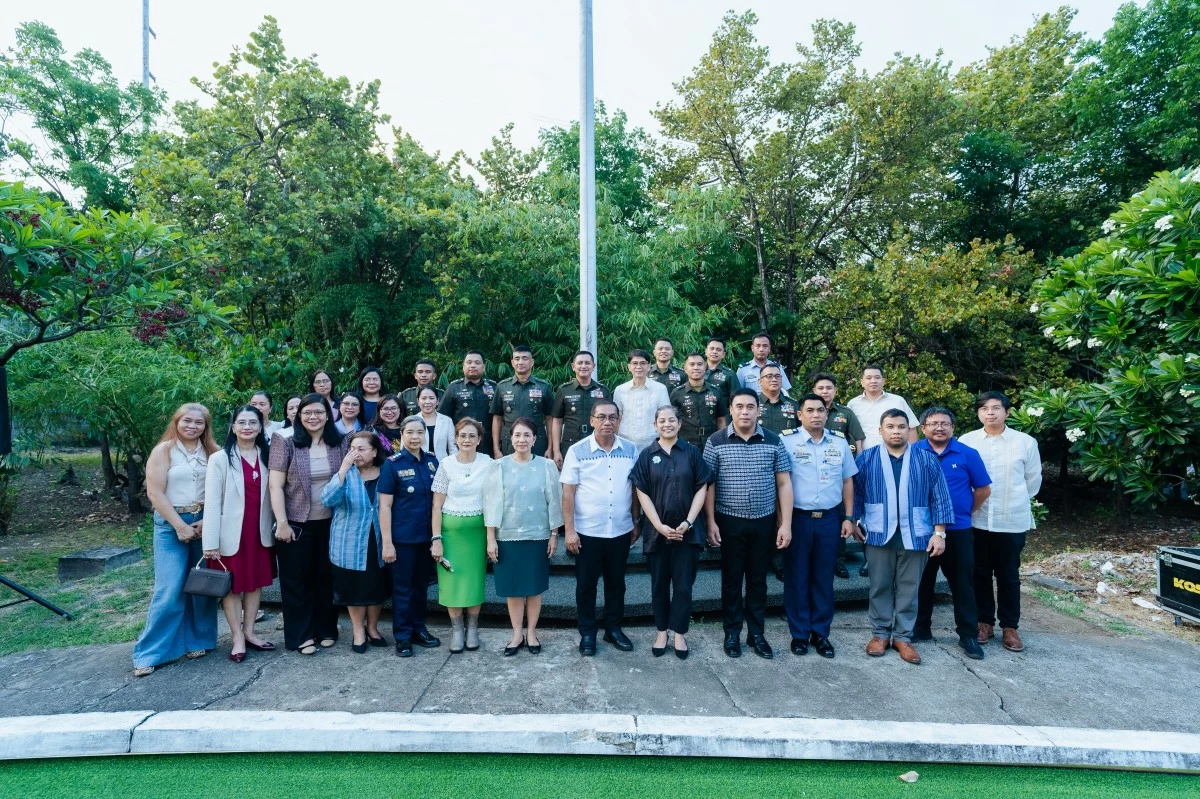
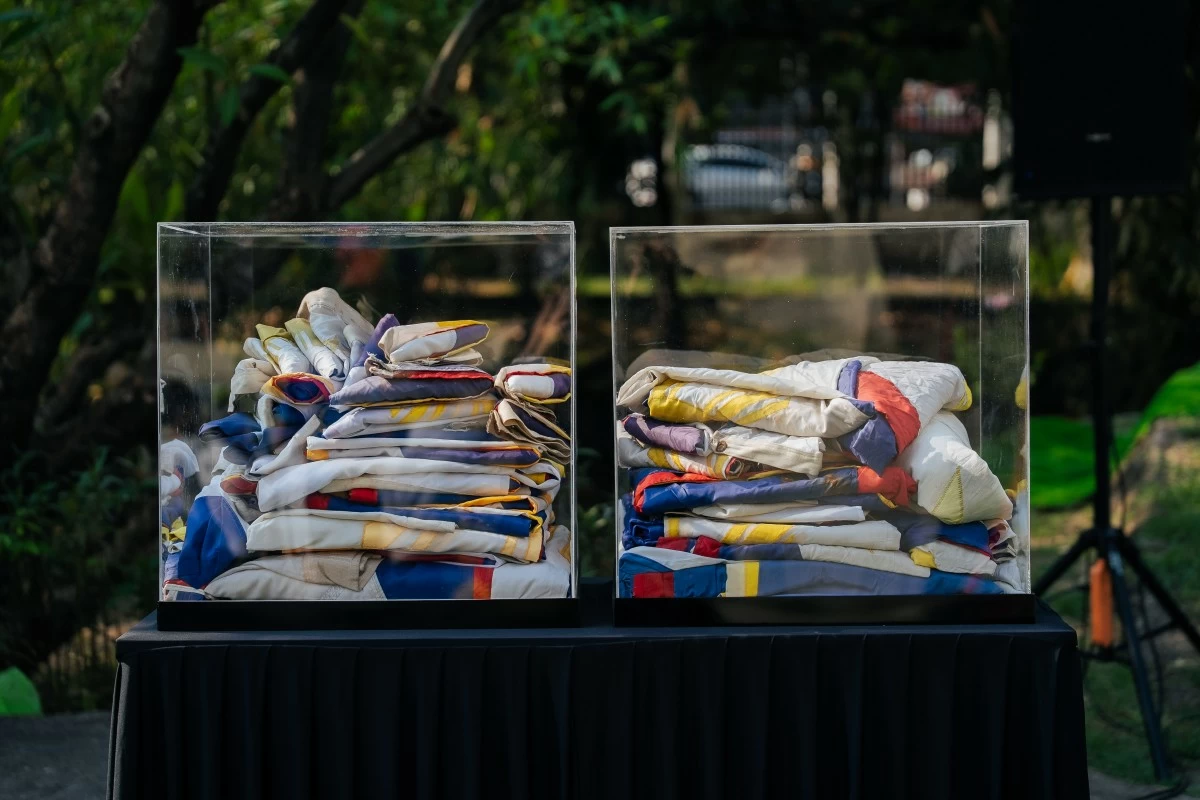
In line with the Flag Retirement Ceremony held at the Institute grounds, DOST-PTRI burned retired Philippine flags for the first time, and stated that it will also be the last time the Institute will conduct such practice. During the ceremony, the Institute formally proposed amendments to Section 14 of Republic Act No. 8491, seeking to establish a dignified and certified recycling process that would recover textile materials for reuse while still preventing misuse or desecration. The process would be determined by DOST-PTRI and verified by the National Historical Commission of the Philippines (NHCP).
The proposal is rooted in existing textile innovation technologies already developed by the Institute. Through mechanical fiber recovery, post-use textile waste can be collected, sorted by material type, shredded into raw fibers, cleaned through carding, and respun into usable yarn. These recycled fibers can then be blended with virgin materials and woven back into fabric.
Under the proposed amendment, retired Philippine flags would no longer end as smoke and ash. Instead, they would become fiber feedstock for new and meaningful applications.
Recovered yarn from retired flags could potentially be used for medal ribbons, ceremonial lanyards, and other official government textiles. It allows the flag that once flew in service of the nation to continue serving another ceremonial purpose.
Blended with virgin fibers, the recycled material may also meet the strength and colorfastness standards required for future flag production, opening the possibility that parts of retired flags could one day become part of newly manufactured Philippine flags.
The long-term vision is a circular procurement system in which retired government-issued flags re-enter the textile supply chain as certified sustainable material for official use.
The initiative suggests that it is not about diminishing the dignity of the flag but about finding ways to co-exist among patriotism, environmental stewardship, and innovation.
The proposal aligns with Textile Revitalization (TexRev), DOST-PTRI’s flagship program that converts post-industrial textile waste into sustainable yarns. TexRev has already been implemented in collaboration with local apparel manufacturers to address the country’s growing textile waste problem. The flag recycling initiative builds directly upon this existing framework.
While recycling protocols for retired flags have yet to be formally institutionalized and any amendment will still require congressional approval, the scientific and technical foundation for the initiative is already in place.
Textile Science as a driver of patriotism
The proposed amendment on flag disposal is only one of three major reforms DOST-PTRI seeks under R.A. 8491.
The Institute is also proposing to modernize the official color specifications for the Philippine flag. Current standards still rely on “Cable No.” references derived from an early 1900s American color system. DOST-PTRI aims to replace these with internationally recognized color space values compatible with modern and more sustainable dyeing technologies.
Additionally, the Institute seeks to consolidate flag quality-testing authority under DOST-PTRI to establish a single, auditable certification system for all Philippine flags procured using public funds. Manufacturers whose materials meet the prescribed standards would undergo annual certification, which would then serve as a mandatory prerequisite for NHCP accreditation and government procurement eligibility.
Taken together, the proposed reforms reframe the retirement of the Philippine flag not only as an act of reverence, but also as an expression of responsibility toward the environment the nation is sworn to protect.
Since honoring the nation’s symbol should also mean honoring the land and nature it represents.