






Manila Bulletin
 Business
The Stock Market
Returning Filipino steel workers bring decades of experience back home
Business
The Stock Market
Returning Filipino steel workers bring decades of experience back home
Business
The Stock Market
Returning Filipino steel workers bring decades of experience back home
Returning Filipino steel workers bring decades of experience back home
Published May 30, 2026 09:33 am


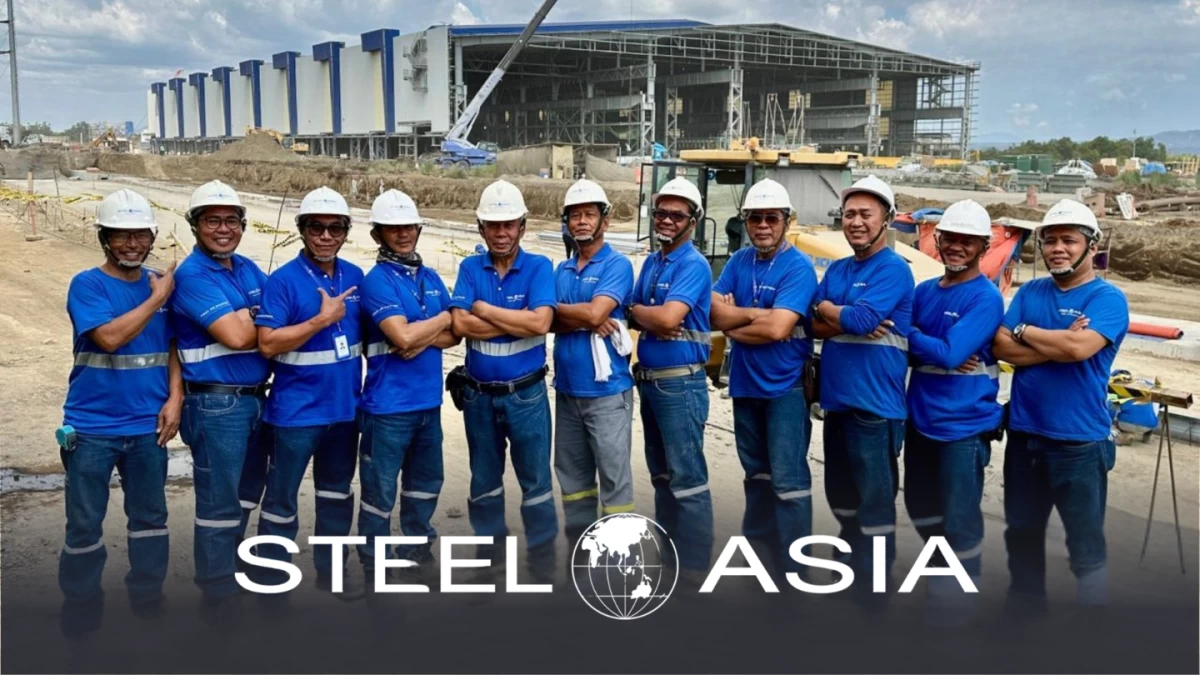
Repatriated overseas Filipino workers (OFWs) pose in front of the construction site of SteelAsia’s new structural steel sections mill in Lemery, Batangas. The team of veteran technicians, who spent decades operating heavy industrial facilities in the Middle East, was recruited to commission the plant, which will soon produce the country's first locally manufactured I-beams and heavy infrastructure steel. (Photo from the Department of Migrant Workers)
SteelAsia Manufacturing Corp., the Philippines’ largest steel producer, has recruited a cohort of repatriated overseas Filipino workers (OFWs) to commission the country’s first structural steel sections mill, a move aimed at replacing imports and advancing national industrialization.
The returning laborers, who spent decades operating heavy industrial rolling facilities in Saudi Arabia, Bahrain, and the wider Middle East, are currently finalizing construction on the company’s new plant in Lemery, Batangas. The facility is scheduled to commence commercial operations later this year.
Once online, the Lemery plant will transform semi-finished steel billets and blooms into finished structural steel shapes, including I-beams, H-sections, channel steel, and angle bars. These heavy steel products, which are fundamental components for high-rise construction, heavy infrastructure, and industrial applications, are currently 100 percent imported into the Philippines.
The initiative comes as part of SteelAsia’s broader strategy to establish a fully integrated domestic steel industry. While the company already manufactures reinforced bars (rebars) to meet local construction demand, the Lemery facility represents a significant technological leap toward self-sufficiency in high-value structural products.
The project has provided an unexpected second act for skilled industrial workers. The Middle East veterans are part of a group of 106 repatriated Filipinos currently employed across SteelAsia’s four operating mills.
Many of these technicians were forced to return home during the Covid-19 pandemic, as global lockdowns and economic contractions halted infrastructure projects abroad and eliminated specialized manufacturing jobs.
For older workers who faced age-related layoffs or early retirement overseas, the Batangas development offered a chance to re-enter the industrial workforce at a senior level. Antonio Rivera, the plant’s acting production head, likened the recruitment drive to calling veteran soldiers back to active duty for a final mission.
Other technicians, including stacker operator Romeo Serna and quality assurance inspector Jess Mato, noted that the opportunity allowed them to transfer decades of foreign-acquired technical expertise back to domestic soil.
SteelAsia’s long-term expansion plans are projected to generate at least 30,000 jobs through direct employment and downstream industrial activities. To sustain this pipeline, the company is expanding its technical training programs via the SteelAsia Academy, targeting out-of-school youth and indigenous communities near its manufacturing hubs.