







Powering the islands
Published May 30, 2026 12:05 am
|
Updated May 29, 2026 05:30 pm


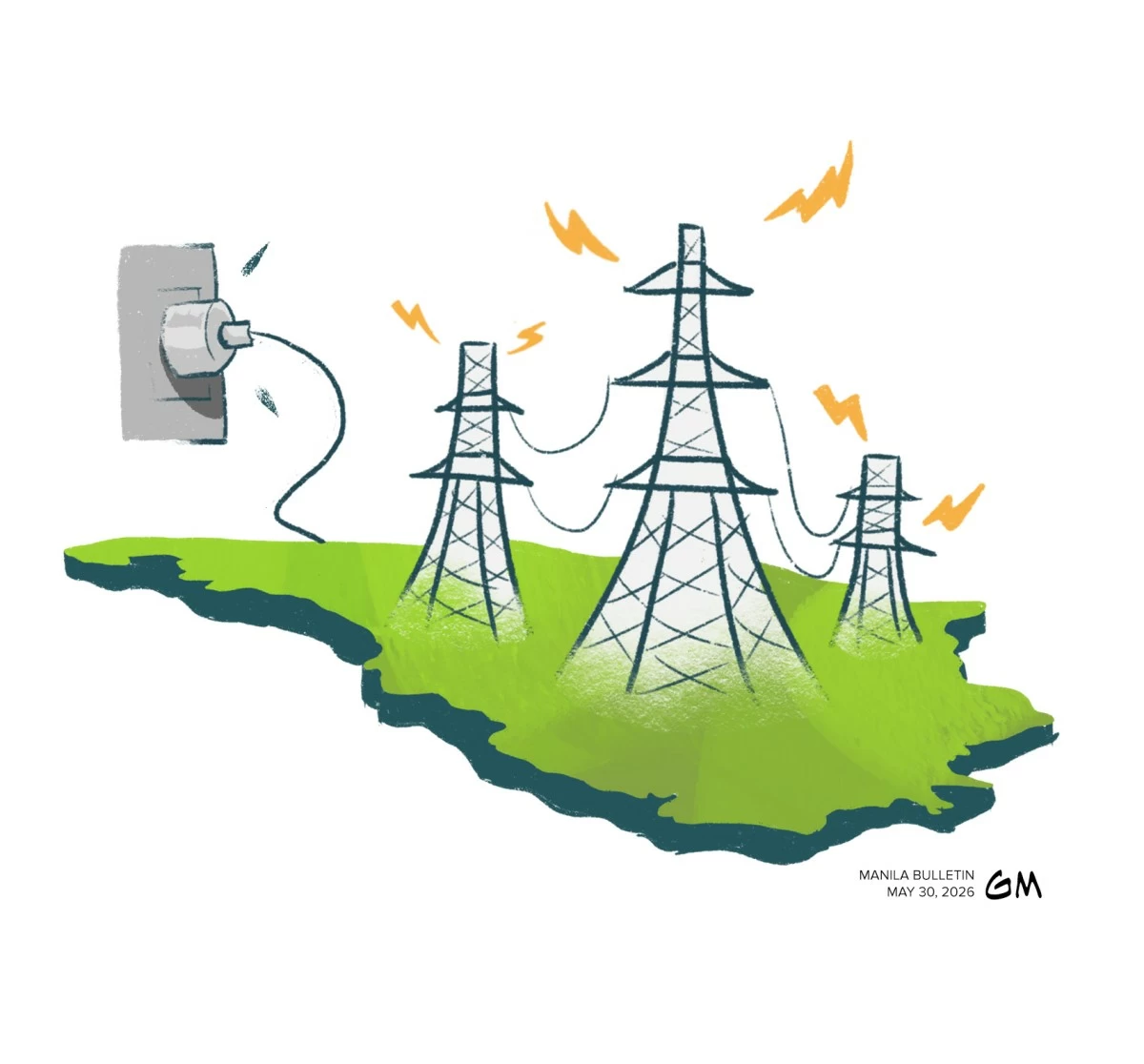
Many off-grid islands in the Philippines, including Mindoro and Palawan, remain heavily dependent on imported diesel generators. To shield residents from the full cost of diesel-based power generation, the government relies on universal charge for missionary electrification (UCME), a subsidy mechanism funded by consumers connected to the national grid.
In other words, every Filipino who pays an electricity bill in Metro Manila, Cebu, Davao, and other grid-connected areas helps shoulder part of the cost of keeping diesel-powered generators running in far-flung islands. The issue is therefore not merely a Mindoro or Palawan concern. It is a national concern that affects millions of households and businesses through a mandatory charge embedded in their monthly electricity bills.
In 2024 alone, UCME reached ₱24.6 billion. National Power Corp. (NPC) is now seeking approval for more than ₱44 billion in subsidy requirements in the coming year as fuel prices remain volatile and the peso continues to face pressure. According to Department of Energy (DOE) data cited by Maharlika Investment Corp. (MIC) President and Chief Executive Officer (CEO) Rafael Jose Consing Jr., Mindoro and Palawan account for roughly 60 percent of these subsidies.
That means approximately ₱15 billion annually is being spent to sustain a diesel-dependent system in just three island provinces.
The Philippines is already confronting elevated inflation and the growing threat of stagflation as the prolonged war in the Middle East continues to inject uncertainty into global energy markets. Oil prices remain vulnerable to supply disruptions, while every increase in fuel costs eventually works its way into transportation expenses, food prices, electricity rates, and household budgets.
For an archipelagic nation that imports much of its fuel requirements, continued dependence on diesel generation is an economic vulnerability that can no longer be ignored.
Mindoro illustrates why energy investments deserve greater urgency. The island possesses substantial renewable energy (RE) potential, including hydro, solar, and wind resources. A recent DOE-supported grid upgrade in Oriental Mindoro province enabled the full dispatch of a 16-megawatt (MW) wind facility that had previously been constrained by transmission limitations.
The renewable resources are already there. What is lacking is the infrastructure needed to fully harness them.
At present, Mindoro’s power system operates through a single-loop 69-kilovolt (kV) network with limited redundancy, leaving the island vulnerable to outages and service interruptions. Planned upgrades—including network sectionalization, advanced monitoring technologies, and improved accessibility for maintenance and restoration—could significantly improve reliability while laying the foundation for eventual interconnection with the national grid.
The benefits extend far beyond lower electricity subsidies.
Reliable power is essential for mechanized agriculture, cold storage facilities, tourism, fisheries, manufacturing, and other industries that create jobs and economic opportunities. Regions with dependable electricity attract investments. Regions without it struggle to realize their potential.
This week, state-run MIC signed a cooperation framework with the DOE, NPC, National Electrification Administration (NEA), and National Transmission Corp. (TransCo) to rehabilitate and modernize Mindoro’s aging power transmission system.
Its significance lies in its potential to reduce subsidy burdens, improve energy security, unlock renewable resources, and create economic opportunities in regions that have long been constrained by unreliable power.
The challenge now is to replicate this model across the archipelago. Mindoro is only one of many islands facing similar constraints. If the Philippines is serious about lowering electricity costs, strengthening energy security, reducing its exposure to global oil shocks, and supporting long-term economic growth, investments in off-grid power systems, transmission networks, and RE infrastructure must accelerate.
For too long, many of the country’s islands have been treated as permanent subsidy recipients. With the right investments, they can instead become engines of growth.
That is a goal worth powering.