ADVERTISEMENT

Marcos wraps up 'highly productive' Japan visit with new strategic, economic deals

Published May 30, 2026 06:20 am
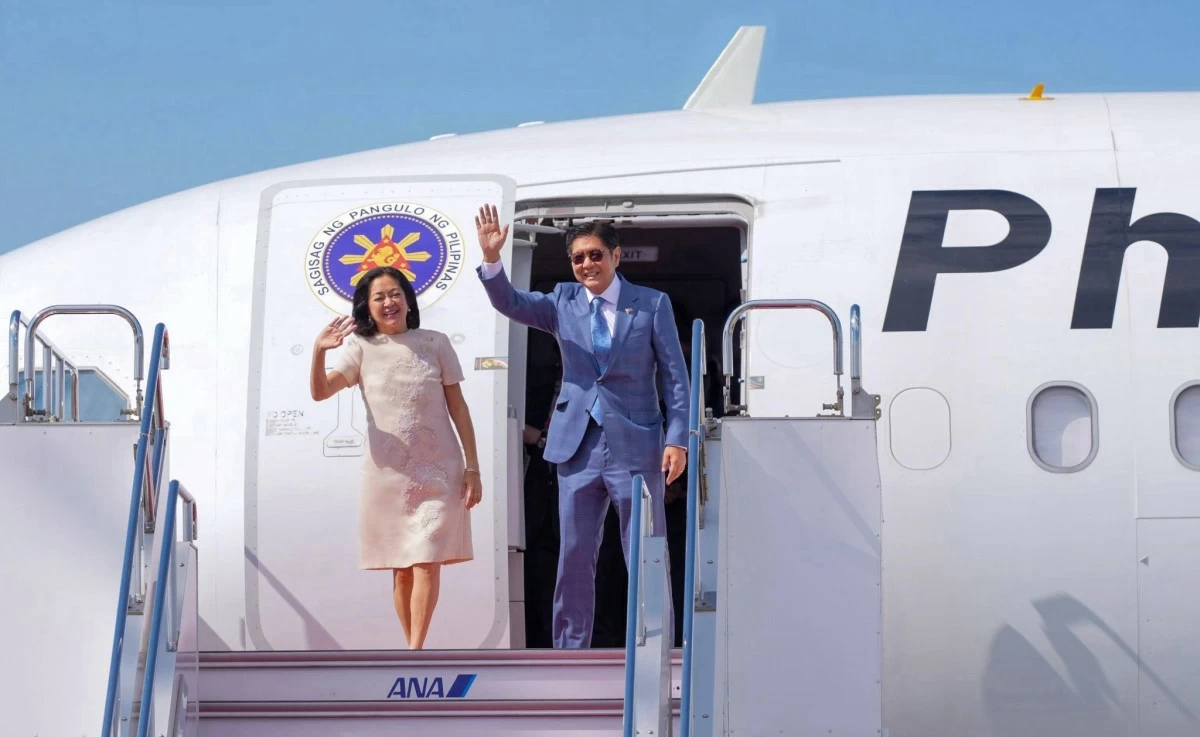
President Ferdinand 'Bongbong' Marcos Jr. and First Lady Liza Araneta-Marcos depart Tokyo on May 29, 2026, concluding his four-day State Visit to Japan. (Malacañang photo)

President Marcos has concluded his four-day State Visit to Japan, describing it as a “highly productive and constructive” trip that secured major economic, strategic, and diplomatic gains for the Philippines.

Speaking to the Philippine media delegation before returning to Manila, the President said the visit further strengthened the Philippines’ partnership with Japan as the two countries commemorate 70 years of diplomatic relations this year.

“It has been a very constructive and highly productive visit, considering that we are actually in Japan for just about three days,” he said Friday, May 29.

“And yet in that little time, we were able to do a great deal,” he added.

Marcos said the timing of the State Visit was significant as it allowed both countries not only to celebrate decades of friendship but also to chart the future of bilateral relations.

President Marcos, First Lady Liza Araneta-Marcos, and their delegation returned to Manila on Friday evening.

Comprehensive Strategic Partnership

One of the highlights of the visit was the elevation of the Philippines-Japan relations from a Strengthened Strategic Partnership to a Comprehensive Strategic Partnership following Marcos’ meeting with Japanese Prime Minister Takaichi Sanae.

“This reflects how our cooperation has grown not only stronger but deeper and broader,” Marcos said.

The two countries agreed to deepen cooperation not only in traditional areas such as defense, maritime security, trade, and investment, but also in emerging sectors, including energy security, supply chain resilience, decarbonization, artificial intelligence, and space cooperation.

The two leaders also exchanged views on regional and global issues, including developments in the South China Sea and the Middle East, particularly their implications on regional stability and energy security.

Japan likewise expressed support for the Philippines’ candidacy for a non-permanent seat in the United Nations Security Council.

Key agreements

During the visit, Manila and Tokyo signed several agreements, including a landmark pact on the avoidance of double taxation aimed at improving the business environment and encouraging more cross-border investments.

Additional agreements covering agriculture and fisheries, health services, and human resource development were also signed.

The Philippines and Japan also formally announced the start of negotiations for a General Security of Military Information Agreement and maritime boundary delimitation.

“These initiatives will support our shared goals of security, economic growth, and resilience,” the President said.

Investments, jobs

Marcos also highlighted the economic gains generated during meetings with Japanese business leaders and major corporations involved in strategic industries.

According to the President, the engagements produced around $3.4 billion worth of investment pledges, pipeline opportunities, financial support facilities, and tourism-related flagship investment prospects.

The Chief Executive separately met executives from Furukawa Electric Corporation, Sumitomo Electric Industries, MinebeaMitsumi Inc., and Tsuneishi Group Corporation.

The companies presented expansion plans in the Philippines worth around P56.3 billion covering semiconductor, advanced electronics, precision manufacturing, and shipbuilding industries.

The planned investments are expected to generate approximately 10,300 direct and indirect jobs for Filipinos.

“These engagements reaffirmed strong confidence in the Philippine economy and opened new opportunities for investments that will benefit our people,” Marcos said.

Imperial audience, Filipinos in Japan

Marcos also cited his Imperial Audience with Emperor Naruhito and Empress Masako as among the highlights of the trip, saying it reaffirmed the enduring friendship between Filipinos and Japanese.

The President likewise met members of the Filipino community in Japan and recognized the contributions of around 330,000 Filipinos living and working there.

“Their hard work and dedication continue to strengthen the bond between our two countries,” he said.

Marcos said he remains confident that the newly elevated Comprehensive Strategic Partnership would further deepen bilateral cooperation and deliver benefits to both Filipinos and Japanese people.

Related Tags

President Marcos Bongbong Marcos PH-Japan State Visit Comprehensive Strategic Partnership
ADVERTISEMENT
.most-popular .layout-ratio{ padding-bottom: 79.13%; } @media (min-width: 768px) and (max-width: 1024px) { .widget-title { font-size: 15px !important; } }

{{ articles_filter_1561_widget.title }}

.most-popular .layout-ratio{ padding-bottom: 79.13%; } @media (min-width: 768px) and (max-width: 1024px) { .widget-title { font-size: 15px !important; } }

{{ articles_filter_1562_widget.title }}

.most-popular .layout-ratio{ padding-bottom: 79.13%; } @media (min-width: 768px) and (max-width: 1024px) { .widget-title { font-size: 15px !important; } }

{{ articles_filter_1563_widget.title }}

{{ articles_filter_1564_widget.title }}

.mb-article-details { position: relative; } .mb-article-details .article-body-preview, .mb-article-details .article-body-summary{ font-size: 17px; line-height: 30px; font-family: "Libre Caslon Text", serif; color: #000; } .mb-article-details .article-body-preview iframe , .mb-article-details .article-body-summary iframe{ width: 100%; margin: auto; } .read-more-background { background: linear-gradient(180deg, color(display-p3 1.000 1.000 1.000 / 0) 13.75%, color(display-p3 1.000 1.000 1.000 / 0.8) 30.79%, color(display-p3 1.000 1.000 1.000) 72.5%); position: absolute; height: 200px; width: 100%; bottom: 0; display: flex; justify-content: center; align-items: center; padding: 0; } .read-more-background a{ color: #000; } .read-more-btn { padding: 17px 45px; font-family: Inter; font-weight: 700; font-size: 18px; line-height: 16px; text-align: center; vertical-align: middle; border: 1px solid black; background-color: white; } .hidden { display: none; }
function initializeAllSwipers() { // Get all hidden inputs with cms_article_id document.querySelectorAll('[id^="cms_article_id_"]').forEach(function (input) { const cmsArticleId = input.value; const articleSelector = '#article-' + cmsArticleId + ' .body_images'; const swiperElement = document.querySelector(articleSelector); if (swiperElement && !swiperElement.classList.contains('swiper-initialized')) { new Swiper(articleSelector, { loop: true, pagination: false, navigation: { nextEl: '#article-' + cmsArticleId + ' .swiper-button-next', prevEl: '#article-' + cmsArticleId + ' .swiper-button-prev', }, }); } }); } setTimeout(initializeAllSwipers, 3000); const intersectionObserver = new IntersectionObserver( (entries) => { entries.forEach((entry) => { if (entry.isIntersecting) { const newUrl = entry.target.getAttribute("data-url"); if (newUrl) { history.pushState(null, null, newUrl); let article = entry.target; // Extract metadata const author = article.querySelector('.author-section').textContent.replace('By', '').trim(); const section = article.querySelector('.section-info ').textContent.replace(' ', ' '); const title = article.querySelector('.article-title h1').textContent; // Parse URL for Chartbeat path format const parsedUrl = new URL(newUrl, window.location.origin); const cleanUrl = parsedUrl.host + parsedUrl.pathname; // Update Chartbeat configuration if (typeof window._sf_async_config !== 'undefined') { window._sf_async_config.path = cleanUrl; window._sf_async_config.sections = section; window._sf_async_config.authors = author; } // Track virtual page view with Chartbeat if (typeof pSUPERFLY !== 'undefined' && typeof pSUPERFLY.virtualPage === 'function') { try { pSUPERFLY.virtualPage({ path: cleanUrl, title: title, sections: section, authors: author }); } catch (error) { console.error('ping error', error); } } // Optional: Update document title if (title && title !== document.title) { document.title = title; } } } }); }, { threshold: 0.1 } ); function showArticleBody(button) { const article = button.closest("article"); const summary = article.querySelector(".article-body-summary"); const body = article.querySelector(".article-body-preview"); const readMoreSection = article.querySelector(".read-more-background"); // Hide summary and read-more section summary.style.display = "none"; readMoreSection.style.display = "none"; // Show the full article body body.classList.remove("hidden"); } document.addEventListener("DOMContentLoaded", () => { let loadCount = 0; // Track how many times articles are loaded const offset = [1, 2, 3, 4, 5, 6, 7, 8, 9, 10]; // Offset values const currentUrl = window.location.pathname.substring(1); let isLoading = false; // Prevent multiple calls if (!currentUrl) { console.log("Current URL is invalid."); return; } const sentinel = document.getElementById("load-more-sentinel"); if (!sentinel) { console.log("Sentinel element not found."); return; } function isSentinelVisible() { const rect = sentinel.getBoundingClientRect(); return ( rect.top < window.innerHeight && rect.bottom >= 0 ); } function onScroll() { if (isLoading) return; if (isSentinelVisible()) { if (loadCount >= offset.length) { console.log("Maximum load attempts reached."); window.removeEventListener("scroll", onScroll); return; } isLoading = true; const currentOffset = offset[loadCount]; window.loadMoreItems().then(() => { let article = document.querySelector('#widget_1690 > div:nth-last-of-type(2) article'); intersectionObserver.observe(article) loadCount++; }).catch(error => { console.error("Error loading more items:", error); }).finally(() => { isLoading = false; }); } } window.addEventListener("scroll", onScroll); });

Sign up by email to receive news.