ADVERTISEMENT

At the table, Türkiye tells its story

Published May 30, 2026 03:37 pm
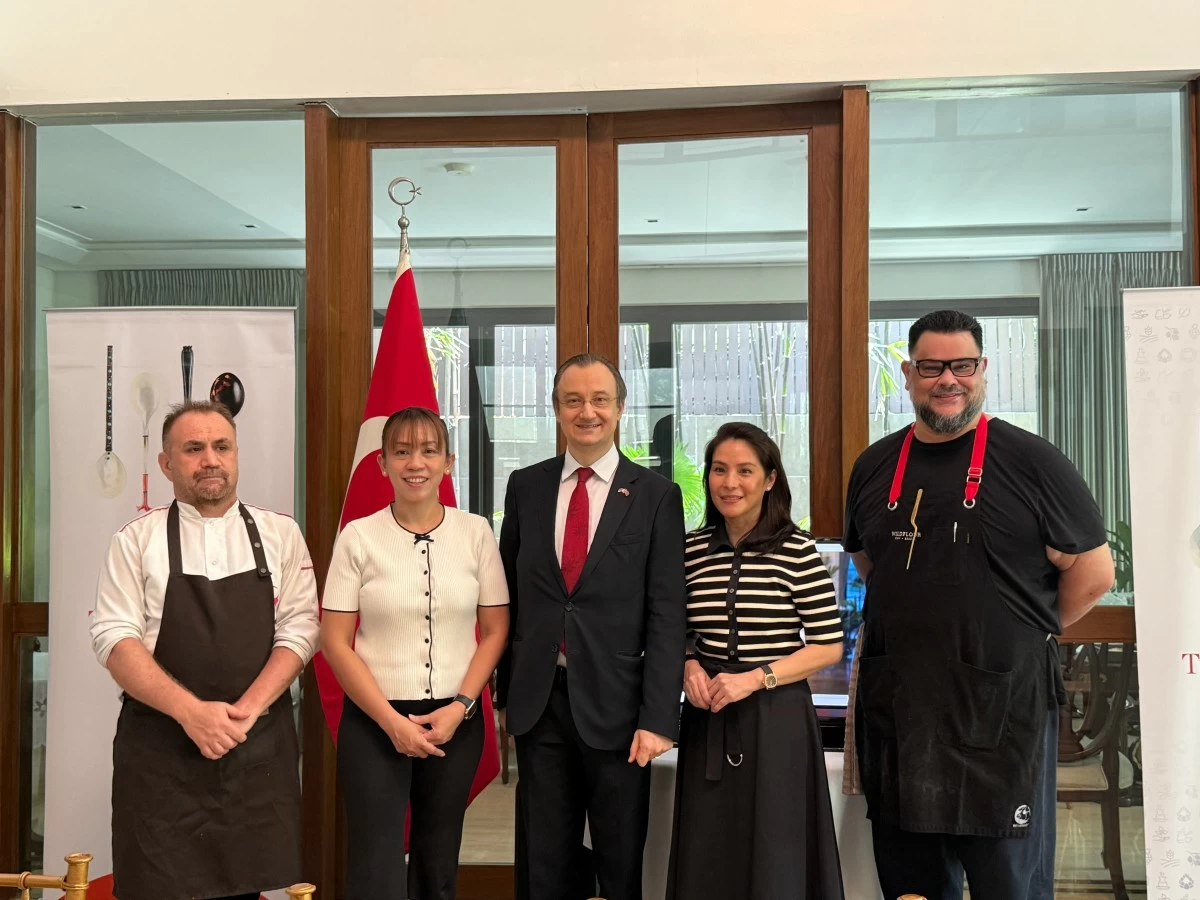
Official chef at the residence of the ambassador, İlhami Kılıç, Mme. Indri Akyol, wife of the Ambassador of Türkiye, Turkish Ambassador Niyazi Evren Akyol, Wildflour Hospitality CEO Ana Lorenzana de Ocampo, Wildflour Hospitality’s Chef Carlo Miguel (Photos: Carolyn Ramoran Hamilton)
Some of the best diplomacy happens over a meal.
Not because food solves political disagreements, but because it lowers barriers almost instantly. People become curious. They ask questions. They compare flavors to childhood memories, family gatherings, places they have traveled to, or places they suddenly want to visit. Before long, a country no longer feels distant. Its people, no longer strangers.
That was exactly the atmosphere at the lunch recently hosted by Turkish Ambassador Niyazi Evren Akyol and his wife, Indri Akyol, in collaboration with Wildflour Hospitality in celebration of Turkish Food Week.
Held at the ambassador’s residence in Manila, the gathering brought together diplomats, media, and guests around a menu developed by the ambassador’s official chef, İlhami Kılıç and Wildflour Hospitality’s Chef Carlo Miguel. Their goal was straightforward: introduce authentic Turkish dishes using Filipino ingredients while staying true to the spirit of Turkish cuisine.
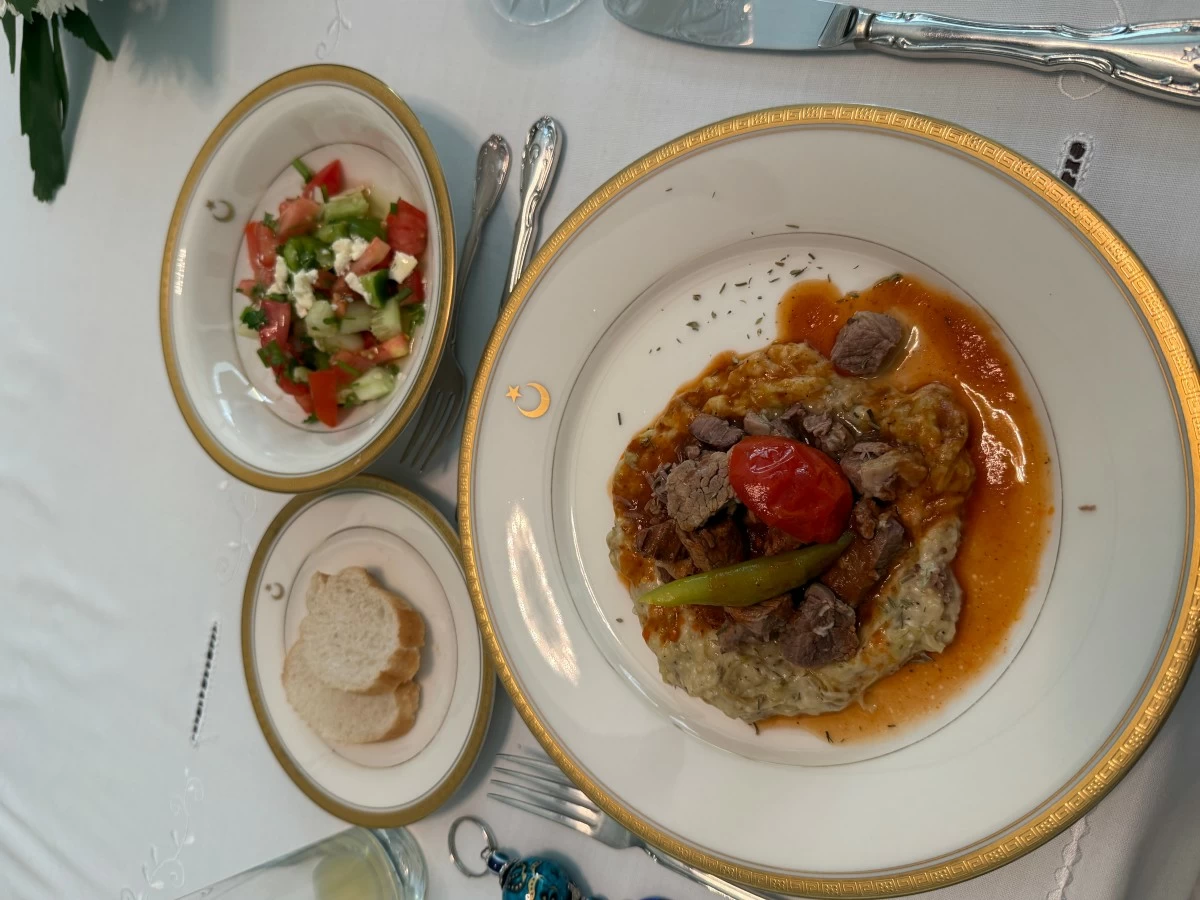
The Sultan’s Delight kebab was a crowd favorite at the lunch hosted by Turkish Ambassador Niyazi Evren Akyol.
And the food did exactly what good food is supposed to do. Lunch began with “mantı”, delicate Turkish dumplings filled with seasoned beef and served with garlic yoghurt and butter sauce. There were stuffed vine leaves, flaky cheese börek, and “imam bayıldı”, the slow-cooked eggplant dish whose name famously translates to “the imam fainted.”
But the dish I kept returning to was the “Hünkar Beğendi”—the Sultan’s Delight Kebab.
The slow-cooked beef arrived over a creamy smoked eggplant purée. Comforting without being heavy. Deeply layered without trying too hard to impress. It was the kind of dish that immediately explains why Ottoman cuisine continues to influence so much of the region around it.
Ambassador Akyol himself described Turkish cuisine as something shaped across centuries of migration, geography, trade, and shared histories.
“It has a lot of layers to it, a lot of variety to it. There is a lot of history to it,” he said. “It brings together elements and philosophy of cooking through place and time, actually through geography and time.”
He also spoke about the Turkish “sofra” not simply as a dining table, but as a cultural space tied to sharing, gathering, and hospitality across generations.
That philosophy was reflected throughout the lunch.
Even dessert became part of the cultural exchange. Alongside the walnut baklava was “Katmer Turon,” a playful fusion inspired by Turkish katmer and the Filipino turon. Instead of feeling forced, it worked surprisingly well—perhaps because Turkish and Filipino food cultures already share something fundamental: generosity. Madame Akyol even quipped that she had christened the dessert “Meron,” a portmanteau of katmer and turon that also happens to mean “there is” in Filipino.
“You know one thing about Turkish cuisine is it’s not just very rich in flavor and colors, but every dish talks,” said Wildflour CEO Ana Lorenzana de Ocampo during the lunch. “Every dish has that traditional hospitality and culture present in it.”
That idea of hospitality sits at the center of Turkish Food Week itself, a global initiative launched under the leadership of Turkish First Lady Emine Erdoğan to promote Türkiye’s culinary heritage internationally. For Türkiye, food has become an increasingly effective form of cultural diplomacy—one capable of introducing the country beyond headlines, geopolitics, or tourism campaigns.
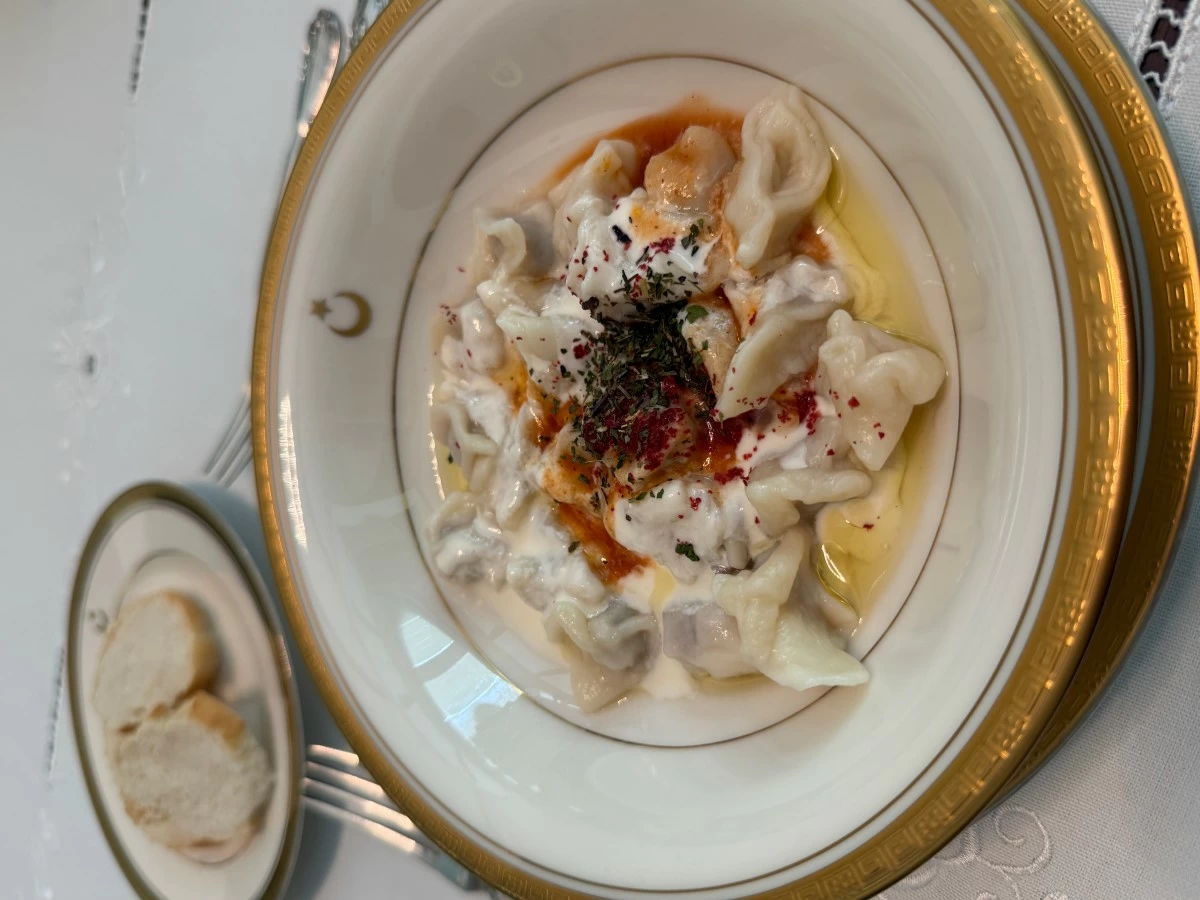
“Mantı” are beef dumplings served with garlic yoghurt. A well-loved dish in the Akyol family, especially to Ambassador and Madame Akyol’s two daughters
And the collaboration is not ending with a single lunch.
Miguel revealed that several Turkish-inspired dishes developed through the partnership will soon appear across Wildflour restaurants in the coming weeks, giving more Filipinos access to flavors that, until recently, largely existed within embassy walls or specialty restaurants.
“For me, what I noticed is, if you look at the history of the Ottoman Empire, they spread their wings very far, and they brought back the best of the food culture from all the different regions,” Miguel said. “You can truly see a melting pot of different cuisines.”
In many ways, that observation also explains why Turkish food resonates so naturally in the Philippines.
Like Filipino cuisine, it is deeply tied to memory, migration, trade, and gatherings that revolve around feeding people generously.
And perhaps that is why lunches like this work so well diplomatically. People may arrive curious about a country. But somewhere between the kebabs, the coffee, and dessert, they leave feeling like they understand it a little more.
ADVERTISEMENT
.most-popular .layout-ratio{ padding-bottom: 79.13%; } @media (min-width: 768px) and (max-width: 1024px) { .widget-title { font-size: 15px !important; } }

{{ articles_filter_1561_widget.title }}

.most-popular .layout-ratio{ padding-bottom: 79.13%; } @media (min-width: 768px) and (max-width: 1024px) { .widget-title { font-size: 15px !important; } }

{{ articles_filter_1562_widget.title }}

.most-popular .layout-ratio{ padding-bottom: 79.13%; } @media (min-width: 768px) and (max-width: 1024px) { .widget-title { font-size: 15px !important; } }

{{ articles_filter_1563_widget.title }}

{{ articles_filter_1564_widget.title }}

.mb-article-details { position: relative; } .mb-article-details .article-body-preview, .mb-article-details .article-body-summary{ font-size: 17px; line-height: 30px; font-family: "Libre Caslon Text", serif; color: #000; } .mb-article-details .article-body-preview iframe , .mb-article-details .article-body-summary iframe{ width: 100%; margin: auto; } .read-more-background { background: linear-gradient(180deg, color(display-p3 1.000 1.000 1.000 / 0) 13.75%, color(display-p3 1.000 1.000 1.000 / 0.8) 30.79%, color(display-p3 1.000 1.000 1.000) 72.5%); position: absolute; height: 200px; width: 100%; bottom: 0; display: flex; justify-content: center; align-items: center; padding: 0; } .read-more-background a{ color: #000; } .read-more-btn { padding: 17px 45px; font-family: Inter; font-weight: 700; font-size: 18px; line-height: 16px; text-align: center; vertical-align: middle; border: 1px solid black; background-color: white; } .hidden { display: none; }
function initializeAllSwipers() { // Get all hidden inputs with cms_article_id document.querySelectorAll('[id^="cms_article_id_"]').forEach(function (input) { const cmsArticleId = input.value; const articleSelector = '#article-' + cmsArticleId + ' .body_images'; const swiperElement = document.querySelector(articleSelector); if (swiperElement && !swiperElement.classList.contains('swiper-initialized')) { new Swiper(articleSelector, { loop: true, pagination: false, navigation: { nextEl: '#article-' + cmsArticleId + ' .swiper-button-next', prevEl: '#article-' + cmsArticleId + ' .swiper-button-prev', }, }); } }); } setTimeout(initializeAllSwipers, 3000); const intersectionObserver = new IntersectionObserver( (entries) => { entries.forEach((entry) => { if (entry.isIntersecting) { const newUrl = entry.target.getAttribute("data-url"); if (newUrl) { history.pushState(null, null, newUrl); let article = entry.target; // Extract metadata const author = article.querySelector('.author-section').textContent.replace('By', '').trim(); const section = article.querySelector('.section-info ').textContent.replace(' ', ' '); const title = article.querySelector('.article-title h1').textContent; // Parse URL for Chartbeat path format const parsedUrl = new URL(newUrl, window.location.origin); const cleanUrl = parsedUrl.host + parsedUrl.pathname; // Update Chartbeat configuration if (typeof window._sf_async_config !== 'undefined') { window._sf_async_config.path = cleanUrl; window._sf_async_config.sections = section; window._sf_async_config.authors = author; } // Track virtual page view with Chartbeat if (typeof pSUPERFLY !== 'undefined' && typeof pSUPERFLY.virtualPage === 'function') { try { pSUPERFLY.virtualPage({ path: cleanUrl, title: title, sections: section, authors: author }); } catch (error) { console.error('ping error', error); } } // Optional: Update document title if (title && title !== document.title) { document.title = title; } } } }); }, { threshold: 0.1 } ); function showArticleBody(button) { const article = button.closest("article"); const summary = article.querySelector(".article-body-summary"); const body = article.querySelector(".article-body-preview"); const readMoreSection = article.querySelector(".read-more-background"); // Hide summary and read-more section summary.style.display = "none"; readMoreSection.style.display = "none"; // Show the full article body body.classList.remove("hidden"); } document.addEventListener("DOMContentLoaded", () => { let loadCount = 0; // Track how many times articles are loaded const offset = [1, 2, 3, 4, 5, 6, 7, 8, 9, 10]; // Offset values const currentUrl = window.location.pathname.substring(1); let isLoading = false; // Prevent multiple calls if (!currentUrl) { console.log("Current URL is invalid."); return; } const sentinel = document.getElementById("load-more-sentinel"); if (!sentinel) { console.log("Sentinel element not found."); return; } function isSentinelVisible() { const rect = sentinel.getBoundingClientRect(); return ( rect.top < window.innerHeight && rect.bottom >= 0 ); } function onScroll() { if (isLoading) return; if (isSentinelVisible()) { if (loadCount >= offset.length) { console.log("Maximum load attempts reached."); window.removeEventListener("scroll", onScroll); return; } isLoading = true; const currentOffset = offset[loadCount]; window.loadMoreItems().then(() => { let article = document.querySelector('#widget_1690 > div:nth-last-of-type(2) article'); intersectionObserver.observe(article) loadCount++; }).catch(error => { console.error("Error loading more items:", error); }).finally(() => { isLoading = false; }); } } window.addEventListener("scroll", onScroll); });

Sign up by email to receive news.