






Manila Bulletin
 Business
Trade & Industry
Senate virtual voting plan sparks backlash from business leaders
Business
Trade & Industry
Senate virtual voting plan sparks backlash from business leaders
Business
Trade & Industry
Senate virtual voting plan sparks backlash from business leaders
Senate virtual voting plan sparks backlash from business leaders
Published May 29, 2026 03:51 pm


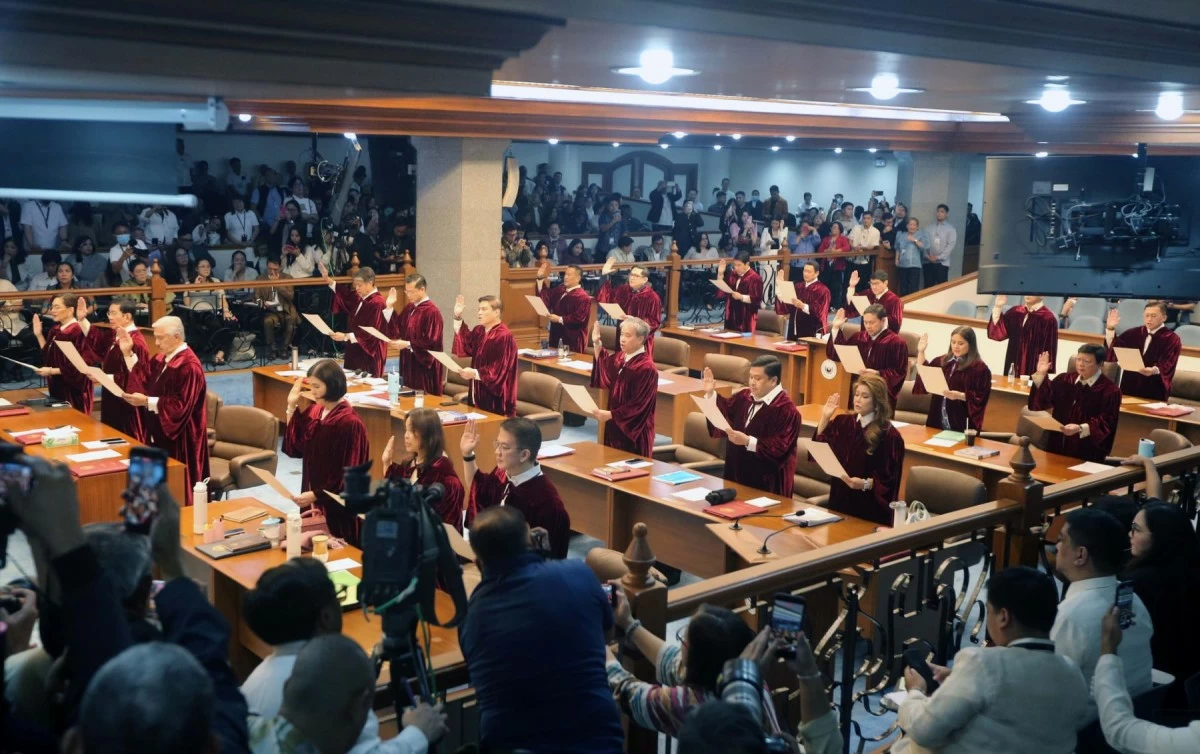
Senators, led by Senate President Alan Peter Cayetano, take their oath as the impeachment court convenes at the Senate in Pasay City on Monday, May 18, 2026, for the impeachment trial of Vice President Sara Duterte. Duterte is facing impeachment charges over alleged misuse of confidential funds, unexplained wealth, and statements against President Ferdinand Marcos Jr., First Lady Liza Araneta-Marcos, and then House Speaker Martin Romualdez. (Mark Balmores)
The Justice Reform Initiative (JRI) joined the growing opposition from the private sector against the recent attempt by the Senate majority bloc to allow lawmakers to vote remotely, which the group warned could have serious consequences for the upcoming impeachment trial.
JRI, an umbrella group of business organizations, foreign chambers, and civil society groups in matters involving justice reforms, urged senators to stop any move that would pave the way for virtual participation and voting in the chamber’s proceedings.
The group asserted that such a reform must undergo a thorough examination of its constitutional, governance, and institutional implications before it may be permitted to take effect.
“Virtual or remote participation may appear convenient, but when applied to quorum, debate, and voting, it directly affects the legitimacy of Senate action,” JRI said. “Technology cannot simply be assumed to preserve what the Senate’s rules were built to guarantee.”
JRI noted that rules on attendance, quorum, deliberation, and voting are structural safeguards that uphold the Senate’s constitutional function in lawmaking, oversight, and accountability on matters of national consequence.
As a result, the group said the Senate’s authority rests on public trust, meaning that any reform that cannot withstand scrutiny should not be adopted.
“Those that can must be earned through transparent process—not circumvented through expedient accommodation,” said JRI.
Earlier, the Senate majority bloc moved to put up for vote the proposed amendment allowing remote participation even before committee deliberations on the matter had taken place.
The attempt to rush the process was alleged to benefit some majority senators who are expected to face plunder charges soon, as well as Senator Ronald Dela Rosa, who has gone back into hiding to evade arrest over a warrant issued by the International Criminal Court.
“Even if Senate rules were amended, they cannot compel external authorities—whether domestic courts or international bodies—to allow detained individuals to participate remotely,” JRI said.
The group said public perception that the proposed remote voting scheme aims to serve the interests of specific individuals weakens the chamber’s claim to govern under the rule of law.
This is especially noteworthy in the context of the upcoming impeachment trial against Vice President Sara Duterte, particularly since the rules of an impeachment court operate differently from ordinary plenary procedures.
Essentially, if remote voting pushes through in matters involving plenary deliberations, it may then be considered a precedent for the impeachment trial, which JRI said would violate the constitutional framework governing impeachment.
“Rule changes affecting impeachment proceedings cannot be made through regular plenary amendments,” the group said. “This is not the moment for procedural improvisation.”
The Financial Executives Institute of the Philippines (FINEX) recently expressed opposition to the Senate majority's move, stressing that physical presence and direct participation must remain required in Senate proceedings to uphold accountability and transparency.