






Manila Bulletin
 Business
Trade & Industry
Rotational blackout risks rise in Visayas amid power crunch
Business
Trade & Industry
Rotational blackout risks rise in Visayas amid power crunch
Business
Trade & Industry
Rotational blackout risks rise in Visayas amid power crunch
Rotational blackout risks rise in Visayas amid power crunch
Published May 29, 2026 02:36 pm


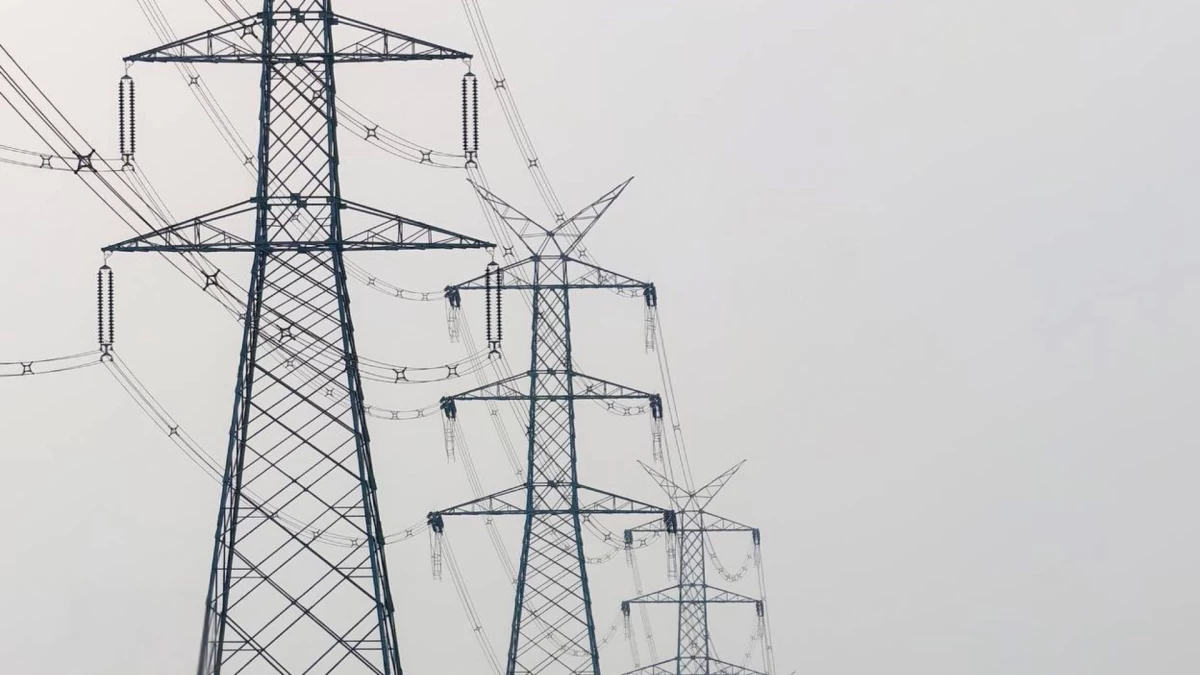
High-voltage transmission towers cut across the landscape in Pampanga on Wednesday, May 13. The National Grid Corporation of the Philippines placed the Visayas grid under yellow alert following the forced outage of three power plants, highlighting the region's heavy reliance on power imports from the Luzon and Mindanao grids to meet surging electricity demand. (Photo by Santi San Juan | Manila Bulletin)
The power grid in the Visayas faces worsening stability constraints after another electricity generator unexpectedly failed, prompting energy officials to declare a system emergency and warn of impending rolling blackouts.
The National Grid Corporation of the Philippines (NGCP) placed the Visayas power grid under a red alert—the highest level of emergency warning—for one hour on Friday evening, from 6 p.m. to 7 p.m. The system operator also blanketed the region with six hours of yellow alerts spanning mid-afternoon and late-evening windows, citing an inadequate operating margin that left the grid unable to maintain essential reserve capacities.
Grid operators use red alerts to indicate that supply is no longer sufficient to meet consumer demand and required regulatory buffers, a condition that typically forces utilities to implement manual load dropping, or rolling blackouts, to protect the network from a total collapse. Yellow alerts indicate that while current consumption is being met, safety reserves have dropped below required contingency levels.
The latest network strain was triggered by the unplanned shutdown of Kepco SPC Power Corp.’s Unit 2 facility. The outage compounded an ongoing regional power deficit, with three other major baseload units—Therma Visayas Inc.’s Units 1 and 2, alongside Panay Energy Development Corp.’s Unit 3—remaining offline. The cluster of generation failures coincided with a sharp increase in regional electricity consumption driven by seasonal temperatures, compressing the grid’s operational flexibility.
Available capacity across the Visayas grid stood at 2,562 megawatts on Friday against a forecast peak demand of 2,542 megawatts, leaving a razor-thin supply buffer of just 20 megawatts.
According to grid operational logs, a total of 952.4 megawatts of capacity remains unavailable to the regional network due to a combination of forced outages and plants running at reduced, derated levels.
The grid operator noted that 11 generation units have broken down since the start of May alone, while another four facilities have been offline since earlier periods, including three that have failed to return to service since 2025.
The emergency declarations follow mandatory load-shedding measures implemented by the grid operator on Thursday, which cut power to select distribution utilities and electric cooperatives across the central islands to preserve network integrity.
NGCP stated that the emergency load shedding was required to prevent the overloading of the 230-kilovolt Daanbantayan-Tabango Line 2, a critical transmission corridor that was pushed to its limits after the unexpected loss of 140 megawatts from the KSPC unit and another smaller generation facility.