






Manila Bulletin
 Business
Banking & Finance
Peso risks slumping to record low as rate hikes lose punch
Business
Banking & Finance
Peso risks slumping to record low as rate hikes lose punch
Business
Banking & Finance
Peso risks slumping to record low as rate hikes lose punch
Peso risks slumping to record low as rate hikes lose punch
By Derco Rosal
Published May 29, 2026 06:30 pm
|
Updated May 29, 2026 03:51 pm


At A Glance
- Relying solely on the Bangko Sentral ng Pilipinas' (BSP) interest rate hike is seen providing limited support for the Philippine peso, which remains on the verge of another historic low amid elevated oil prices, a stronger United States (US) dollar, and cautious risk appetite, the Oversea-Chinese Banking Corp. (OCBC) said.
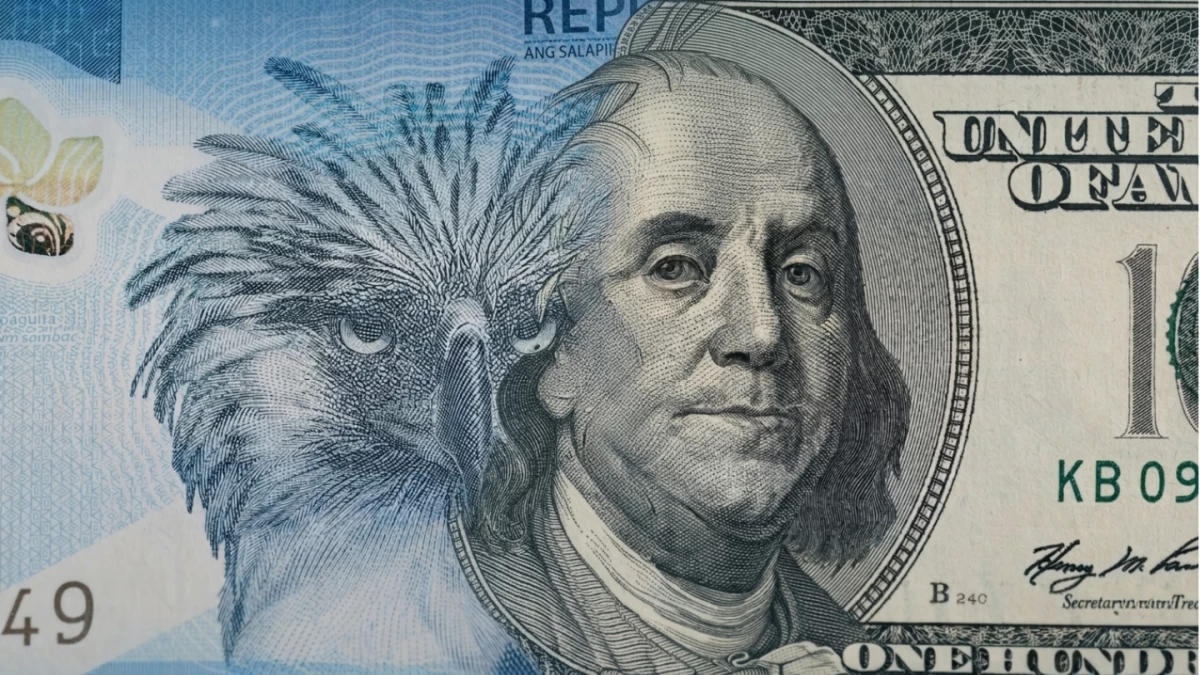
Relying solely on the Bangko Sentral ng Pilipinas’ (BSP) interest rate hikes will likely provide limited support for the Philippine peso, which remains on the verge of another historic low amid elevated oil prices, a stronger United States (US) dollar, and cautious market risk appetite, according to Oversea-Chinese Banking Corp. (OCBC).
Christopher Wong, a foreign exchange (forex) strategist at OCBC, said in a May 25 commentary that the “policy backdrop is becoming more difficult as growth has weakened while inflation has risen, leaving the Philippines closer to a stagflation-type squeeze that complicates BSP’s reaction function.”
Inflation surged to a three-year high of 7.2 percent in April, while gross domestic product (GDP) growth sharply slowed to a five-year low of 2.8 percent in the first quarter of 2026. This macroeconomic environment suggests that traditional monetary tools may no longer be sufficient to anchor the currency’s value against a relentless greenback.
While the BSP is expected to implement price-targeting interventions, Wong remains skeptical about the impact of singular policy moves.
BSP Governor Eli M. Remolona Jr.’s recent signal that an “off-cycle hike is being considered” has kept near-term policy risks alive, particularly as the market awaits the next inflation print on June 5. The benchmark rate currently stands at 4.5 percent following a quarter-point hike in April.
However, Wong noted that “another BSP hike alone is unlikely to be a circuit breaker” for the peso’s current downward trajectory. While a hawkish move from the central bank could prevent inflation expectations from becoming de-anchored, the peso remains at the mercy of external pressures. Wong pointed to higher oil costs, a stronger US dollar, and cautious risk appetite as the primary global drivers of the currency's weakness.
As such, “sustained peso stabilization would likely require some easing in oil prices, softer US dollar momentum and clearer signs that inflation pressures are not becoming more entrenched,” Wong explained.
OCBC added that the peso, Indian rupee, and Indonesian rupiah “may lag given oil sensitivity and idiosyncratic policy concerns.” Meanwhile, high-beta currencies like the Australian dollar, South Korean won, and New Taiwan dollar “may benefit first from any risk relief” and experience appreciation.
This week, the peso traded near ₱61.70 against the US dollar, placing it just centavos away from its record low of ₱61.73. Wong warned that the currency is testing a “double-top” technical pattern. If it breaks past this resistance ceiling, the exchange rate could quickly climb toward the ₱62.00 psychological threshold.
Despite the near-term caution, OCBC maintains a brighter long-term outlook for the local currency. The bank projects the peso will regain strength, recovering to the ₱60.00 level between the third quarter of this year and the first quarter of 2027, before appreciating further to ₱59.00 against the dollar by the second quarter of 2027.