






Manila Bulletin
 Business
Trade & Industry
AmCham seeks ease in Philippine customs rules for subsea cable ships
Business
Trade & Industry
AmCham seeks ease in Philippine customs rules for subsea cable ships
Business
Trade & Industry
AmCham seeks ease in Philippine customs rules for subsea cable ships
AmCham seeks ease in Philippine customs rules for subsea cable ships
Published May 29, 2026 01:39 pm


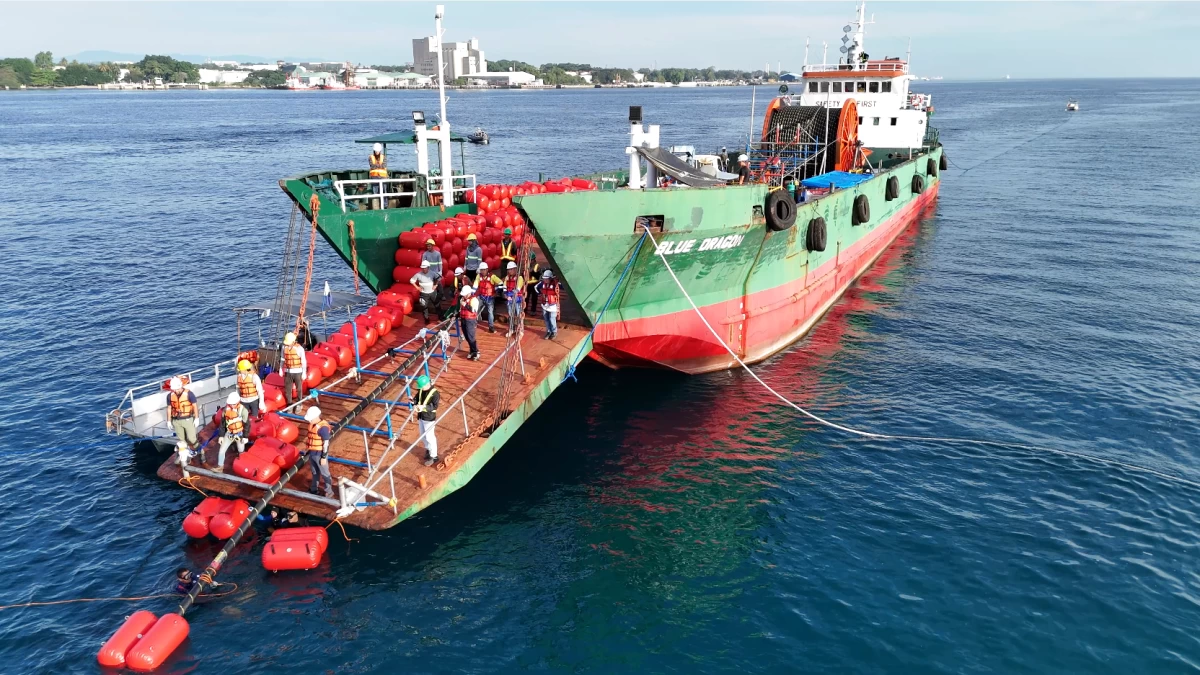
A team of technical experts and divers, led by Davao Light, initiates the long-awaited Davao-Samal power interconnection project—marking the official start of the island’s connection to the mainland grid.
The American Chamber of Commerce of the Philippines (AmCham) is pushing for reforms to make the new policy of the Bureau of Customs (BOC), which provides temporary relief to foreign cable-laying and repair vessels, more responsive to business demands.
In a statement on Friday, May 29, AmCham welcomed the issuance of Customs Administrative Order (CAO) No. 2-2026 as an important step in reducing procedural uncertainty involving international cable-laying and repair vessels (ICLRVs).
The business group said this would help improve the efficiency of customs processes for these highly specialized vessels that support the country’s digital resilience and connectivity to global markets.
Still, AmCham said the order needs some changes to “further strengthen clarity, consistency, and operational efficiency while preserving effective customs administration and regulatory oversight.”
For one, AmCham is pushing for the extension of the allowable short-term presence period of ICLRVs to 30 days, with an option to extend for an additional 30 days.
Under the CAO, vessels staying in the Philippines for not more than 15 days, extendible once for another 15 days, are no longer required to file a goods declaration.
AmCham said extending the allowable period is necessary for cable repair and installation operations, which are often highly time-sensitive, weather-dependent, and operationally complex.
The group noted that providing operators the necessary flexibility by exempting them from filing a goods declaration would “ensure uninterrupted and timely completion of critical works.”
AmCham is also calling for a more standardized approach to security requirements, particularly regarding the current requirement for proof of posting of a security equivalent to 100 percent of duties, taxes, and other charges.
Such a requirement is reportedly prone to creating valuation uncertainty, inconsistent application, and avoidable operational delays.
“A more clearly defined, capped, or standardized methodology would help promote predictability and efficient implementation,” the business group said.
Amid these proposed reforms, AmCham said the CAO is a major milestone in aligning the country’s customs procedures with the Customs Modernization and Tariff Act (CMTA), which was enacted back in 2016 to facilitate seamless trade, improve supply chains, and reduce opportunities for corruption.
The group added that this is also in line with international best practices, particularly in facilitating the timely installation, maintenance, and repair of submarine cables that are critical to the country’s digital infrastructure, economic competitiveness, and connectivity security.
“A more efficient and predictable regulatory environment for these operations will also help strengthen the Philippines’ competitiveness and attractiveness as an investment destination by reinforcing the country’s reliability as a regional digital and connectivity hub and supporting continued investment in digital infrastructure,” said AmCham. (Dexter Barro II)