







Tree cutting for SALEX done only as 'last resort'—DENR
By Jel Santos
Published May 28, 2026 01:19 pm


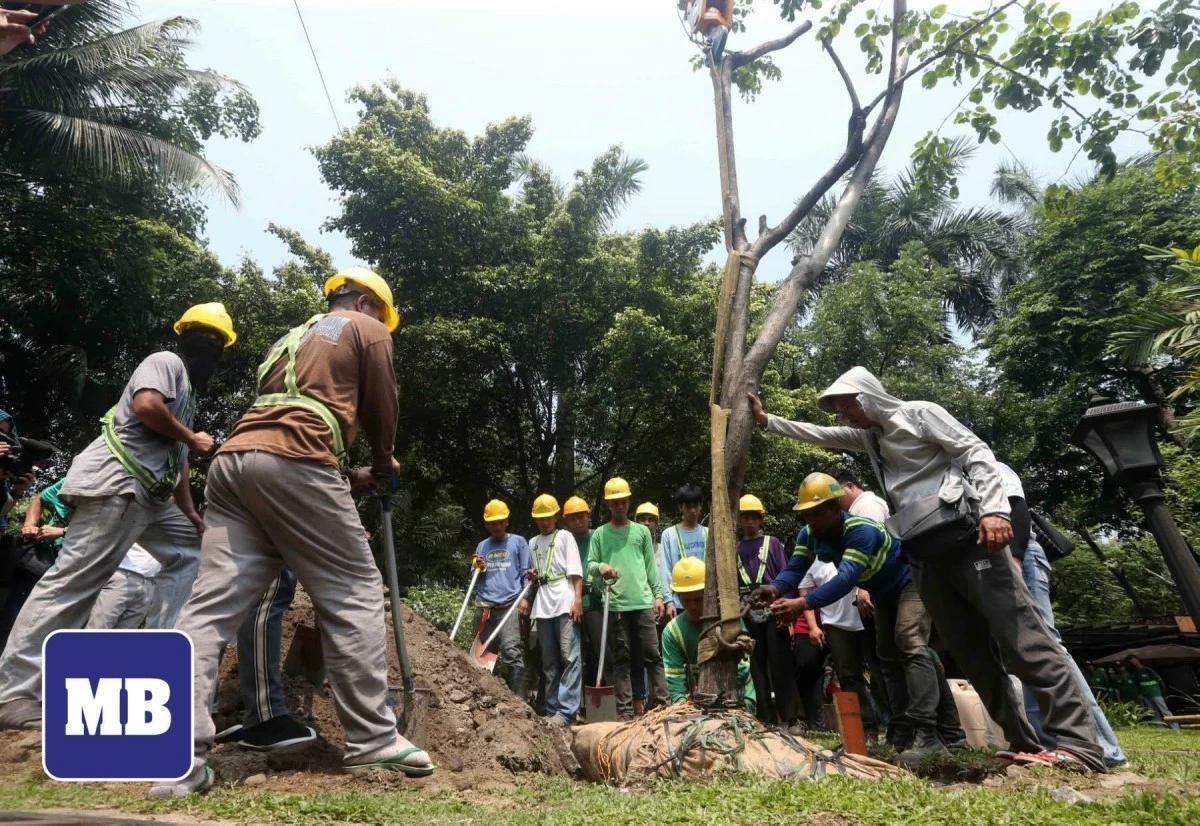
(MARK BALMORES/MB PHOTO)
The cutting of trees affected by the Southern Access Link Expressway (SALEX) Project was undertaken only as a “last resort” after mitigation and conservation measures had already been considered, the Department of Environment and Natural Resources (DENR) said on Thursday, May 28.
In DENR’s briefer, the agency said the SALEX project, a national government infrastructure undertaking, seeks to improve traffic mobility and connectivity in Metro Manila through a four-lane elevated roadway linking key transport corridors.
The project alignment traverses portions of Quirino Avenue from San Marcelino Street to Roxas Boulevard in Manila, with linkages to the Metro Manila Skyway Stage 3.
“After considering all these measures, tree cutting was undertaken only as a last resort, thereby ensuring that environmental safeguards were consistently prioritized throughout the project,” the DENR said.
Mitigation measures implemented
The DENR said the project applied a “mitigation hierarchy,” which included avoidance, minimization, restoration, and offsetting measures.
According to the agency, these included the implementation of the Environmental Compliance Certificate (ECC), environmental impact management and monitoring plans, as well as tree risk and hazard assessments.
The DENR also said healthy trees were subjected to earthballing or tree transplantation to reduce ecological damage.
“Earthballing of 94 healthy trees following specification under FMB Technical Bulletin No. 3,” the agency said.
Majority of affected trees are exotic species
The DENR said exotic tree species comprised 87 percent of the affected trees within the project footprint, while native species accounted for only 13 percent.
Among the most common exotic species identified were mahogany, fire tree, bo tree, neem tree, mango, fig, and auri.
Meanwhile, the leading native species included narra, dita, bignay, santol, and talisay.
“The subject area is predominantly composed of exotic species (87%), while only 13% are native species,” the DENR said.
“As fast-growing trees, the exotics have significantly contributed to canopy cover in the area,” it added.
Most trees found structurally compromised
Of the 617 trees assessed, the DENR said the most common conditions observed were cavities or decay in roots and base trunks, leaning or entanglement with wires, and dead, wilting, or deformed specimens.
“Only 65 trees (11%) were found to be healthy and structurally stable,” the agency reported.
As such, agency added that the most common tree conditions were caused by fungal infections, mechanical damage, nutrient deficiency, soil compaction, and urban stressors such as limited water availability and human activities.
“Exotic species dominate the site but show higher vulnerability, while native species, though fewer, demonstrate relatively better resilience,” it said.
Native species prioritized for conservation
The DENR said conservation efforts are focused on preserving native and fruit-bearing trees affected by the project.
According to the agency, 40 trees have already been replanted in Intramuros and the Hidden Garden, including narra, atis, duhat, mango, langka, sampalok, santol, and suha.
It added that 54 more trees remain for replanting.
“To further strengthen biodiversity corridors throughout the region, native species are being prioritized for planting in parks, greenways and open spaces,” the DENR said.
As part of the replacement strategy, the agency said 50,700 native seedlings will be planted across Metro Manila to help restore ecological balance and improve urban resilience.