ADVERTISEMENT

Strong El Niño may slash Philippine rice output by 700,000 MT

Published May 28, 2026 04:11 pm
(Unsplash)
(Unsplash)

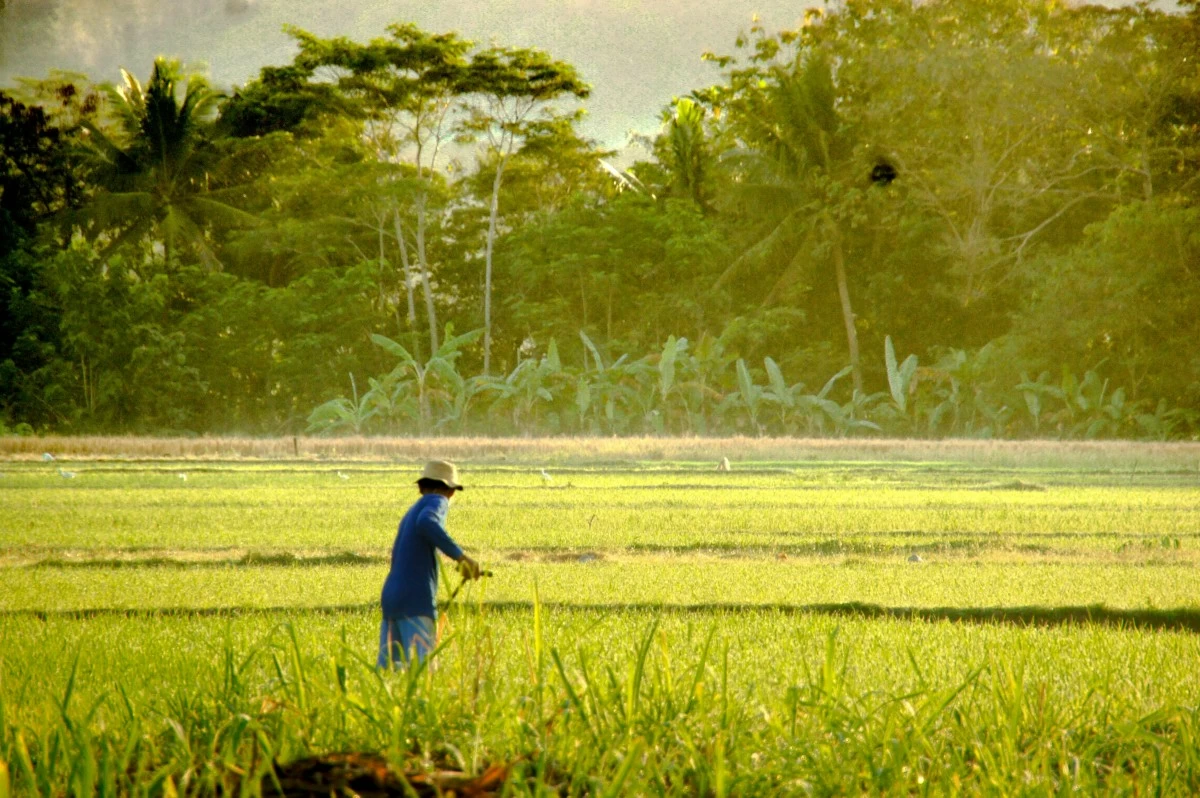
The Philippines stands to lose as much as 700,000 metric tons (MT) in rice output this year under a scenario in which a strong El Niño phenomenon wreaks havoc on local production, according to the Department of Agriculture (DA).

The DA noted that the expected loss in rice production is equivalent to around 3.5 percent of this year’s annual production target of 19.87 million MT, which is already lower than its initial target of 20.3 million MT.

If this projection holds, it would mean that this year’s rice production would decline by 2.6 percent from last year’s total output of 19.87 million MT, signaling “serious risks for the nation’s food security,” the DA said.

The agency attributed the potential decline in rice production to the likelihood of a prolonged dry spell in the second half of the year due to an extreme El Niño.

Citing data from the country’s weather bureau, the Philippine Atmospheric, Geophysical, and Astronomical Services Administration (PAGASA), the DA said there is a 92-percent probability of a moderate to strong El Niño in the fourth quarter of the year that may extend into early 2027.

To counter the potential impact, Agriculture Secretary Francisco Tiu Laurel Jr. has reconvened the DA’s El Niño task force to prepare the sector for the adverse weather phenomenon.

“It is imperative that we put in place interventions that mitigate the impact of El Niño on agriculture, the livelihoods of farmers, fisherfolk, and others in the value chain, as well as its adverse effects on food supply, prices, and consumers,” the DA chief said in a statement.

So far, the DA has already rolled out proactive measures such as cloud seeding, deployment of solar-powered irrigation systems, and crop diversification programs to equip farmers with the capacity to respond to the impending threat.

According to the DA, these efforts are critical to protect not only rice production but also the entire agricultural sector, especially since the recent El Niño in 2024 inflicted a record ₱57.78 billion in agricultural losses.

“Without timely intervention, reduced farm output could trigger higher food prices, supply chain disruptions, and added pressure on low-income households,” the agency said.

The latest Philippine Statistics Authority (PSA) data showed that rice production from January to March declined by six percent to 4.4 million MT from 4.7 million MT a year ago, driven largely by the impact of typhoons in the latter part of 2025.

This downturn largely contributed to the 0.3-percent contraction in the overall value of the country’s agriculture and fisheries production in the first quarter to ₱437.52 billion from ₱438.65 billion last year.

Related Tags

Department of Agriculture (DA) rice production El Niño
ADVERTISEMENT
.most-popular .layout-ratio{ padding-bottom: 79.13%; } @media (min-width: 768px) and (max-width: 1024px) { .widget-title { font-size: 15px !important; } }

{{ articles_filter_1561_widget.title }}

.most-popular .layout-ratio{ padding-bottom: 79.13%; } @media (min-width: 768px) and (max-width: 1024px) { .widget-title { font-size: 15px !important; } }

{{ static_articles_1562_widget.title }}

.most-popular .layout-ratio{ padding-bottom: 79.13%; } @media (min-width: 768px) and (max-width: 1024px) { .widget-title { font-size: 15px !important; } }

{{ articles_filter_1563_widget.title }}

{{ articles_filter_1564_widget.title }}

.mb-article-details { position: relative; } .mb-article-details .article-body-preview, .mb-article-details .article-body-summary{ font-size: 17px; line-height: 30px; font-family: "Libre Caslon Text", serif; color: #000; } .mb-article-details .article-body-preview iframe , .mb-article-details .article-body-summary iframe{ width: 100%; margin: auto; } .read-more-background { background: linear-gradient(180deg, color(display-p3 1.000 1.000 1.000 / 0) 13.75%, color(display-p3 1.000 1.000 1.000 / 0.8) 30.79%, color(display-p3 1.000 1.000 1.000) 72.5%); position: absolute; height: 200px; width: 100%; bottom: 0; display: flex; justify-content: center; align-items: center; padding: 0; } .read-more-background a{ color: #000; } .read-more-btn { padding: 17px 45px; font-family: Inter; font-weight: 700; font-size: 18px; line-height: 16px; text-align: center; vertical-align: middle; border: 1px solid black; background-color: white; } .hidden { display: none; }
function initializeAllSwipers() { // Get all hidden inputs with cms_article_id document.querySelectorAll('[id^="cms_article_id_"]').forEach(function (input) { const cmsArticleId = input.value; const articleSelector = '#article-' + cmsArticleId + ' .body_images'; const swiperElement = document.querySelector(articleSelector); if (swiperElement && !swiperElement.classList.contains('swiper-initialized')) { new Swiper(articleSelector, { loop: true, pagination: false, navigation: { nextEl: '#article-' + cmsArticleId + ' .swiper-button-next', prevEl: '#article-' + cmsArticleId + ' .swiper-button-prev', }, }); } }); } setTimeout(initializeAllSwipers, 3000); const intersectionObserver = new IntersectionObserver( (entries) => { entries.forEach((entry) => { if (entry.isIntersecting) { const newUrl = entry.target.getAttribute("data-url"); if (newUrl) { history.pushState(null, null, newUrl); let article = entry.target; // Extract metadata const author = article.querySelector('.author-section').textContent.replace('By', '').trim(); const section = article.querySelector('.section-info ').textContent.replace(' ', ' '); const title = article.querySelector('.article-title h1').textContent; // Parse URL for Chartbeat path format const parsedUrl = new URL(newUrl, window.location.origin); const cleanUrl = parsedUrl.host + parsedUrl.pathname; // Update Chartbeat configuration if (typeof window._sf_async_config !== 'undefined') { window._sf_async_config.path = cleanUrl; window._sf_async_config.sections = section; window._sf_async_config.authors = author; } // Track virtual page view with Chartbeat if (typeof pSUPERFLY !== 'undefined' && typeof pSUPERFLY.virtualPage === 'function') { try { pSUPERFLY.virtualPage({ path: cleanUrl, title: title, sections: section, authors: author }); } catch (error) { console.error('ping error', error); } } // Optional: Update document title if (title && title !== document.title) { document.title = title; } } } }); }, { threshold: 0.1 } ); function showArticleBody(button) { const article = button.closest("article"); const summary = article.querySelector(".article-body-summary"); const body = article.querySelector(".article-body-preview"); const readMoreSection = article.querySelector(".read-more-background"); // Hide summary and read-more section summary.style.display = "none"; readMoreSection.style.display = "none"; // Show the full article body body.classList.remove("hidden"); } document.addEventListener("DOMContentLoaded", () => { let loadCount = 0; // Track how many times articles are loaded const offset = [1, 2, 3, 4, 5, 6, 7, 8, 9, 10]; // Offset values const currentUrl = window.location.pathname.substring(1); let isLoading = false; // Prevent multiple calls if (!currentUrl) { console.log("Current URL is invalid."); return; } const sentinel = document.getElementById("load-more-sentinel"); if (!sentinel) { console.log("Sentinel element not found."); return; } function isSentinelVisible() { const rect = sentinel.getBoundingClientRect(); return ( rect.top < window.innerHeight && rect.bottom >= 0 ); } function onScroll() { if (isLoading) return; if (isSentinelVisible()) { if (loadCount >= offset.length) { console.log("Maximum load attempts reached."); window.removeEventListener("scroll", onScroll); return; } isLoading = true; const currentOffset = offset[loadCount]; window.loadMoreItems().then(() => { let article = document.querySelector('#widget_1690 > div:nth-last-of-type(2) article'); intersectionObserver.observe(article) loadCount++; }).catch(error => { console.error("Error loading more items:", error); }).finally(() => { isLoading = false; }); } } window.addEventListener("scroll", onScroll); });

Sign up by email to receive news.