






 Philippines
National
Legarda joins Manila school visit, cites ARAL Program's role in helping students
Philippines
National
Legarda joins Manila school visit, cites ARAL Program's role in helping students
Legarda joins Manila school visit, cites ARAL Program's role in helping students


At A Glance
- Senate President Pro Tempore Loren Legarda said the ARAL Program is crucial because it gives children who struggle in reading, math, and science a fair chance to recover and succeed.
- Established under Republic Act No. 12028, the ARAL Program, which was signed into law on Oct. 16, 2024, provides targeted support for learners struggling in reading, mathematics, and science through tutorial sessions, learner-centered intervention plans, accessible delivery modes, trained tutors, and holistic learner support mechanisms.
Senate President Pro Tempore Loren Legarda joined the site visit to Senator Benigno S. Aquino, Jr. Elementary School and President Corazon C. Aquino High School in Baseco, Manila on May 26, 2026 to observe how the Academic Recovery and Accessible Learning (ARAL) Program is being implemented in classrooms.
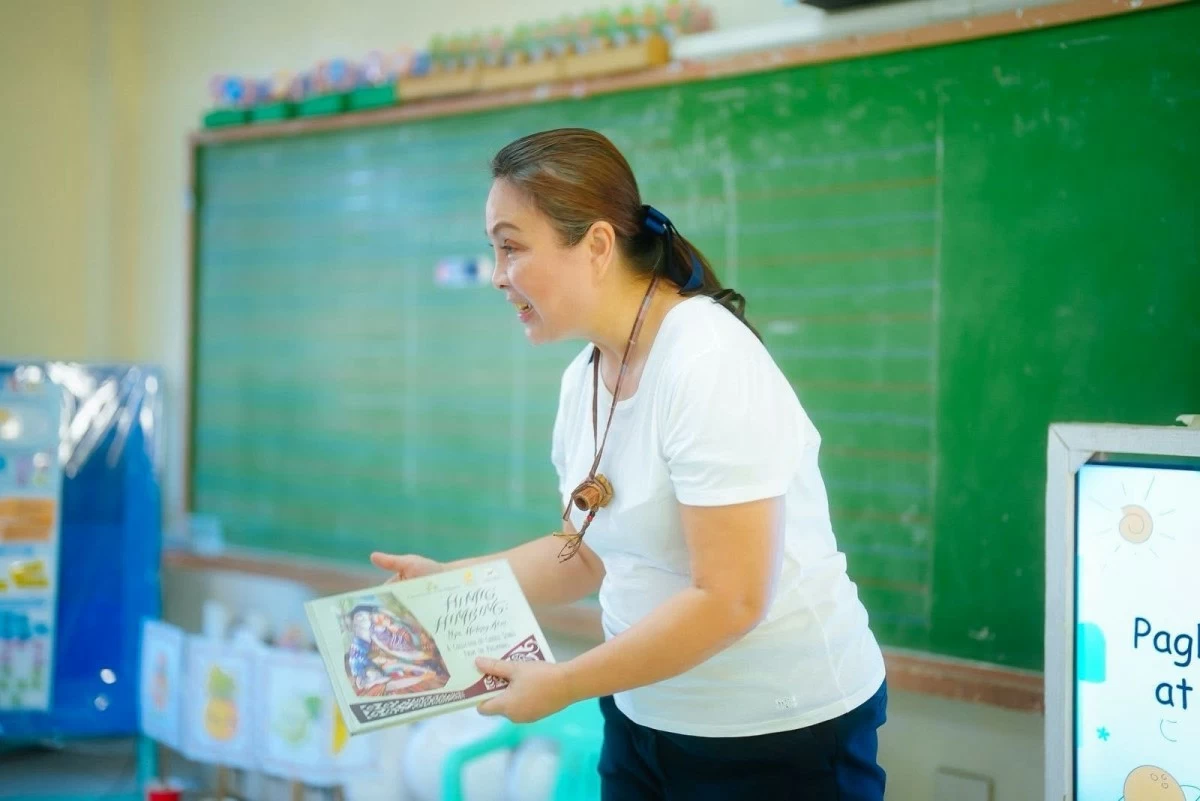
Having been elected as chairperson of the Senate Committee on Basic Education and Co-Chairperson of the Second Congressional Commission on Education (EDCOM II), Legarda said she wants to see firsthand how education policies are being felt by learners inside the classroom.
“The ARAL Program is crucial because it gives children who struggle in reading, math, and science a fair chance to recover and succeed. Every hour of teaching can change the course of their future,” Legarda said.
Established under Republic Act No. 12028, the ARAL Program, which Legarda co-authored and signed into law on Oct. 16, 2024, provides targeted support for learners struggling in reading, mathematics, and science through tutorial sessions, learner-centered intervention plans, accessible delivery modes, trained tutors, and holistic learner support mechanisms.
The Department of Education’s (DepEd) Order No. 010, s. 2026 operationalizes these interventions through ARAL Summer Reading, ARAL Summer Mathematics, and Senior High School Remediation Programs.
During observation tour, Legarda noted elementary and secondary classes under the ARAL Summer Reading and Remediation Programs, are focusing on classroom environments, learning resources, and teaching strategies.
“The most important guidance for us comes from the voices of parents, teachers, and the learners themselves. Their experiences with ARAL will help us refine the program and make it more effective,” Legarda said.
Citing EDCOM II data, the senator pointed to the scale of the literacy challenge in the Philippines, where many learners remain unable to read by Grade 3.
Across grade levels, one in four students struggles with reading. In Key Stage 3 covering Grades 7 to 10, more than 80 percent of learners fall behind.
Even more concerning, Legarda said, is that data for Grade 11 showed that 87 percent of students were not independent readers, highlighting that these figures reflect an education crisis that requires urgent action.
During the site visit, the senator also delivered a lecture to students on Republic Act No. 9003, the Ecological Solid Waste Management Act of 2000, which she authored and principally sponsored.
She highlighted the importance of proper waste segregation and responsible disposal of garbage, noting that ecological awareness cultivated in schools equips learners with both academic skills and a lasting commitment to environmental stewardship.
The site visit ended with a plenary discussion facilitated by EDCOM II, reaffirming its mandate to recommend transformative reforms that will strengthen the country’s education and ensure global competitiveness.