






Manila Bulletin
 Philippines
National
'Ano ba naman 'yan': Hontiveros rejects Padilla's claim on force majeure
Philippines
National
'Ano ba naman 'yan': Hontiveros rejects Padilla's claim on force majeure
Philippines
National
'Ano ba naman 'yan': Hontiveros rejects Padilla's claim on force majeure
'Ano ba naman 'yan': Hontiveros rejects Padilla's claim on force majeure
By Dhel Nazario
Published May 28, 2026 11:10 am
|
Updated May 28, 2026 01:25 pm


At A Glance
- Senator Risa Hontiveros rejected Senator Robin Padilla's argument that global conflicts, terrorism threats, and climate-related risks qualify as "force majeure" situations that justify virtual Senate attendance.
- Hontiveros said lawmakers should physically attend Senate sessions, especially as many pending measures affecting Filipinos remain unresolved.
- Padilla cited the Middle East conflict, possible China-Taiwan tensions, and looming severe El Niño conditions as examples of circumstances that could warrant online Senate work under Senate rules.
Senator Risa Hontiveros on Thursday, May 28, rejected claims by Senator Robin Padilla that global tensions and looming climate threats could justify the Senate’s continued use of virtual attendance.
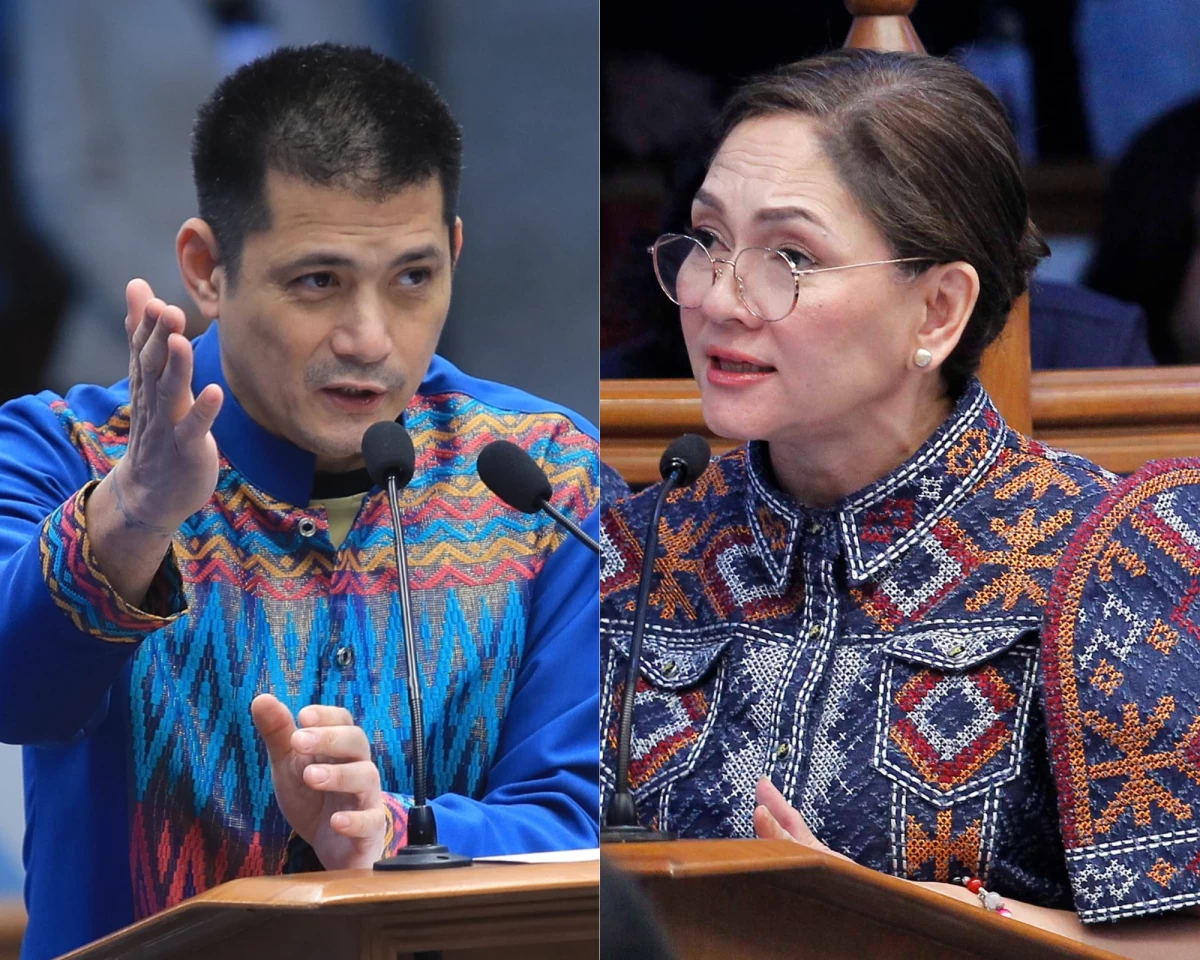
Senators Robin Padilla and Risa Hontiveros (Senate PRIB and MB file photo)
In a television interview on Unang Hirit, Hontiveros stated that lawmakers should instead report physically to work amid pressing national concerns.
Hontiveros made the remarks in response to Padilla’s social media posts defending the interpretation of “force majeure”, wherein he cited war in the Middle East, terrorism threats, the possible spillover of a China-Taiwan conflict, and the threat of a severe El Niño phenomenon as circumstances that could warrant online participation in Senate sessions.
“Ano ba naman iyan. I mean with all due respect hindi po 'yan mga force majeure (What is that supposed to be? I mean, with all due respect, those are not force majeure events),” Hontiveros said.
She stressed that conflicts abroad and climate-related threats are not new issues and should not prevent senators from carrying out their duties in person.
“Yung giyera sa Middle East, 'yan po ay nangyayari sa mga mamamayan doon sa ibang rehiyon pa precisely sa Middle East, at yung epektong oil crisis na 'yan sa ating mga kababayan, 'yan na nga ang dahilan na dapat physically pumapasok kami at ginagawa ang aming trabaho (The war in the Middle East is happening among the people in that region, precisely in the Middle East.) But the resulting oil crisis that affects our fellow citizens here is exactly the reason why we must physically report to work and carry out our duties),” she said.
The senator also criticized what she described as the Senate’s prolonged focus on internal political disputes instead of pending legislation.
Padilla's recent posts state that “force majeure” covers events beyond the control of parties involved, including natural disasters, war, terrorism, labor unrest, and government actions such as lockdowns. In another post, he asked whether the ongoing war in the Middle East and the possibility of the Philippines being drawn into tensions involving China and Taiwan could be considered force majeure situations.
Hontiveros, however, maintained that such threats have long existed and do not justify shifting Senate work online.
“Ang kinatatakutang hidwaan ng Tsina at Taiwan medyo matagal-tagal nang banta iyan, di naman namin kinailangan na mag-online work (The feared conflict between China and Taiwan has long been a threat, yet we never needed to shift to online work),” she said.
“At yung global warming at saka climate change, antagal na rin, yan ay kasama sa issues na dapat namin trabahuin in person (Global warming and climate change are longstanding concerns that require our physical presence),” she added.
Hontiveros has previously stated that under Senate rules, virtual attendance is only allowed during instances of force majeure or a national emergency, conditions she said no longer apply now that the COVID-19 pandemic has ended.