







Tolentino's test: Balancing workers' interest and economic survival
Published May 27, 2026 12:05 am
|
Updated May 26, 2026 05:34 pm


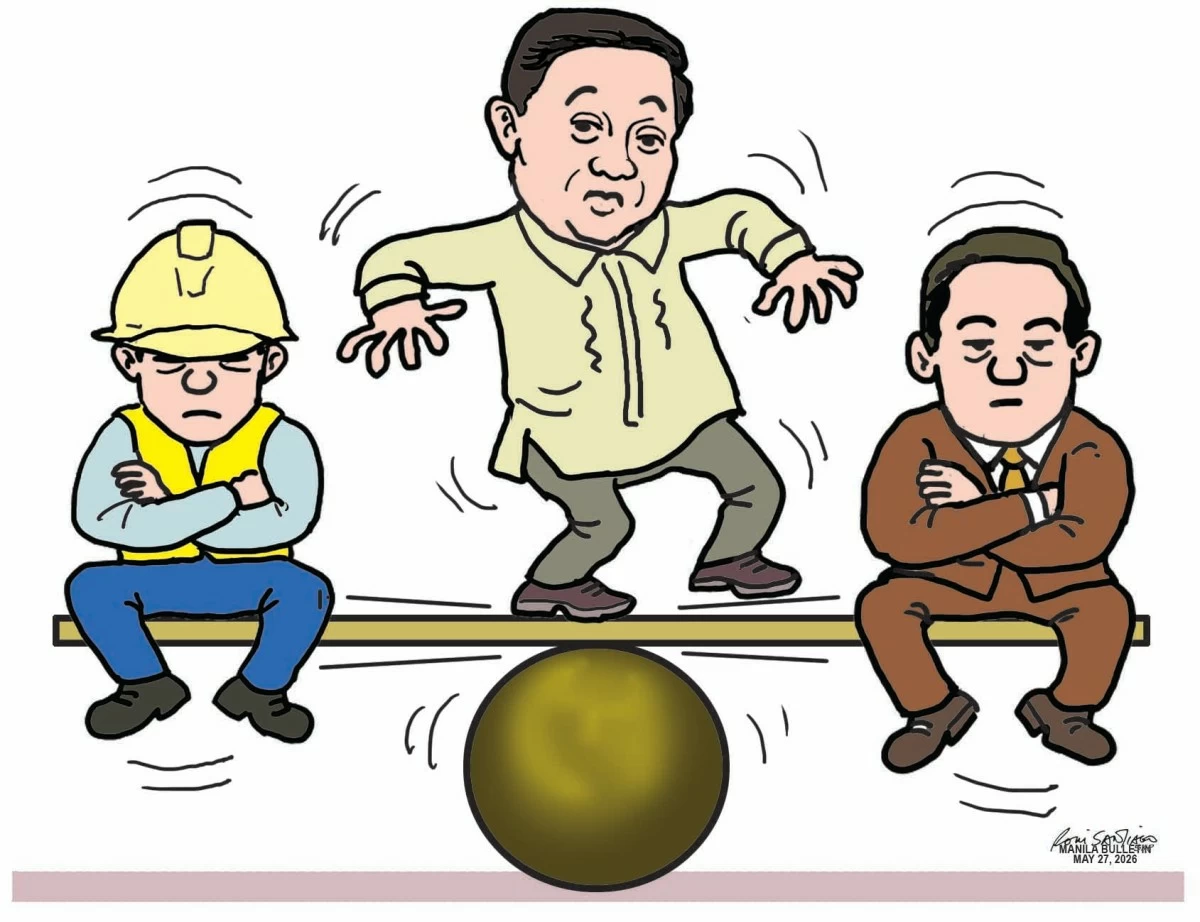
The appointment of Francis Tolentino as Secretary of the Department of Labor and Employment (DOLE) comes at a crucial moment for the Philippine labor sector. Inflation continues to erode household incomes, workers are demanding higher wages, businesses fear rising operational costs, and technological disruption threatens traditional jobs. At the center of these competing pressures now stands a man whose greatest challenge will not be proving his legal brilliance, but proving whether the government can serve as a fair arbiter between labor and capital.
Tolentino’s credentials are undeniably impressive. He possesses extensive legal training, including advanced studies abroad, and is admitted to both the Philippine and New York State bars. His years as mayor of Tagaytay City exposed him to grassroots economic realities, while his leadership of the Metropolitan Manila Development Authority demonstrated his ability to manage competing public interests under pressure. His experience in the Senate, particularly in labor-related policymaking, further gives him insight into the complex relationship between workers, employers, and the state.
At DOLE, he’s treading in a battlefield of survival.
Workers fear low wages, contractual insecurity, and declining purchasing power. Employers fear that excessive regulation and sweeping wage mandates could cripple businesses, discourage investments, and trigger layoffs. Under this situation, a labor secretary who blindly sides with one sector risks damaging the other. The challenge is not choosing between labor and business, but ensuring that neither collapses for the other to survive.
To attain this, Tolentino must resist simplistic solutions. Legislated nationwide wage hikes may appear compassionate and politically attractive, but wage policies detached from economic realities can become self-defeating. Many Micro, Small, and Medium Enterprises already operate on fragile margins. Abrupt increases in labor costs may force some businesses to reduce hiring, automate prematurely, or shut down entirely.
At the same time, the government cannot ignore the legitimate frustrations of Filipino workers whose salaries no longer keep pace with rising prices. Millions remain employed yet economically trapped. The growing demand for higher wages reflects not greed, but exhaustion from working harder while falling further behind.
The solution lies not in ideological extremes, but in smarter labor governance.
Tolentino should maximize the role of Regional Tripartite Wages and Productivity Boards instead of relying solely on blanket legislated wage increases. Regionalized wage-setting recognizes that economic conditions differ around the country and allows compensation adjustments that reflect local realities while protecting both workers and enterprise sustainability.
Equally important is restoring trust in tripartite dialogue among labor groups, employers, and government. Industrial disputes worsen when communication collapses. By strengthening negotiation mechanisms, DOLE can encourage compromise before conflicts escalate into strikes, closures, or mass layoffs.
Beyond wage debates, however, the long-term future of labor depends on productivity and skills development. Sustainable wage growth cannot rely entirely on mandates; it must also come from creating a workforce capable of generating higher economic value. Through stronger partnerships with training institutions and private industries, DOLE can help prepare Filipino workers for technology-driven and high-value sectors.
Tolentino must also embrace a “flexi-security” approach that balances business adaptability with worker protection. Companies need flexibility to survive global competition and digital transformation, but workers must not bear all the risks alone. Stronger unemployment assistance, retraining programs, and social safety nets are essential to making labor reforms humane and sustainable.
Ultimately, the deeper question confronting Tolentino is whether economic growth can still translate into genuine improvement in workers’ lives. Businesses cannot thrive amid widespread insecurity and labor unrest. But workers cannot prosper if businesses collapse under unsustainable pressures.
The new Labor secretary now faces the difficult task of proving that protecting workers and sustaining economic growth are interconnected responsibilities. His success at DOLE will depend on whether he can build a labor system that values both dignity and economic survival equally.