ADVERTISEMENT

PIDS study highlights a widening housing gap in Metro Manila

The government policy think tank flags the uneven access to shelter in Metro Manila

Published May 27, 2026 05:35 pm
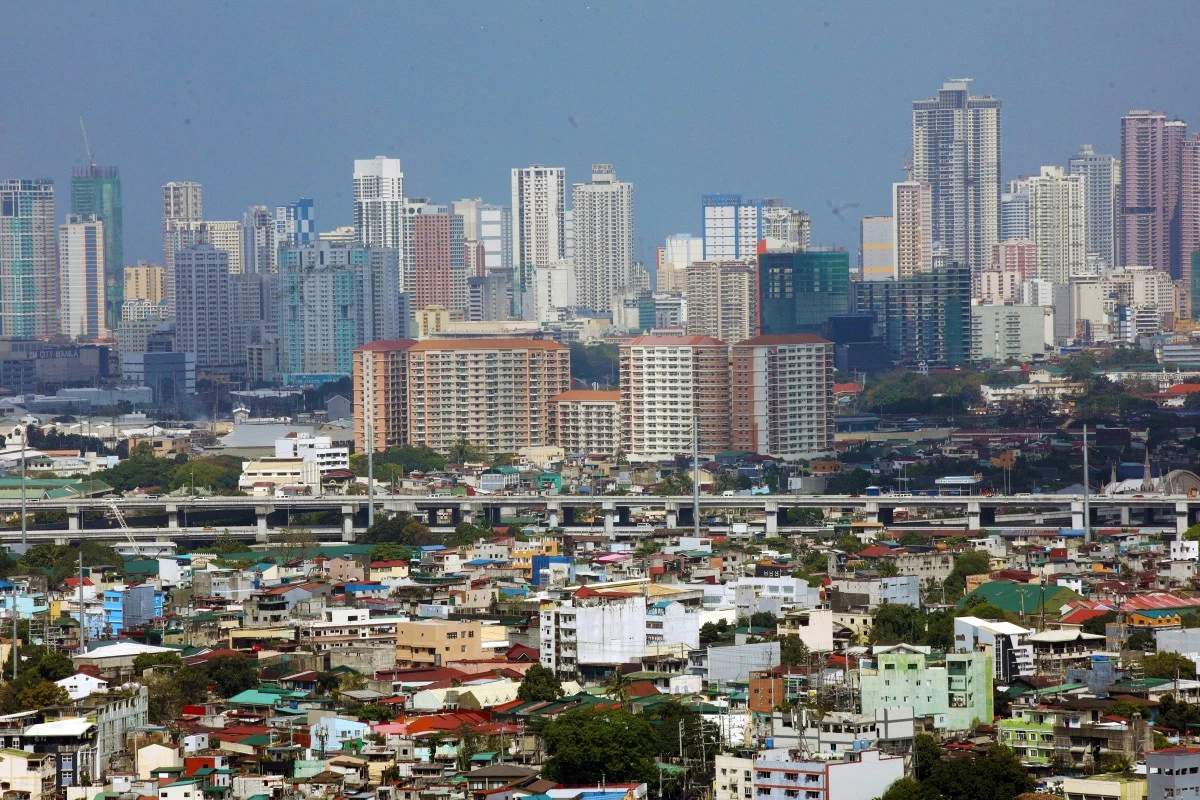
Makati City skyline (Photo: PNA)
A study released by the Philippine Institute of Development Studies (PIDS) found that urban revitalization strategies are transforming Metro Manila's landscape and have implications for housing adequacy. The study also revealed the mismatch between the demand for housing in Metro Manila and the supply in neighboring provinces, which “indicates a gap between urban growth and housing affordability."
In their study “Urban Revitalization and Shelter Inadequacy: A Geospatial Analysis,” PIDS researchers Jenica Ancheta, Marife Ballesteros, and Tatum Ramos tracked how Metro Manila’s urban landscape has changed in the span of three decades. Using geospatial and statistical analyses, the researchers integrated geographic information system-based mapping and demographic data to trace patterns of housing growth, land value changes, and spatial inequities associated with upzoning and urban renewal in Metro Manila.
The study on revitalization finds a rise in high-density, mixed-use developments and increases in land values. While these projects raised housing standards and increased the overall supply, PIDS researchers warn that these gains are spatially uneven, as affordable housing continues to be pushed to peripheral areas.
The study also showed that residential development “increased significantly and improved quality” between 1990 and 2020, with the fastest changes occurring in the last two decades as revitalization efforts accelerated alongside economic growth. They also identified a multicenter pattern of growth, with new residential and commercial clusters emerging in the southern and northern parts of Metro Manila.
In revitalized districts, land values have increased by 500–600 percent, on average, within a three-kilometer radius, with increases within a one-kilometer buffer even more immense. These rising zonal values, they explain, “reflect not only asset creation in these areas but also the inequality between low-income communities and those living within a two-kilometer radius of revitalized areas."
While revitalization improved housing quality and expanded the residential stock, the supply of affordable housing remains concentrated in peripheral regions, reinforcing spatial inequalities and gentrification pressures.
These dynamics have contributed to the outward movement of affordable housing. Rising land prices push low-income households farther from city centers, as evidenced by the locations of new housing projects.
According to PIDS researchers, “most economic and socialized housing projects continue to be built outside Metro Manila, particularly in the adjacent provinces of Regions III and IV-A.” At the same time, new construction in the capital is dominated by residential and commercial condominium projects that “usually cater to higher income groups."
They also note that “improving road infrastructure leading to Metro Manila will not address housing affordability, as improved access to city centers also accelerates the urbanization of peripheral areas, pushing affordable housing ever further outward.”
Moreover, the authors also indicated market dualism, “whereby a housing market in poor or undeveloped settlements coexists with a speculative market from business development firms."
In its conclusion, the study underscored the need for inclusive urban planning through policies such as inclusionary mixed-income zoning, transit-oriented development, and community land trust strategies that promote equitable urban growth.
The studies also suggested to compel the government to act on the housing crisis by looking at how where people live and their housing struggles affect their health and financial well-being, measuring how much money and value are created when the government builds new infrastructure in an area, and examining how growing cities create wealth, and how that wealth, in turn, shapes the future of those cities and the surrounding areas.

Related Tags

PIDS housing Metro Manila
ADVERTISEMENT
.most-popular .layout-ratio{ padding-bottom: 79.13%; } @media (min-width: 768px) and (max-width: 1024px) { .widget-title { font-size: 15px !important; } }

{{ articles_filter_1561_widget.title }}

.most-popular .layout-ratio{ padding-bottom: 79.13%; } @media (min-width: 768px) and (max-width: 1024px) { .widget-title { font-size: 15px !important; } }

{{ articles_filter_1562_widget.title }}

.most-popular .layout-ratio{ padding-bottom: 79.13%; } @media (min-width: 768px) and (max-width: 1024px) { .widget-title { font-size: 15px !important; } }

{{ articles_filter_1563_widget.title }}

{{ articles_filter_1564_widget.title }}

.mb-article-details { position: relative; } .mb-article-details .article-body-preview, .mb-article-details .article-body-summary{ font-size: 17px; line-height: 30px; font-family: "Libre Caslon Text", serif; color: #000; } .mb-article-details .article-body-preview iframe , .mb-article-details .article-body-summary iframe{ width: 100%; margin: auto; } .read-more-background { background: linear-gradient(180deg, color(display-p3 1.000 1.000 1.000 / 0) 13.75%, color(display-p3 1.000 1.000 1.000 / 0.8) 30.79%, color(display-p3 1.000 1.000 1.000) 72.5%); position: absolute; height: 200px; width: 100%; bottom: 0; display: flex; justify-content: center; align-items: center; padding: 0; } .read-more-background a{ color: #000; } .read-more-btn { padding: 17px 45px; font-family: Inter; font-weight: 700; font-size: 18px; line-height: 16px; text-align: center; vertical-align: middle; border: 1px solid black; background-color: white; } .hidden { display: none; }
function initializeAllSwipers() { // Get all hidden inputs with cms_article_id document.querySelectorAll('[id^="cms_article_id_"]').forEach(function (input) { const cmsArticleId = input.value; const articleSelector = '#article-' + cmsArticleId + ' .body_images'; const swiperElement = document.querySelector(articleSelector); if (swiperElement && !swiperElement.classList.contains('swiper-initialized')) { new Swiper(articleSelector, { loop: true, pagination: false, navigation: { nextEl: '#article-' + cmsArticleId + ' .swiper-button-next', prevEl: '#article-' + cmsArticleId + ' .swiper-button-prev', }, }); } }); } setTimeout(initializeAllSwipers, 3000); const intersectionObserver = new IntersectionObserver( (entries) => { entries.forEach((entry) => { if (entry.isIntersecting) { const newUrl = entry.target.getAttribute("data-url"); if (newUrl) { history.pushState(null, null, newUrl); let article = entry.target; // Extract metadata const author = article.querySelector('.author-section').textContent.replace('By', '').trim(); const section = article.querySelector('.section-info ').textContent.replace(' ', ' '); const title = article.querySelector('.article-title h1').textContent; // Parse URL for Chartbeat path format const parsedUrl = new URL(newUrl, window.location.origin); const cleanUrl = parsedUrl.host + parsedUrl.pathname; // Update Chartbeat configuration if (typeof window._sf_async_config !== 'undefined') { window._sf_async_config.path = cleanUrl; window._sf_async_config.sections = section; window._sf_async_config.authors = author; } // Track virtual page view with Chartbeat if (typeof pSUPERFLY !== 'undefined' && typeof pSUPERFLY.virtualPage === 'function') { try { pSUPERFLY.virtualPage({ path: cleanUrl, title: title, sections: section, authors: author }); } catch (error) { console.error('ping error', error); } } // Optional: Update document title if (title && title !== document.title) { document.title = title; } } } }); }, { threshold: 0.1 } ); function showArticleBody(button) { const article = button.closest("article"); const summary = article.querySelector(".article-body-summary"); const body = article.querySelector(".article-body-preview"); const readMoreSection = article.querySelector(".read-more-background"); // Hide summary and read-more section summary.style.display = "none"; readMoreSection.style.display = "none"; // Show the full article body body.classList.remove("hidden"); } document.addEventListener("DOMContentLoaded", () => { let loadCount = 0; // Track how many times articles are loaded const offset = [1, 2, 3, 4, 5, 6, 7, 8, 9, 10]; // Offset values const currentUrl = window.location.pathname.substring(1); let isLoading = false; // Prevent multiple calls if (!currentUrl) { console.log("Current URL is invalid."); return; } const sentinel = document.getElementById("load-more-sentinel"); if (!sentinel) { console.log("Sentinel element not found."); return; } function isSentinelVisible() { const rect = sentinel.getBoundingClientRect(); return ( rect.top < window.innerHeight && rect.bottom >= 0 ); } function onScroll() { if (isLoading) return; if (isSentinelVisible()) { if (loadCount >= offset.length) { console.log("Maximum load attempts reached."); window.removeEventListener("scroll", onScroll); return; } isLoading = true; const currentOffset = offset[loadCount]; window.loadMoreItems().then(() => { let article = document.querySelector('#widget_1690 > div:nth-last-of-type(2) article'); intersectionObserver.observe(article) loadCount++; }).catch(error => { console.error("Error loading more items:", error); }).finally(() => { isLoading = false; }); } } window.addEventListener("scroll", onScroll); });

Sign up by email to receive news.