






Manila Bulletin
 Philippines
National
'Personal presence dapat': House leaders sound off on proposed online participation among senators
Philippines
National
'Personal presence dapat': House leaders sound off on proposed online participation among senators
Philippines
National
'Personal presence dapat': House leaders sound off on proposed online participation among senators
'Personal presence dapat': House leaders sound off on proposed online participation among senators
Published May 27, 2026 11:51 pm


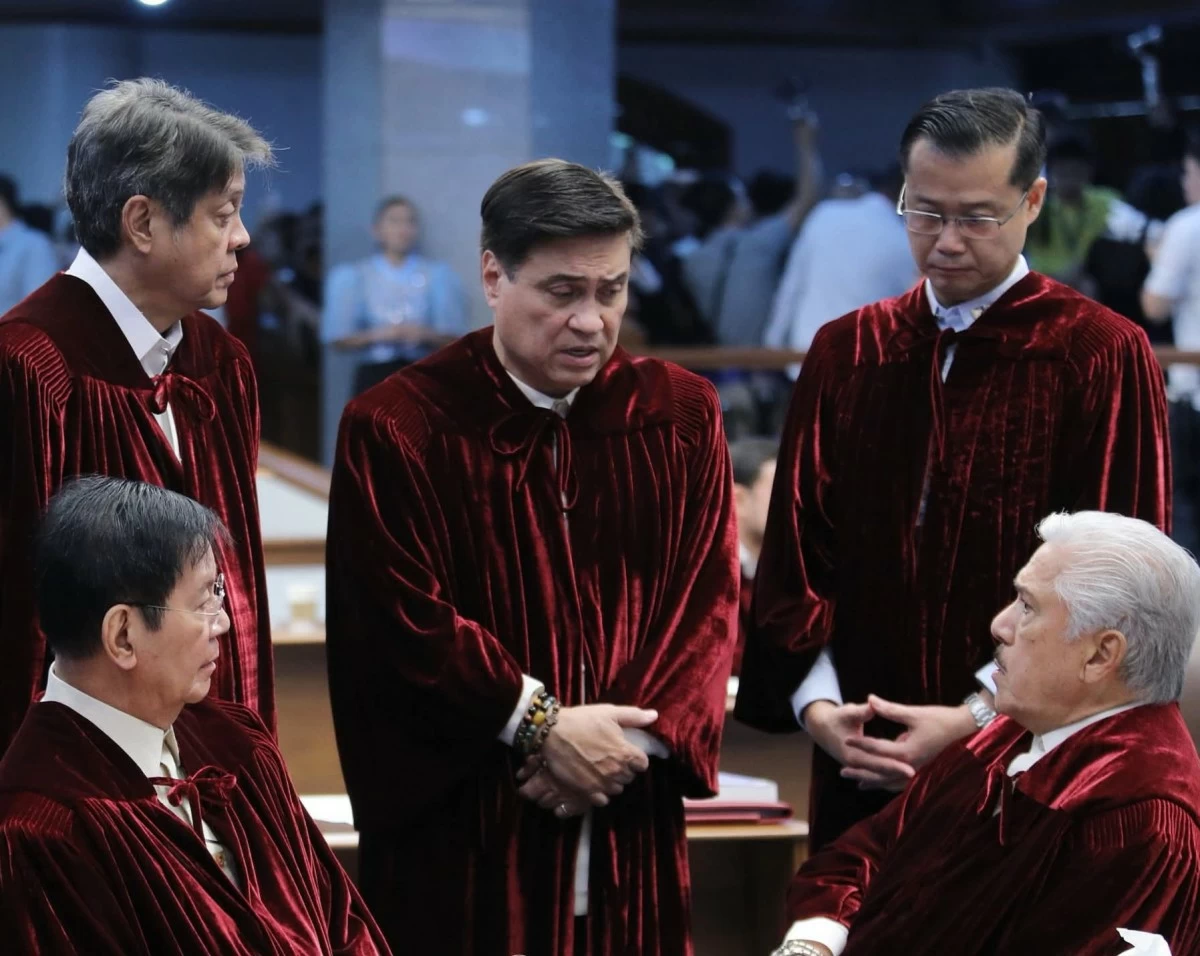
Members of the Senate minority bloc huddle as they wear their impeachment judge robes (Facebook)
Ranking House members have expressed their reservations about the online participation rule that's being pushed by the new Senate majority particularly in view of the upcoming Senate impeachment trial of Vice President Sara Duterte.
Giving their two cents on the matter Wednesday, May 27 are Lanao del Sur 1st district Rep. Zia Alonto Adiong, assistant majority leader; and Tingog Party-list Rep. Jude Acidre, chairman of the Committee on Higher and Technical Education.
“We fully respect the Senate as an independent institution, but we strongly believe that impeachment proceedings require personal presence, personal accountability and full attention from every senator-judge,” Adiong said in a statement.
Adiong, one of the spokespersons of the House prosecution panel, pointed out that there was no pandemic or extraordinary situation that would justify online participation on the part of the senators.
There was heated debate in Senate plenary Tuesday, May 26 after acting Majority Leader Joel Villanueva introduced a motion to consider an amendment proposed by Senator Rodante Marcoleta to allow senators to attend plenary sessions through teleconferencing.
The dispute led to a walkout by minority senators, resulting in a lack of quorum and the adjournment of the particular session.
Adiong thanked the 11-member Senate minority bloc, who opposed the proposed rule amendment, and said they did the right thing by protecting the integrity and solemnity of the upper chamber ahead of the impeachment trial.
The rule change was pushed after the Supreme Court (SC) rejected Senator Ronald “Bato” Dela Rosa’s plea to block his arrest in connection with an International Criminal Court (ICC) warrant for his participation in the Duterte drug war.
“The more critical level of participation is voting. Even in the House, voting online is not really encouraged,” Acidre said in an online interview.
For the party-list congressman from Leyte, physical presence is not a technical formality because senator-judges must hear, see, and weigh testimony in an impeachment trial.
“I think the role of a senator-judge, for that matter, requires full attention, probably even physical participation because when you’re a judge, you have to observe also the demeanor of the witnesses, the tone of the language, which I think would be impeded if one were to participate only online. I think the gravity of the role that they would have to play requires their physical presence,” Acidre explained.
Adiong agreed with Acidre in that physical attendance also helps preserve public trust in the process.
“Impeachment carries enormous constitutional and historical weight. Personal attendance reflects the seriousness, transparency and accountability expected from every senator-judge,” said the Midnanaoan.
A two-thirds vote or 16 out of the 24 senators is needed to convict the impeachment respondent, Duterte. The penalties include removal as Vice President and perpetual disqualification from holding public office.
It's a high-stakes vote, considering that Duterte has already bared her intention to run for president in 2028.
Acidre acknowledged that technology has changed the way institutions work, but he argued that impeachment belongs to a different category because it is a constitutional trial, not a routine legislative vote.
“Of course, we have to accept that the higher levels of technology have kind of changed the way we do work. But for a matter as grave and as important as the impeachment of the second highest official of the land, I think there is no substitute to physical presence, especially during the voting,” he said.