






Manila Bulletin
 Philippines
National
'Kontra-gutom': House grants 2nd reading passage to expanded feeding program bill
Philippines
National
'Kontra-gutom': House grants 2nd reading passage to expanded feeding program bill
Philippines
National
'Kontra-gutom': House grants 2nd reading passage to expanded feeding program bill
'Kontra-gutom': House grants 2nd reading passage to expanded feeding program bill
Published May 27, 2026 07:05 pm


At A Glance
- House approves on second reading HB No. 9466, expanding the government's feeding program to address hunger, malnutrition, and learning poverty among Filipino children from early childhood to senior high school.
- Bill strengthens nutrition framework by increasing feeding days, including vulnerable groups such as pregnant learners and children with disabilities, and integrating health, sanitation, and education support.
- Measure links nutrition to agriculture through a stronger milk feeding program and a requirement to source at least 30 percent of food products from local farmers and fisherfolk, aligning child nutrition with rural development and food security.
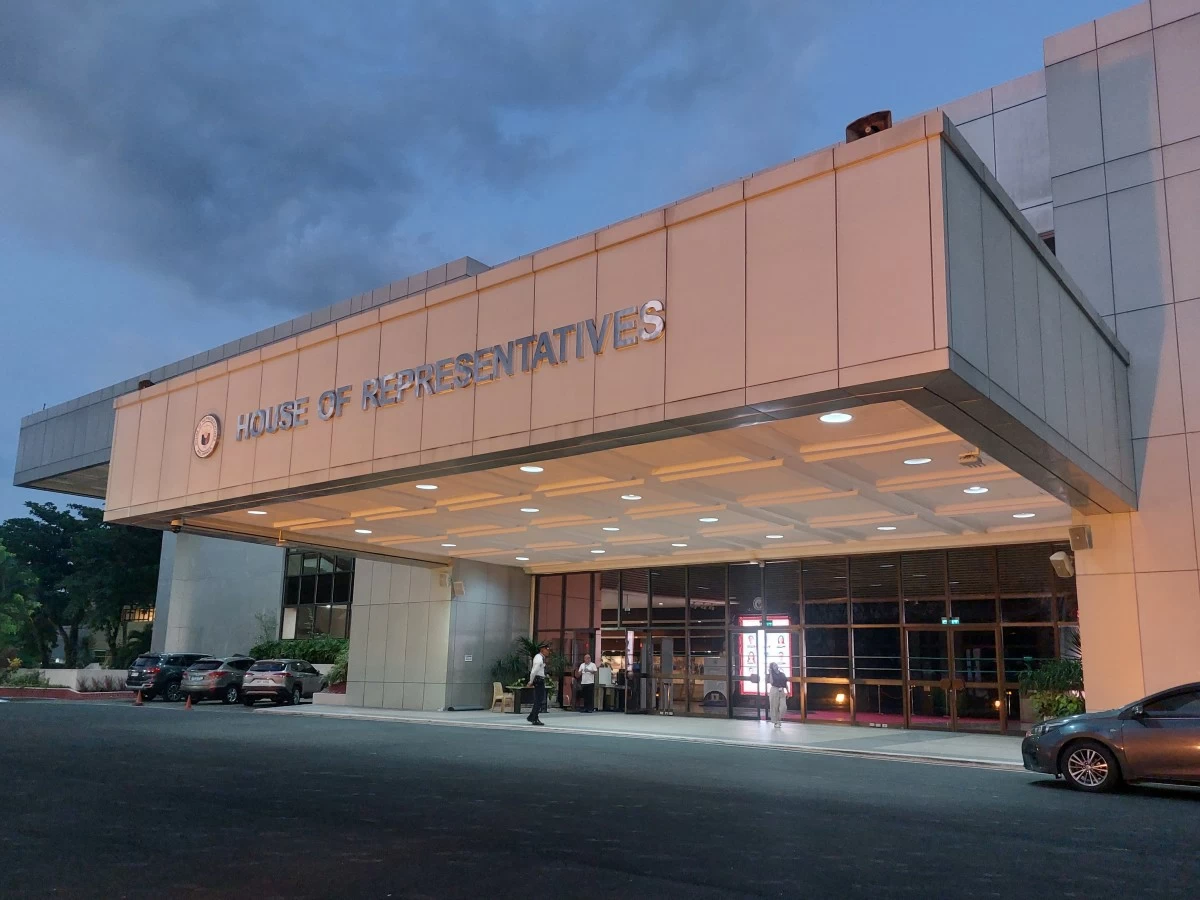
The House of Representatives (Ellson Quismorio/MANILA BULLETIN)
The measure seeking to expand the government’s existing feeding program into an initiative that addresses hunger, malnutrition, and learning poverty among Filipino children has been approved on second reading in the House of Representatives.
Gaining penultimate passage via simple voice vote (ayes vs. nayes) during the marathon plenary session on Tuesday, May 26 was House Bill (HB) No. 9466.
Supported by House Speaker Isabela 6th district Rep. Faustino "Bojie" Dy III and Majority Leader Ilocos Norte 1st district Rep. Sandro Marcos, the bill seeks to tweak Republic Act (RA) No. 11037 or the “Masustansyang Pagkain Para sa Batang Pilipino Act” by widening feeding coverage from early childhood to senior high school, while strengthening nutrition, health and agricultural support systems.
The measure was principally authored by Speaker Dy and Committee on Basic Education and Culture chairman, Pasig City lone district Rep. Roman Romulo. Some 86 other House lawmakers listed up as co-authors.
Sponsoring the measure on the plenary floor, Romulo said the proposal recognizes nutrition as central to education and national development.
“At the heart of this measure is a simple but urgent reality: hunger and undernutrition remain among the gravest barriers to learning, development, and productivity among Filipino children,” Romulo said.
“For many of our learners, especially those in vulnerable communities, the classroom is difficult to navigate on an empty stomach. A child who is hungry cannot concentrate. A child who is undernourished struggles to grow, to learn, and to thrive,” he added.
Under the bill, the school-based feeding program of the Department of Education (DepEd) would be expanded to cover all public school learners from Kindergarten to Grade 3, as well as undernourished learners from Grades 4 to 12.
Feeding days would also increase from 120 to 200 days yearly.
The proposal also includes nutritionally-at-risk pregnant learners, children with disabilities, indigenous learners and other vulnerable sectors among the beneficiaries of the program.
Romulo stressed that the measure goes beyond providing meals and instead adopts a broader nutrition-centered framework.
“This measure recognizes that nutrition is not a one-time intervention. It is a continuing, integrated, and multi-sectoral responsibility,” he said.
“That is why this bill expands the current feeding program into a broader nutrition-centered framework that addresses not only caloric intake, but also micronutrient deficiencies, food quality, child development, maternal nutrition, sanitation, health education, and local food sustainability,” he added.
The measure also institutionalizes a stronger milk feeding program led by the Department of Agriculture through the National Dairy Authority while prioritizing locally produced fresh milk and products sourced from Filipino dairy farmers and cooperatives.
By linking the nutrition program with local agriculture, the bill also requires that at least 30 percent of agricultural and fishery products used in the program be sourced directly from local farmers and fisherfolk, particularly small-scale producers.
“This is not merely a feeding program. It is also an economic intervention that uplifts rural communities and strengthens food security,” Romulo said.
“In doing so, the measure aligns nutrition policy with agricultural sustainability and local economic development,” he added.
The bill likewise provides for micronutrient supplementation, iron and folic acid interventions, health examinations, deworming, sanitation and hygiene programs, nutrition education, and the establishment of central kitchens in schools divisions to improve food safety and meal distribution.
Romulo said the long-term impact of the measure extends far beyond the classroom.
“This bill is therefore not merely an expenditure. It is a strategic national investment,” he said.
“An investment in healthier children. An investment in stronger communities. An investment in a more productive and resilient Philippines,” Roman said.