






Manila Bulletin
 Philippines
National
House bill batting for stronger child online protection OK'd on 2nd reading
Philippines
National
House bill batting for stronger child online protection OK'd on 2nd reading
Philippines
National
House bill batting for stronger child online protection OK'd on 2nd reading
House bill batting for stronger child online protection OK'd on 2nd reading
Published May 27, 2026 02:37 pm


At A Glance
- House approves on second reading HB 9461, strengthening child online protection laws and expanding coverage to AI-generated and deepfake exploitative content.
- Lawmakers highlight alarming data that show the Philippines as a global epicenter of online child exploitation, with nearly half a million children trafficked in 2022 and 1.7 million cybertipline reports in 2024.
- Bill enforces tougher penalties and assigns stricter responsibilities to platforms, service providers, and institutions, authorizing blocking and takedown orders to disrupt exploitation networks.
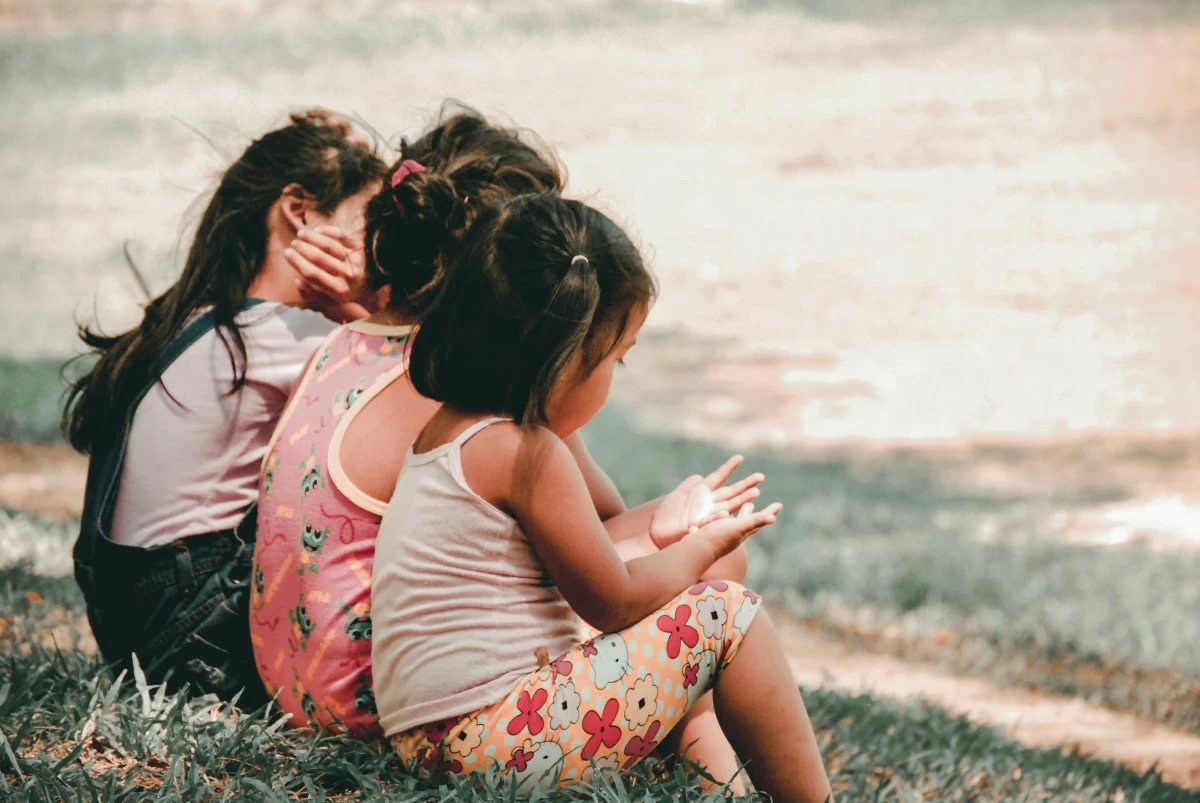
(Unsplash)
The House of Representatives has approved on second reading a measure seeking to strengthen the country’s fight against online child sexual abuse and exploitation.
Passed via voice vote (ayes vs. nayes) during the marathon plenary session on Tuesday, May 27 was House Bill (HB) No. 9461, or the proposed “Child Online Safety and Protection Act of 2026", which also sought to curb crimes involving artificial intelligence (AI)-generated and deepfake child abuse content.
It seeks to modernize the country’s child protection laws amid the growing use of digital platforms, encrypted communications, online payment systems and artificial intelligence in child exploitation operations.
House Committee on Public Order and Safety Chairman Manila 2nd district Rep. Rolando Valeriano sponsored the measure, which was backed by no less than House Speaker Isabela 6th district Rep. Faustino “Bojie” Dy III and Majority Leader Ilocos Norte 1st district Rep. Sandro Marcos.
The approved bill repeals and strengthens Republic Act (RA) No. 11930, or the Anti-Online Sexual Abuse or Exploitation of Children and Anti-Child Sexual Abuse or Exploitation Materials Act of 2022, after lawmakers identified legal and enforcement gaps amid rapidly evolving digital threats and technologies.
Valeriano said the Philippines remained among the countries hardest hit by online child exploitation.
“The Philippines has long been identified as one of the global epicenters of Online Sexual Abuse or Exploitation of Children (OSAEC) and Child Sexual Abuse or Exploitation Materials (CSAEM), due to the alarming number of victims and facilitators operating in the country,” he said.
Valeriano cited the International Justice Mission’s “Scale of Harm” study, which found that nearly half a million Filipino children were trafficked in 2022 alone to produce child sexual exploitation materials. He said the figure was equivalent to one in every 100 Filipino children.
The lawmaker also cited a study by End Child Prostitution, Child Pornography and Trafficking of Children for Sexual Purposes (ECPAT), the United Nations Children’s Fund (UNICEF), and the International Criminal Police Organization (INTERPOL).
The study found that 20 percent of Filipino internet users aged 12 to 17 experienced serious forms of online sexual abuse or exploitation. These included blackmail, non-consensual sharing of intimate images, and coercion through money or gifts.
Citing data from the National Center for Missing and Exploited Children, Valeriano said the Philippines ranked second worldwide in cybertipline reports in 2024 with more than 1.7 million reports.
“These figures highlight the urgent need for stronger and more responsive measures to protect Filipino children online,” he said.
Sultan Kudarat 2nd district Rep. Bella Vanessa Suansing, who chaired the technical working group that crafted the amendments to RA No.11930, said the measure was the result of extensive consultations with government agencies, law enforcement authorities, civil society groups, rescue teams, advocacy organizations and victim-survivors.
“There is a reason why this collective pursuit against the online sexual abuse and exploitation of Filipino children has to be addressed by law, and addressed immediately,” Suansing said in her sponsorship speech.
“One day, we want to be able to look at our children in the eye and say that we did our best to protect them from what can harm them,” Suansing said.
The bill expands the definition of child sexual abuse materials to include AI-generated, synthetic and digitally manipulated exploitative content, including deepfakes involving children.
It also criminalizes sexual extortion, image-based sexual abuse, livestreamed exploitation, grooming and luring.
Under the measure, those convicted of producing, distributing, livestreaming or facilitating child sexual abuse materials may face life imprisonment and fines of at least P2 million.
Those convicted of creating or distributing AI systems or digital platforms primarily designed to generate or spread child sexual abuse materials may also face life imprisonment and fines ranging from P2 million to P10 million.
Persons found guilty of possessing child sexual abuse materials may face up to 20 years in prison and fines of up to P500,000, while those convicted of merely accessing such materials may face up to 12 years in prison and fines of up to P300,000.
The bill also imposes heavier penalties when the crimes are committed by syndicates, persons in authority, relatives, or through the use of encryption, anonymization tools and artificial intelligence technologies.
The measure also imposes heightened duties on internet intermediaries, technology platforms, payment service providers, virtual asset service providers and learning institutions to prevent, detect, report and disrupt online child exploitation activities.
It authorizes lawful blocking, takedown and disruption orders against online platforms, accounts and digital infrastructure used in child exploitation operations.