






 Business
Banking & Finance
Gov't agencies leave ₱155 billion unused as spending efficiency slips in April
Business
Banking & Finance
Gov't agencies leave ₱155 billion unused as spending efficiency slips in April
Gov't agencies leave ₱155 billion unused as spending efficiency slips in April
By Derco Rosal


At A Glance
- Government agencies posted a weaker spending efficiency in the four months of 2026, although they continued to utilize the vast majority of their cash allocations compared to the same period in 2025.
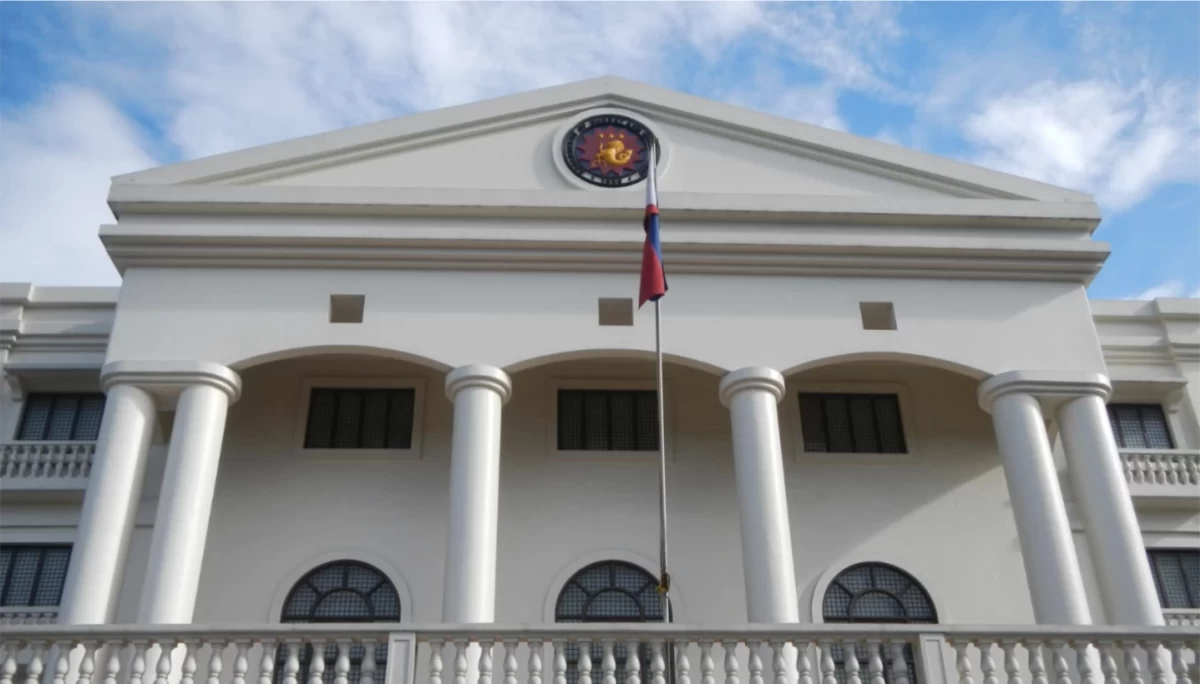
Government agencies posted weaker spending efficiency in the first four months of 2026, although they continued to utilize the bulk of their cash allocations compared to the same period last year.
According to the latest data from the Department of Budget and Management (DBM), the overall utilization rate for notices of cash allocation (NCAs) stood at 91.3 percent as of end-April, lower than the 92 percent recorded during the same four-month period in 2025.
Total NCA releases increased to ₱1.78 trillion, up by nearly a tenth from ₱1.63 trillion in the same period last year.
Of the total funds released to line departments, state-run firms, and local government units (LGUs), ₱1.63 trillion was utilized.
This left ₱154.9 billion in unused cash authority by the end of April, higher than the ₱132.4 billion left idle a year ago.
Under the government’s accounting framework, NCAs serve as the primary disbursement authority, allowing agencies to pay for contracted works and services.
High utilization rates typically indicate more efficient procurement and administrative implementation of national programs.
Among agencies that posted declines, the Commission on Elections (Comelec) saw its utilization rate fall to 51 percent this year from 78 percent a year ago, leaving ₱2.8 billion in unused funds.
The Department of Agriculture (DA) also recorded a sharp decline, with its utilization rate plunging to 44.2 percent from 66 percent in 2025, resulting in ₱14.4 billion in idle cash authority.
Similarly, the Civil Service Commission (CSC) dropped to 60.6 percent from 85 percent, leaving ₱491.4 million unused, while the Presidential Communications Office (PCO) declined to 61 percent from 80 percent, with ₱489.5 million left unutilized.
Other executive offices also posted a sharp drop in spending efficiency to 54.9 percent from 73 percent, with unused NCAs totaling ₱11.3 billion.
Major agencies with large allocations also experienced slower spending.
The Department of Social Welfare and Development (DSWD) saw its utilization rate slide to 78.2 percent from 98 percent last year despite receiving a larger allocation of ₱132.6 billion, leaving ₱28.9 billion in unused cash authority.
The Department of Education (DepEd), which received the largest allocation at ₱263.5 billion, posted a lower utilization rate of 91.2 percent from 95 percent, leaving ₱23.2 billion in unused authority.
Other large agencies that recorded declines included the Department of Labor and Employment (DOLE), which fell to 70.7 percent from 81 percent, and the Department of Transportation (DOTr), which slipped to 67.3 percent from 71 percent.
Even with a reduced budget allocation compared to last year, the Department of Finance (DOF) saw its utilization rate decline to 87.2 percent from 96 percent.
Meanwhile, several departments improved their spending efficiency.
The Department of Energy (DOE) posted a sharp recovery, with its utilization rate surging to 98.7 percent from 76 percent in 2025, even as its allocation expanded significantly to ₱20.9 billion.
Likewise, the Department of Human Settlements and Urban Development (DHSUD) improved to a utilization rate of 90.7 percent from 75 percent, while the Department of Information and Communications Technology (DICT) rose to 81.6 percent from 66 percent.