






Manila Bulletin
 Philippines
National
Fake news peddlers beware: House advances proposed Digital Media Anti-False Information Act
Philippines
National
Fake news peddlers beware: House advances proposed Digital Media Anti-False Information Act
Philippines
National
Fake news peddlers beware: House advances proposed Digital Media Anti-False Information Act
Fake news peddlers beware: House advances proposed Digital Media Anti-False Information Act
Published May 27, 2026 09:12 pm


At A Glance
- The House approved on second reading HB No. 9465, the Digital Media Anti-False Information Act, which imposes prison terms and fines for deliberate disinformation that threatens national security.
- Lawmakers stressed the bill targets intentional deception, coordinated networks, synthetic media, and foreign-backed influence operations, while protecting criticism, debate, satire, and journalistic inquiry.
- Digital platforms must establish local offices, disclose sponsored content, submit transparency reports, and comply with stricter obligations, with very large platforms facing penalties of up to 6 percent of annual Philippine revenue.
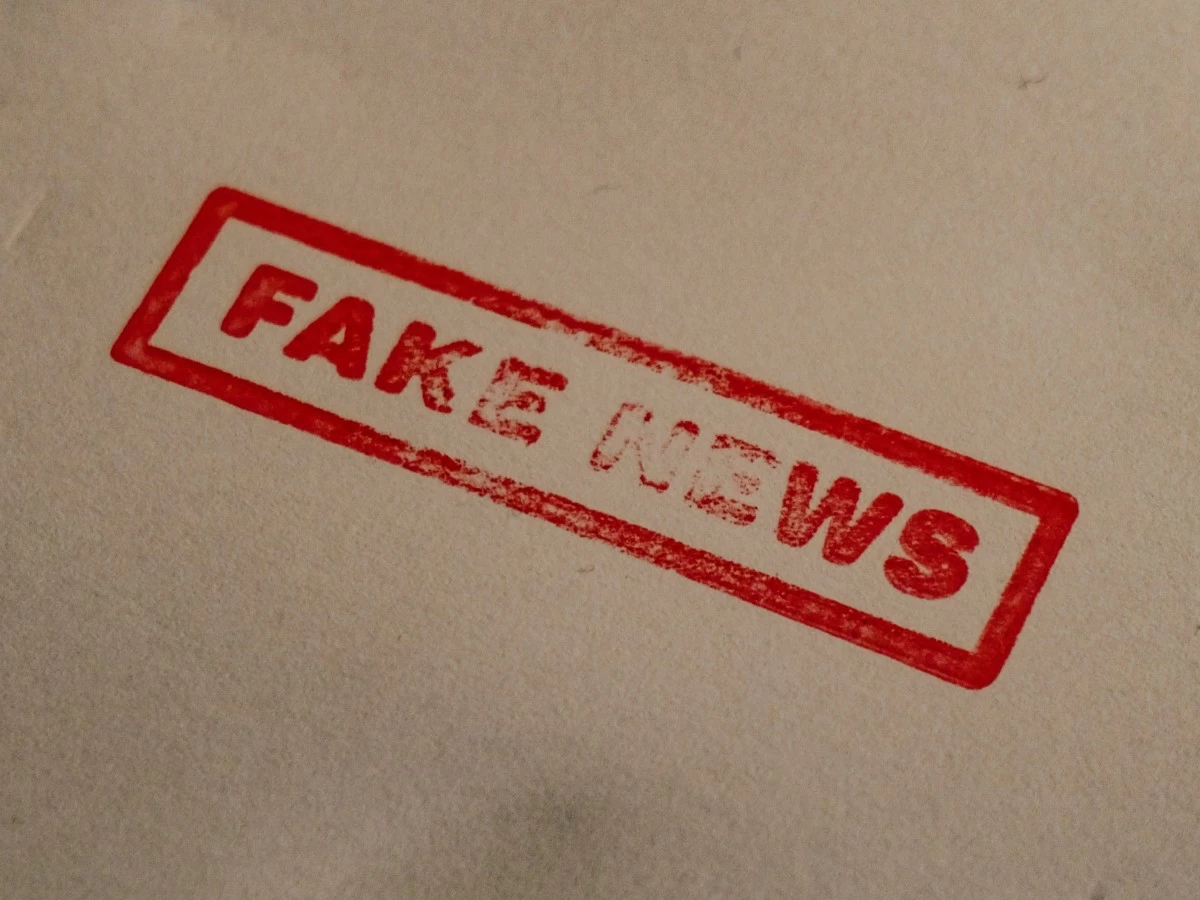
(Unsplash)
The proposed Digital Media Anti-False Information Act, which imposes a six- to 12-year prison term and fines of up to P2 million on persons found guilty of deliberately spreading fake news that seriously threatens national security, has been approved on second reading in House of Representatives.
Embodied in House Bill (HB) No. 9465, the measure was approved via simple voice vote (ayes vs. nayes) during the marathon plenary session Tuesday night, May 26.
Majority Leader Ilocos Norte 1st district Rep. Sandro Marcos, one of the authors of the measure, thanked House Speaker Faustino “Bojie” Dy III for his guidance and support.
"Ang layunin ng panukalang ito ay hindi patahimikin ang kritisismo kundi panagutin ang sadyang panlilinlang (The purpose of this proposal is not to silence criticism but to hold deliberate deception accountable)," Rep. Marcos said.
“Sa panahon ngayon na ilang segundo lang ay puwede nang kumalat ang maling impormasyon, kailangan ding maging mabilis at malinaw ang proteksiyon ng Estado laban sa disinformation na may tunay na pinsalang dulot sa publiko at pambansang seguridad," noted the presidential son.
(Nowadays, when false information can spread in just seconds, the State must also act swiftly and clearly to protect against disinformation that causes real harm to the public and national security.)
In justifying the HB No. 9465, Rep. Marcos said fake news must never be used as a weapon to deceive, destroy, or sow fear and disorder.
"Kasabay ng pagprotekta sa freedom of expression ay ang pagtitiyak na may pananagutan ang mga sadyang nagpapakalat ng mapanirang kasinungalingan," he said.
(Alongside protecting freedom of expression is the assurance that those who deliberately spread destructive lies are held responsible.)
Cagayan de Oro 1st district Rep. Lordan Suan, chair of the House Committee on Public Information and sponsor of the measure, said the bill was built around a difficult but necessary balance in the digital age, where falsehoods can travel faster than verified information and where government must respond without weakening the freedoms that allow citizens to speak, criticize and dissent.
“Today, we take up a measure that touches two things that every democracy must protect: truth and freedom. This bill is not about choosing one over the other,” Suan said in his sponsorship speech.
The measure was among the five Legislative-Executive Development Advisory Council (LEDAC) priority bills approved on second reading by the House during the May 26 plenary session, together with the proposed Anti-Online Sexual Abuse or Exploitation of Children measure, the bill converting the national feeding program into a national nutrition program, strengthening the Bases Conversions and Development Authority, and Right to Information Act.
Under the HB No. 9465, persons may be punished only for knowingly and willfully publishing, disseminating, financing, directing or materially assisting false information, with actual knowledge of falsity or reckless disregard for truth and with specific intent to cause verifiable public harm or a serious threat to national security.
The high penalty covers deliberate acts that cross the bill’s strict threshold, while digital platforms that fail to comply with their obligations may face administrative sanctions ranging from warnings and compliance orders to fines of P1 million to P10 million, with very large online platforms facing possible penalties of up to 6 percent of Philippine annual gross revenue for grave or repeated violations.
The measure goes after coordinated inauthentic behavior networks, troll farms, bot networks, fake account networks and deceptive digital operations intended to manipulate public discourse, deceive the public and cause concrete harm or national security risks.
It also covers synthetic or materially manipulated media, including AI-generated or altered images, videos and audio, if released without adequate disclosure and with actual knowledge of their deceptive character and specific intent to cause public harm or threaten national security.
The bill penalizes foreign-backed covert influence operations, including acts done on behalf of a foreign state, intelligence service, military actor or foreign-funded operation to spread disinformation that poses a serious threat to national security.
It also prohibits impersonating government agencies, election bodies, emergency-response authorities, courts, law enforcement agencies, public-health authorities, educational institutions, media organizations or real persons to spread disinformation that causes public harm or threatens national security.
Suan stressed that the substitute bill was drafted to punish harmful and intentional deception, not ordinary political debate, public criticism or honest mistakes.
“It does not criminalize disagreement. It does not criminalize criticism of government,” Suan stressed.
The bill expressly protects political opinions, criticism of government, criticism of public officials or candidates, satire, journalistic inquiry, investigative reporting, editorial judgment, whistleblowing, public interest advocacy, commentary, opinion, academic discourse, artistic expression and religious expression.
It also states that mere liking, sharing, forwarding or reposting of content will not be punishable unless prosecutors prove beyond reasonable doubt that the person knowingly and materially participated in the prohibited conduct with the required intent.
Digital platforms operating in the Philippines will be required to establish a legal entity or permanent representative office in the country, where they may be served summons, notices and other official communications by competent Philippine authorities.
Platforms must also disclose sponsored content, political advertisements and paid campaigns, submit annual transparency reports, maintain notice-and-action mechanisms for unlawful content, provide explanations for restrictions or takedowns and give users access to appeal and redress systems.
Very large online platforms, or those reaching at least 10 percent of the national population in average monthly active users or meeting other risk-based thresholds set by the Department of Information and Communications Technology (DICT), will have additional obligations such as annual systemic risk assessments, mitigation plans, independent audits, local compliance officers and data access for vetted researchers.
“The threshold is deliberately high because we recognize that freedom is too important to be burdened by vague or arbitrary standards,” Suan noted.