






Manila Bulletin
 Philippines
National
SC's denial of Sen Bato's plea to stop ICC arrest 'is no judicial restraint, it is judicial surrender' – Justice Lazaro-Javier
Philippines
National
SC's denial of Sen Bato's plea to stop ICC arrest 'is no judicial restraint, it is judicial surrender' – Justice Lazaro-Javier
Philippines
National
SC's denial of Sen Bato's plea to stop ICC arrest 'is no judicial restraint, it is judicial surrender' – Justice Lazaro-Javier
SC's denial of Sen Bato's plea to stop ICC arrest 'is no judicial restraint, it is judicial surrender' – Justice Lazaro-Javier
Published May 26, 2026 04:54 pm


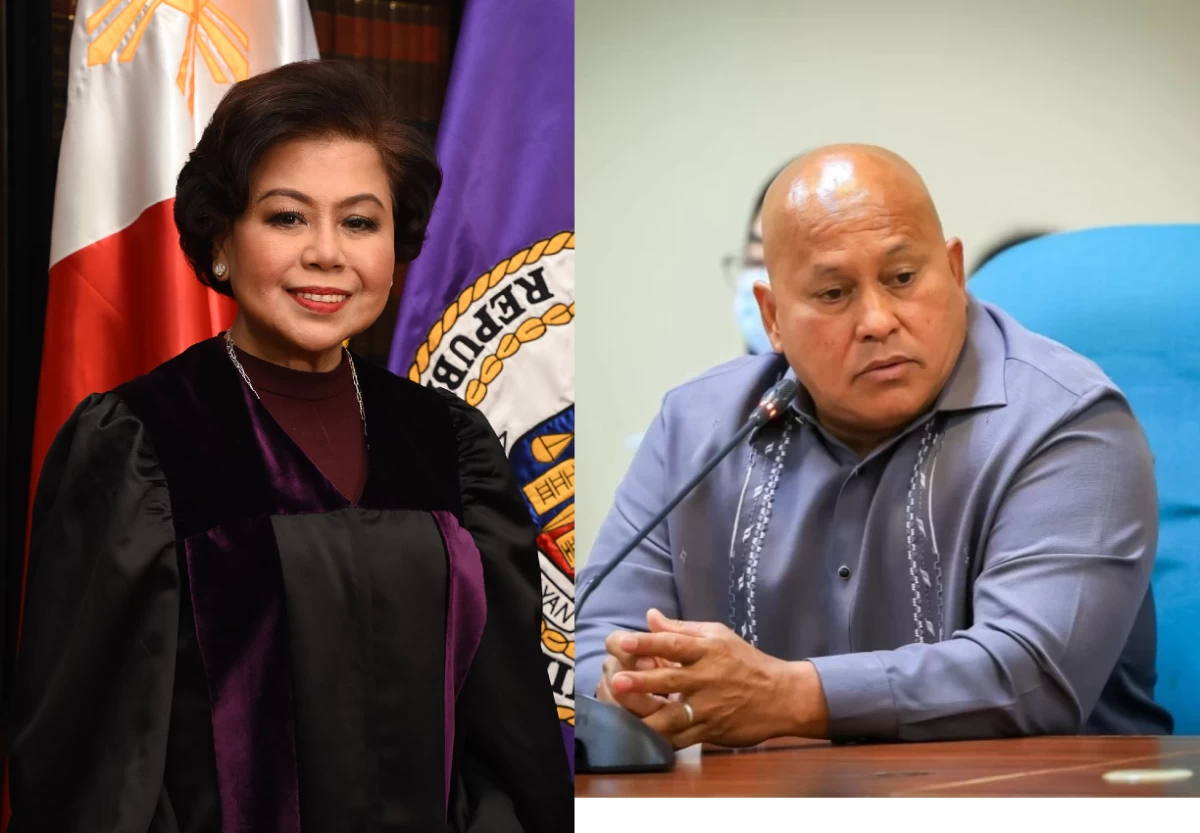
The Supreme Court’s (SC) ruling that denied the restraining order sought by Senator Ronald “Bato” dela Rosa against the arrest order issued by the International Criminal Court (ICC) “is not judicial restraint, it is judicial surrender.”
SC Associate Justice Amy C. Lazaro-Javier said the judiciary exists precisely to ensure that rights are not extinguished before they can be adjudicated.
“By declining to issue temporary injunctive relief, the Court (SC) abdicates its constitutional duty to prevent irreparable harm while a case is pending,” she pointed out in her dissenting opinion.
At the same time, Justice Lazaro-Javier said: “Thus, a temporary cessation of petitioner's (Dela Rosa’s) arrest and surrender is not an act of shielding him from accountability. It is an act of preserving the Court's own authority to determine whether accountability may lawfully be exacted by the International Criminal Court. The jurisdictional question is real, substantial, and unresolved. Until it is answered, no irreversible step -- such as surrender to a foreign tribunal -- should be taken.”
In a 9-5-1 vote, the SC denied Dela Rosa’s plea to stop his arrest ordered by the ICC.
Justice Lazaro-Javier was a bemedalled law student, an assistant solicitor general, and a Court of Appeals (CA) associate justice before she was promoted to the SC in 2019 by then president Rodrigo R. Duterte.
She was one of the five Duterte’s appointees who voted to grant the TRO pleaded by Dela Rosa. The four others were Associate Justices Ramon Paul L. Hernando, Henri Jean Paul B. Inting, Ricardo R. Rosario, and Antonio T. Kho Jr.
Those who voted to deny the TRO plea were Chief Justice Alexander G. Gesmundo, Senior Associate Justice Leonen, and Associate Justices Alfredo Benjamin S. Caguioa, Rodil V. Zalameda, Samuel H. Gaerlan, Jhosep Y. Lopez, Jose Midas P. Marquez, Maria Filomena D. Singh, and Raul B. Villanueva.
Gesmundo, Zalameda, Gaerlan, Lopez, Marquez, and Singh are appointees of Duterte. Leonen and Caguioa are appointees of the late president Noynoy Aquino, while Villanueva is the appointee of President Marcos.
Associate Justice Japar B. Dimaampao, also an appointee of Duterte, was on leave at the time Dela Rosa’s motion was taken up by the SC last May 20 during its special full court session.
Justice Lazaro-Javier said the country’s legal system has long repudiated the use of “bad character” as a proxy for culpability. “Evidence of propensity is presumptively inadmissible,” she said.
She also said: “Courts have been admonished not to infer guilt from the perception that an accused is the ‘type’ of person capable of wrongdoing. Stereotypes, no matter how elegantly framed or intellectually packaged, do not aid the Court. They obscure rather than illuminate. They inject into the judicial process the very noise and political fervor from which the Constitution demands we remain insulated.”
Thus, she said, constraints against bad-character evidence or in this context, bad-character arguments directed at Dela Rosa, offered as prefatory observations are not mere technicalities. “They are constitutional guardrails,” she also said.
She said she viewed with deep caution the reliance on arguments that begin from assessments of Dela Rosa’s character or of the political constituencies -- whether affluent or marginalized, haves or have nots, intellectually or financially -- that support him.
“Such considerations, however sincerely held, risk transforming a neutral judicial inquiry into a referendum on personality, ideology, or class. That is not the role of the Court. It has never been the role of the Court. And it must not become so now,” she stressed.
Justice Lazaro-Javier said that after considering the submissions of both Dela Rosa and the government, she was compelled to state that the circumstances presented not only justify but necessitate the issuance of temporary injunctive relief.
She stressed: “The rights at stake are neither speculative nor abstract. The potential injury is not merely political or reputational; it is juridical, concrete, and irreparable. To deny provisional relief under these conditions is to expose petitioner to harm that the law itself recognizes as intolerable. The balance of considerations, when viewed through the disciplined lens of our own precedents, does not merely tilt. It weighs heavily, decisively, and unmistakably in favor of preserving the status quo until the Court may fully resolve the substantive questions raised.”
She cautioned that if the Executive branch or law enforcement were to bypass the local judicial system and summarily hand a Filipino citizen over to the ICC, “such an act would constitute a direct and flagrant violation of four foundational pillars of our constitutional order.”
She strongly declared that Dela Rosa would be deprived of liberty without due process of law if he were arrested, detained, and transported to a foreign jurisdiction absent a judicial determination of the legality of such actions.
“Due process is not a ceremonial formality; it is a constitutional command that no person shall be deprived of life, liberty, or property except through lawful, orderly, and transparent procedures,” she said.
She said “a Filipino citizen cannot be subjected to a diminished set of rights merely because the requesting authority is an international tribunal rather than a domestic court.”
She added that Dela Rosa’s arrest and detention, if followed by his immediate transfer to a foreign jurisdiction “would effectively strip him of access to the writ of habeas corpus, which is the primary constitutional mechanism for testing the legality of one's arrest and detention.”
At the same time, Justice Lazaro-Javier said that “the enforcement of an alien arrest and surrender process without judicial oversight would allow the Executive, through mere police action, to deprive a citizen of liberty without a judicial finding of probable cause, without a judicial determination of the validity of the warrant, and without a judicial assessment of whether surrender complies with domestic law.”
She added that while the Executive is the chief architect of foreign policy, it is not vested with judicial power. “To capture a citizen and hand him over to an international body by executive fiat is to usurp the judiciary's exclusive constitutional role and to erode the bedrock principle of separation of powers,” she also said.
She said that once Dela Rosa is surrendered to a foreign jurisdiction, he will he beyond the reach of Philippine courts, beyond the protection of remedial processes, and beyond the jurisdictional authority of the Philippine judiciary.
“It is also not lost on this Court that the Executive and its security forces are actively deploying all available resources to locate, arrest, detain, and surrender petitioner. This ongoing and vigorous enforcement · effort underscores the immediacy of the threat. It leaves no realistic window for petitioner to avail himself of ordinary remedies. The machinery of the State is already in motion. Only a temporary restraining order from this Court can halt that machinery long enough to preserve petitioner's constitutional rights,” she also said.
“The extraordinary circumstances of this case demand the extraordinary remedy of a temporary injunctive writ,” she added.