

ADVERTISEMENT

Rodriguez refuses to blame NGCP for rotating brownouts; here's why

Published May 26, 2026 04:31 pm

At A Glance

  • Rodriguez defends NGCP, saying the grid operator fulfilled its duty by reporting incidents, restoring lines the same day, and maintaining stability despite outages.
  • Supply issues persist as Rodriguez stresses that generation deficiencies, not transmission faults, continue to trigger yellow and red alerts in the Visayas and Luzon grids.
  • DOE and NGCP affirm that prolonged brownouts stemmed from plant shutdowns, noting the tripped lines were restored within required timeframes and cannot solely explain extended grid alerts.
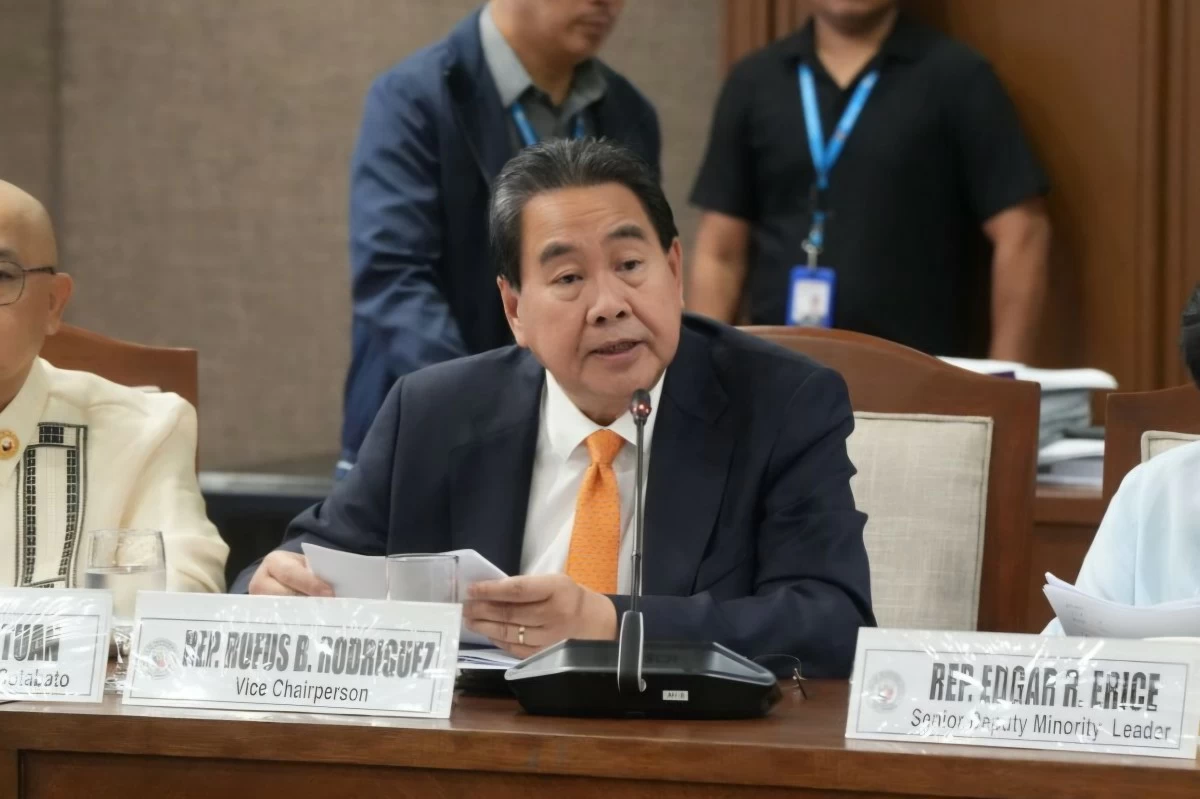
Cagayan de Oro 2nd district Rep. Rufus Rodriguez (PPAB)


Cagayan de Oro 2nd district Rep. Rufus Rodriguez refuses to pin any blame on system operator National Grid Corporation of the Philippines (NBCP) as far as the recent rotating brownouts in Luzon and Visayas are concerned.
The reason? The NGCP carried out its duty and ultimately fixed the problem, Rodriguez told a joint hearing of the House Committees on Energy and on Legislative Franchises on Tuesday, May 26.
"Clearly, NGCP performed its duty. They reported the incident, they fixed the lines, and they preserved the power supply that was available," Rodriguez told the joint panel.
The Midnanaoan was referring to the back-to-back tripping of the 500 kilovolt (KV) Ilijan-Dasmariñas and Ilijan-Tayabas transmission lines earlier this month. The joint panel hearing was meant to look into the grid operator's accountability on the matter.
Rodriguez pointed out that NGCP promptly reported the incident, restored the affected transmission lines within the same day, and preserved grid stability despite the loss of major transmission facilities and generation capacity.
The veteran lawmaker noted that both affected 500-kV lines were restored on May 13, with the Ilijan-Tayabas line returned to service at 2:44 p.m. and the Dasmariñas-Ilijan line restored at 4:52 p.m., fully restoring the affected transmission corridor on the same day.
Rodriguez also underscored that supply adequacy—not transmission—remains the larger challenge confronting the power sector.
"Hanggang ngayon may yellow alert pa rin sa Visayas kasi maraming planta ang naka-out (There is still a yellow alert in the Visayas because many plants are offline),” he said.
Rodriguez noted that generation deficiencies continue to affect grid operations long after the transmission facilities were restored.
As such, he he questioned attempts to attribute the prolonged red alerts solely to the transmission disturbance.
"What is the fault of NGCP?" Rodriguez asked. "They were able to preserve the power supply that was available."
His observations were reinforced by statements made during the hearing by Department of Energy (DOE) officials and NGCP representatives.
DOE Undersecretary Mario Marasigan agreed that the subsequent outages of several generating units were separate events and were not caused by the earlier transmission line trippings.
NGCP spokesperson, lawyer Cynthia Alabanza likewise stressed that while the company does not deny that the two 500-kV transmission lines went offline on May 13, both incidents were cleared and restored within the required timeframes.
"We do not deny the fact that the two lines tripped. But the faults were cleared within the required period and the lines were restored in 8 and 12 hours," Alabanza told the House members.
Alabanza added that generating plants were likewise required to comply with operational and technical timelines to synchronize back to the grid. However, despite the availability of the transmission facilities, several generating units were unable to immediately return to service.
"While we do not deny the line trippings, the prolonged red alerts cannot be attributed to the transmission lines alone. Additional generating units went on shutdown even after the transmission lines had already been restored," she noted.
For Rodriguez, the facts presented during the hearing highlight the need to focus on the root causes of recurring power alerts.
"The transmission lines were restored, the reporting requirements were complied with, and the grid remained stable. The bigger issue that remains before us is the adequacy of power supply," he said.

Related Tags

NGCP Rotating brownouts Rufus Rodriguez DOE House of Representatives
ADVERTISEMENT
.most-popular .layout-ratio{ padding-bottom: 79.13%; } @media (min-width: 768px) and (max-width: 1024px) { .widget-title { font-size: 15px !important; } }

{{ articles_filter_1561_widget.title }}

.most-popular .layout-ratio{ padding-bottom: 79.13%; } @media (min-width: 768px) and (max-width: 1024px) { .widget-title { font-size: 15px !important; } }

{{ articles_filter_1562_widget.title }}

.most-popular .layout-ratio{ padding-bottom: 79.13%; } @media (min-width: 768px) and (max-width: 1024px) { .widget-title { font-size: 15px !important; } }

{{ articles_filter_1563_widget.title }}

{{ articles_filter_1564_widget.title }}

.mb-article-details { position: relative; } .mb-article-details .article-body-preview, .mb-article-details .article-body-summary{ font-size: 17px; line-height: 30px; font-family: "Libre Caslon Text", serif; color: #000; } .mb-article-details .article-body-preview iframe , .mb-article-details .article-body-summary iframe{ width: 100%; margin: auto; } .read-more-background { background: linear-gradient(180deg, color(display-p3 1.000 1.000 1.000 / 0) 13.75%, color(display-p3 1.000 1.000 1.000 / 0.8) 30.79%, color(display-p3 1.000 1.000 1.000) 72.5%); position: absolute; height: 200px; width: 100%; bottom: 0; display: flex; justify-content: center; align-items: center; padding: 0; } .read-more-background a{ color: #000; } .read-more-btn { padding: 17px 45px; font-family: Inter; font-weight: 700; font-size: 18px; line-height: 16px; text-align: center; vertical-align: middle; border: 1px solid black; background-color: white; } .hidden { display: none; }
function initializeAllSwipers() { // Get all hidden inputs with cms_article_id document.querySelectorAll('[id^="cms_article_id_"]').forEach(function (input) { const cmsArticleId = input.value; const articleSelector = '#article-' + cmsArticleId + ' .body_images'; const swiperElement = document.querySelector(articleSelector); if (swiperElement && !swiperElement.classList.contains('swiper-initialized')) { new Swiper(articleSelector, { loop: true, pagination: false, navigation: { nextEl: '#article-' + cmsArticleId + ' .swiper-button-next', prevEl: '#article-' + cmsArticleId + ' .swiper-button-prev', }, }); } }); } setTimeout(initializeAllSwipers, 3000); const intersectionObserver = new IntersectionObserver( (entries) => { entries.forEach((entry) => { if (entry.isIntersecting) { const newUrl = entry.target.getAttribute("data-url"); if (newUrl) { history.pushState(null, null, newUrl); let article = entry.target; // Extract metadata const author = article.querySelector('.author-section').textContent.replace('By', '').trim(); const section = article.querySelector('.section-info ').textContent.replace(' ', ' '); const title = article.querySelector('.article-title h1').textContent; // Parse URL for Chartbeat path format const parsedUrl = new URL(newUrl, window.location.origin); const cleanUrl = parsedUrl.host + parsedUrl.pathname; // Update Chartbeat configuration if (typeof window._sf_async_config !== 'undefined') { window._sf_async_config.path = cleanUrl; window._sf_async_config.sections = section; window._sf_async_config.authors = author; } // Track virtual page view with Chartbeat if (typeof pSUPERFLY !== 'undefined' && typeof pSUPERFLY.virtualPage === 'function') { try { pSUPERFLY.virtualPage({ path: cleanUrl, title: title, sections: section, authors: author }); } catch (error) { console.error('ping error', error); } } // Optional: Update document title if (title && title !== document.title) { document.title = title; } } } }); }, { threshold: 0.1 } ); function showArticleBody(button) { const article = button.closest("article"); const summary = article.querySelector(".article-body-summary"); const body = article.querySelector(".article-body-preview"); const readMoreSection = article.querySelector(".read-more-background"); // Hide summary and read-more section summary.style.display = "none"; readMoreSection.style.display = "none"; // Show the full article body body.classList.remove("hidden"); } document.addEventListener("DOMContentLoaded", () => { let loadCount = 0; // Track how many times articles are loaded const offset = [1, 2, 3, 4, 5, 6, 7, 8, 9, 10]; // Offset values const currentUrl = window.location.pathname.substring(1); let isLoading = false; // Prevent multiple calls if (!currentUrl) { console.log("Current URL is invalid."); return; } const sentinel = document.getElementById("load-more-sentinel"); if (!sentinel) { console.log("Sentinel element not found."); return; } function isSentinelVisible() { const rect = sentinel.getBoundingClientRect(); return ( rect.top < window.innerHeight && rect.bottom >= 0 ); } function onScroll() { if (isLoading) return; if (isSentinelVisible()) { if (loadCount >= offset.length) { console.log("Maximum load attempts reached."); window.removeEventListener("scroll", onScroll); return; } isLoading = true; const currentOffset = offset[loadCount]; window.loadMoreItems().then(() => { let article = document.querySelector('#widget_1690 > div:nth-last-of-type(2) article'); intersectionObserver.observe(article) loadCount++; }).catch(error => { console.error("Error loading more items:", error); }).finally(() => { isLoading = false; }); } } window.addEventListener("scroll", onScroll); });

Sign up by email to receive news.