







Return the Senate to its ideals
Published May 26, 2026 12:05 am
|
Updated May 25, 2026 04:03 pm


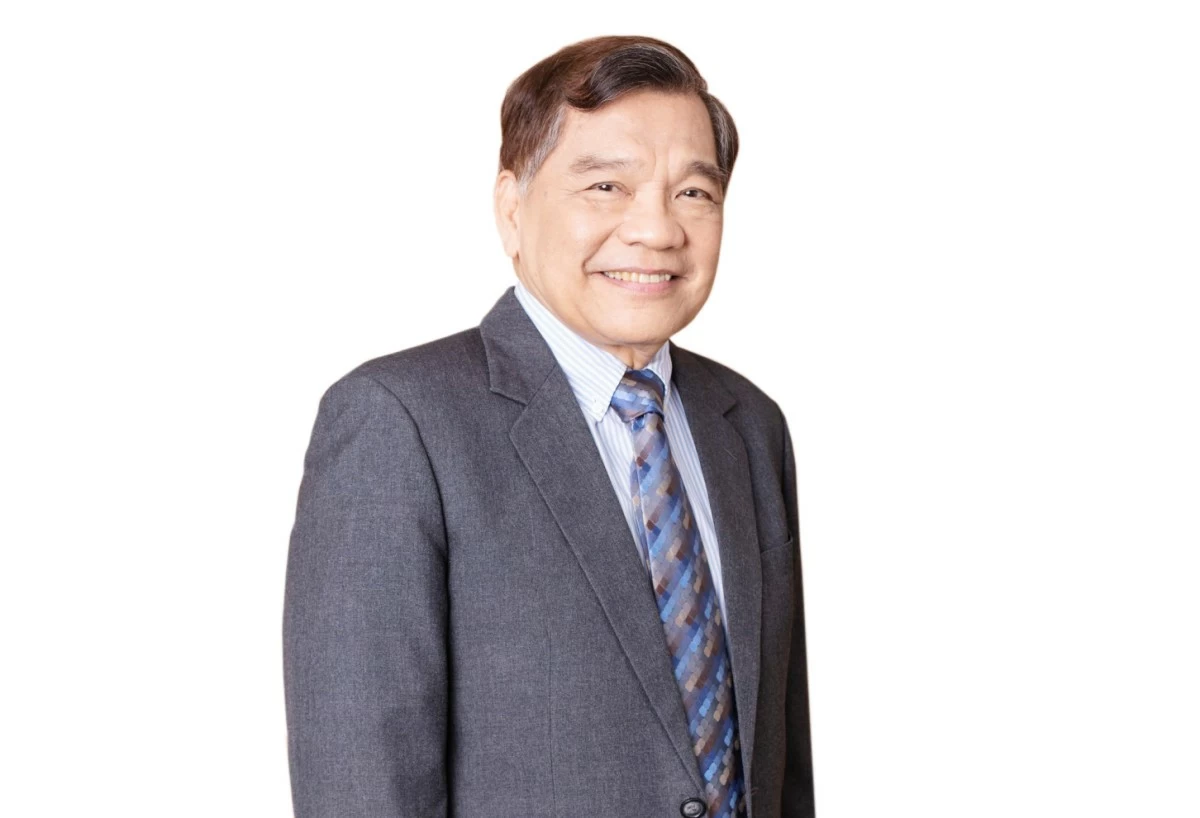
FINDING ANSWERS
The Philippine Senate was never meant to be a circus of noise, ego, and endless political theater; it was envisioned as something far nobler: a stabilizing institution of democracy and a chamber of statesmen.
At least that’s how I saw it during my two terms as senator from the late 1980s to the mid-1990s. When I was part of it, I felt immense pride knowing that many Filipinos saw the institution as the national conscience, capable of rising above partisanship and personal ambition.
Historically, the Senate was designed to temper passions with wisdom. When it was established in 1916 under the Jones Law, it was conceived as a deliberative body whose members would think not merely as national representatives of domestic interests but as guardians of the national welfare.
Over the decades, it produced towering figures in Philippine history—men and women remembered not because they shouted the loudest, but because they embodied intellect, restraint, courage, and public service.
From Manuel L. Quezon, Pedro Guevara, Rafael Palma, Sergio Osmeña Sr., Elpidio Quirino, and Claro M. Recto, to name just a few from the 1920s and pre–World War II era, to postwar senators Carlos P. Garcia, Gil J. Puyat, Quintin Paredes, Jose P. Laurel, Eulogio Rodriguez, and Lorenzo Sumulong, the Senate produced generations of great statesmen.
Before martial law, Ninoy Aquino, Lorenzo Tañada, Francisco Soc Rodrigo, Raul Manglapus, Camilo Osias, Manuel Manahan, Magnolia Antonino, Helena Benitez, Arturo Tolentino, Eva Estrada Kalaw, and Emmanuel Pelaez all shone brightly.
And during my time after the EDSA revolt, among the great luminaries were Jovito Salonga, Neptali Gonzales, Heherson Alvarez, Teofisto Guingona Jr., Ernesto Maceda, Rene Saguisag, Leticia Ramos Shahani, Ernesto Herrera, Santanina Rasul, Victor Ziga, and Edgardo Angara.
The Senate has often been described as a “bulwark of democracy” and the “conscience of the nation.” Those descriptions were earned through difficult moments in history when senators challenged abuses of power and defended civil liberties.
It was seen as a “breeding ground for statesmanship”—an institution where reasoned debate, civility, independence, and devotion to the public welfare prevailed. Senators engaged in discussions, furious as they may have been, yet grounded in substance rather than spectacle.
Today, however, many Filipinos are asking an uncomfortable question: Has the Senate strayed too far from its ideals?
Recent public discourse reflects growing frustration with what many perceive as the decline of the institution’s dignity and credibility. Social media commentators have lamented that the Senate has become less a chamber of statesmanship and more a venue for political grandstanding, vanity, and partisan maneuvering.
Public sentiment online mirrors this disappointment, with citizens increasingly questioning whether the institution still functions as a genuine check on abuses and a protector of democratic principles.
Of course, criticism of the Senate is not new. Leadership changes have occurred before, and there is nothing inherently wrong with them. Political realignments are part of democratic life.
But when leadership struggles become excessively personal, vindictive, or transactional, the public begins to lose confidence not merely in individual senators but in the institution itself.
The problem is not disagreement. In fact, vigorous disagreement is essential to democracy. The problem arises when discourse degenerates into petty bickering, theatrical rambling, and conduct unbecoming of a chamber that ought to command national respect.
In the age of livestreams and viral clips, senators are constantly visible to the public. Every outburst, insult, and display of immaturity reaches millions. That visibility carries responsibility. Senators are not online influencers competing for engagement; they are elected officials entrusted with immense constitutional duties.
An ideal Senate should be a place where reason prevails over rage and where public welfare takes precedence over political branding. It should be a forum for thoughtful legislation and rigorous oversight—not a perpetual campaign stage.
This matters because the Senate plays a critical role in national life. It scrutinizes national budgets, investigates issues in aid of legislation, and acts as one of the country’s most important democratic safeguards. When senators prioritize spectacle over substance, the nation suffers.
It is unfortunate that the former majority members were outmaneuvered by a new majority following the sudden appearance of a senator charged with crimes against humanity, due largely to the inaction and failure of authorities to enforce an ICC arrest warrant at a crucial moment.
Yet institutions as vital as the Senate cannot afford to remain captive to intrigue, resentment, or political scheming. The chamber must rise above the controversy, restore public confidence, and return its focus to the burdens borne daily by the Filipino people.
There are many issues demanding the Senate’s attention, including inflation, unemployment, rising fuel prices, and educational deficiencies, to name a few. Yet too often, public attention is consumed by political drama rather than meaningful governance.
To be fair, the institution itself is not beyond redemption. The Senate still contains capable, intelligent, and hardworking individuals. Senators must remember that they are stewards of an institution larger than themselves. Their words and behavior shape public trust.
When lawmakers appear consumed by factional quarrels and political calculations, citizens become cynical. And when cynicism deepens, democratic institutions weaken.
The electorate also carries responsibility. The quality of the Senate ultimately reflects the choices of voters. Elections should not be reduced to popularity contests driven by celebrity or family name recall.
With 2028 fast approaching, Filipinos must begin asking harder questions about those seeking office. Do they possess competence? Integrity? Intellectual seriousness? A genuine commitment to public welfare? Have they demonstrated the capacity to craft meaningful legislation and uphold democratic institutions?
The Philippine Senate can still reclaim its dignity. It can still become what it was meant to be: a chamber of wisdom, restraint, patriotism, and genuine public service. The question is whether today’s senators, and tomorrow’s voters, still believe that ideal is worth fighting for. ([email protected])