ADVERTISEMENT

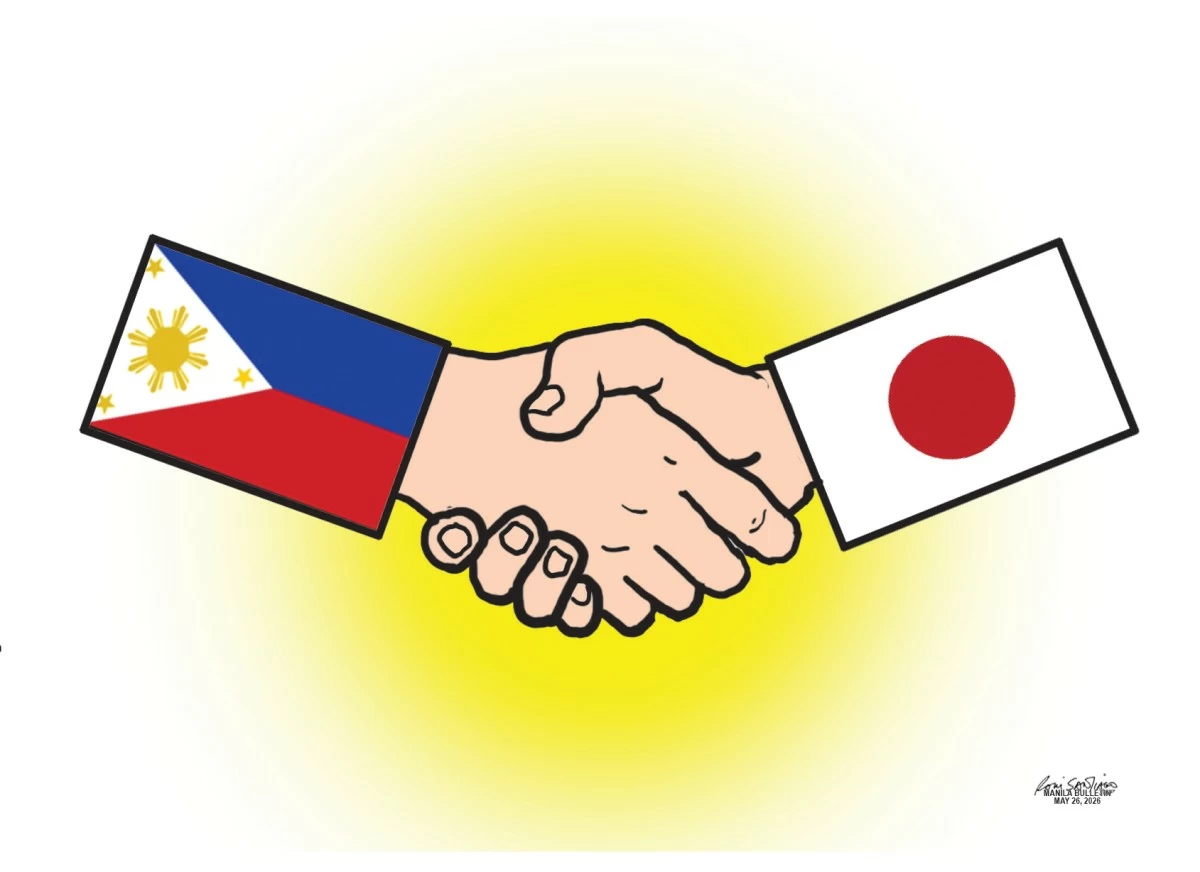
PH-Japan summit on 70th year of strategic partnership

Published May 26, 2026 12:05 am  |  Updated May 25, 2026 04:01 pm
The state visit of President Ferdinand Marcos Jr. to Japan from May 26 to 29 carries significance far beyond diplomatic ceremony. It reaffirms the enduring strength of Philippine-Japan relations at a time when both countries confront complex geopolitical, economic, and energy security challenges. More importantly, it highlights the continuing evolution of a partnership that has matured over seven decades into one of the Philippines’ most consequential strategic relationships.
Particularly meaningful is the conferment by Japan of its highest and most prestigious decorations on President Marcos and First Lady Liza Araneta Marcos. Such honors are never bestowed lightly. They symbolize Japan’s recognition not only of the present administration’s efforts to deepen bilateral cooperation, but also of the importance Tokyo places on its ties with Manila. Diplomatic decorations of this stature reflect mutual trust, respect, and confidence in the future direction of the relationship.
That these honors coincide with the 70th anniversary of formal Philippine-Japan relations further underscores their historic resonance. The journey from the painful memories of war to the flourishing partnership of today stands as one of Asia’s most remarkable stories of reconciliation and cooperation. Japan has since become among the Philippines’ largest development partners, investors, and sources of official development assistance. Generations of Filipinos have benefited from Japanese-funded infrastructure, transportation systems, flood control projects, educational support, and technological cooperation.
The Marcos-Sanae summit likewise comes at a pivotal moment for the Indo-Pacific region. As tensions continue to simmer in the West Philippine Sea and across East Asia, the Philippines and Japan increasingly find common ground in upholding international law, freedom of navigation, and a rules-based regional order. Their growing strategic convergence reflects not militarism, but a shared desire for stability, peace, and economic prosperity in the region.
Yet beyond defense and diplomacy, perhaps the most urgent and immediate concern confronting the Philippines today is energy security. Rotating brownouts, rising electricity costs, and persistent supply vulnerabilities continue to burden industries, businesses, and ordinary households. Against this backdrop, the furtherance of discussions under the Partnership for Overcoming Energy Risks and Risks Reduction (POWERR) Asia initiative assumes critical importance.
Japan possesses extensive expertise in energy efficiency, renewable technologies, smart grids, liquefied natural gas, hydrogen development, and disaster-resilient infrastructure. For the Philippines, cooperation with Japan in these areas is no longer optional — it is essential. The country’s growing economy cannot sustain momentum without stable, affordable, and diversified energy sources. Likewise, the transition toward cleaner and more sustainable power systems requires technology, financing, and institutional support that trusted partners like Japan are uniquely positioned to provide.
The POWERR Asia talks therefore represent more than technical discussions. They are part of a larger strategic imperative to shield the Philippine economy from future energy shocks while accelerating industrial competitiveness and environmental sustainability. Japan’s experience in balancing economic growth with energy resilience offers valuable lessons for the Philippines as it seeks long-term solutions to its recurring power concerns.
President Marcos’ visit should thus be viewed not merely as a ceremonial state occasion, but as a strategic undertaking grounded on national interest. At a time of global uncertainty, the Philippines must strengthen alliances that contribute to economic modernization, regional stability, technological advancement, and human development.
Seventy years after diplomatic ties were formally established, Philippine-Japan relations continue to demonstrate how former adversaries can become trusted partners bound by shared aspirations and mutual goodwill. This enduring friendship now enters a new chapter — one shaped by strategic cooperation, economic resilience, and a common commitment to peace and progress in Asia.

Related Tags

Editorial Japan
ADVERTISEMENT
.most-popular .layout-ratio{ padding-bottom: 79.13%; } @media (min-width: 768px) and (max-width: 1024px) { .widget-title { font-size: 15px !important; } }

{{ articles_filter_1561_widget.title }}

.most-popular .layout-ratio{ padding-bottom: 79.13%; } @media (min-width: 768px) and (max-width: 1024px) { .widget-title { font-size: 15px !important; } }

{{ articles_filter_1562_widget.title }}

.most-popular .layout-ratio{ padding-bottom: 79.13%; } @media (min-width: 768px) and (max-width: 1024px) { .widget-title { font-size: 15px !important; } }

{{ articles_filter_1563_widget.title }}

{{ articles_filter_1564_widget.title }}

.mb-article-details { position: relative; } .mb-article-details .article-body-preview, .mb-article-details .article-body-summary{ font-size: 17px; line-height: 30px; font-family: "Libre Caslon Text", serif; color: #000; } .mb-article-details .article-body-preview iframe , .mb-article-details .article-body-summary iframe{ width: 100%; margin: auto; } .read-more-background { background: linear-gradient(180deg, color(display-p3 1.000 1.000 1.000 / 0) 13.75%, color(display-p3 1.000 1.000 1.000 / 0.8) 30.79%, color(display-p3 1.000 1.000 1.000) 72.5%); position: absolute; height: 200px; width: 100%; bottom: 0; display: flex; justify-content: center; align-items: center; padding: 0; } .read-more-background a{ color: #000; } .read-more-btn { padding: 17px 45px; font-family: Inter; font-weight: 700; font-size: 18px; line-height: 16px; text-align: center; vertical-align: middle; border: 1px solid black; background-color: white; } .hidden { display: none; }
function initializeAllSwipers() { // Get all hidden inputs with cms_article_id document.querySelectorAll('[id^="cms_article_id_"]').forEach(function (input) { const cmsArticleId = input.value; const articleSelector = '#article-' + cmsArticleId + ' .body_images'; const swiperElement = document.querySelector(articleSelector); if (swiperElement && !swiperElement.classList.contains('swiper-initialized')) { new Swiper(articleSelector, { loop: true, pagination: false, navigation: { nextEl: '#article-' + cmsArticleId + ' .swiper-button-next', prevEl: '#article-' + cmsArticleId + ' .swiper-button-prev', }, }); } }); } setTimeout(initializeAllSwipers, 3000); const intersectionObserver = new IntersectionObserver( (entries) => { entries.forEach((entry) => { if (entry.isIntersecting) { const newUrl = entry.target.getAttribute("data-url"); if (newUrl) { history.pushState(null, null, newUrl); let article = entry.target; // Extract metadata const author = article.querySelector('.author-section').textContent.replace('By', '').trim(); const section = article.querySelector('.section-info ').textContent.replace(' ', ' '); const title = article.querySelector('.article-title h1').textContent; // Parse URL for Chartbeat path format const parsedUrl = new URL(newUrl, window.location.origin); const cleanUrl = parsedUrl.host + parsedUrl.pathname; // Update Chartbeat configuration if (typeof window._sf_async_config !== 'undefined') { window._sf_async_config.path = cleanUrl; window._sf_async_config.sections = section; window._sf_async_config.authors = author; } // Track virtual page view with Chartbeat if (typeof pSUPERFLY !== 'undefined' && typeof pSUPERFLY.virtualPage === 'function') { try { pSUPERFLY.virtualPage({ path: cleanUrl, title: title, sections: section, authors: author }); } catch (error) { console.error('ping error', error); } } // Optional: Update document title if (title && title !== document.title) { document.title = title; } } } }); }, { threshold: 0.1 } ); function showArticleBody(button) { const article = button.closest("article"); const summary = article.querySelector(".article-body-summary"); const body = article.querySelector(".article-body-preview"); const readMoreSection = article.querySelector(".read-more-background"); // Hide summary and read-more section summary.style.display = "none"; readMoreSection.style.display = "none"; // Show the full article body body.classList.remove("hidden"); } document.addEventListener("DOMContentLoaded", () => { let loadCount = 0; // Track how many times articles are loaded const offset = [1, 2, 3, 4, 5, 6, 7, 8, 9, 10]; // Offset values const currentUrl = window.location.pathname.substring(1); let isLoading = false; // Prevent multiple calls if (!currentUrl) { console.log("Current URL is invalid."); return; } const sentinel = document.getElementById("load-more-sentinel"); if (!sentinel) { console.log("Sentinel element not found."); return; } function isSentinelVisible() { const rect = sentinel.getBoundingClientRect(); return ( rect.top < window.innerHeight && rect.bottom >= 0 ); } function onScroll() { if (isLoading) return; if (isSentinelVisible()) { if (loadCount >= offset.length) { console.log("Maximum load attempts reached."); window.removeEventListener("scroll", onScroll); return; } isLoading = true; const currentOffset = offset[loadCount]; window.loadMoreItems().then(() => { let article = document.querySelector('#widget_1690 > div:nth-last-of-type(2) article'); intersectionObserver.observe(article) loadCount++; }).catch(error => { console.error("Error loading more items:", error); }).finally(() => { isLoading = false; }); } } window.addEventListener("scroll", onScroll); });

Sign up by email to receive news.