






Manila Bulletin
 Lifestyle
Youth
Filipino teen scholar David Quijano Adapon wins Harvard Political Review essay competition
Lifestyle
Youth
Filipino teen scholar David Quijano Adapon wins Harvard Political Review essay competition
Lifestyle
Youth
Filipino teen scholar David Quijano Adapon wins Harvard Political Review essay competition
Filipino teen scholar David Quijano Adapon wins Harvard Political Review essay competition
The weight of words
Published May 26, 2026 01:40 pm



In an era where many people claim journalism is fading and young people are losing interest in meaningful conversations, 17-year-old Filipino scholar David Quijano Adapon is proving otherwise.
Of revolutions and resolve
The Grade 10 student at St. Joseph’s Institution recently emerged as champion in the Asia-Pacific Individual Category of the Harvard Political Review Journalism Essay Competition for spring 2026. He was also recognized as Singapore’s country champion for his essay, “Democracy through Determination: What Comes After Success?”
Through his piece, David explored how perseverance shapes societies long after revolutions and turning points take place. Drawing from South Africa’s end of apartheid, the Philippines’ 1986 People Power Revolution, and Singapore’s post-war rebuilding efforts, he examined how the lasting effects of change depend on what happens after victory is achieved.
For David, the essay became more than just a competition entry. It was also a reflection on history and the role of younger generations in shaping the future.

David Quijano Adapon
“When I entered the competition, there were several prompts that I could choose from, but one stood out to me the most, and this is a prompt about the power of perseverance and community resilience,” he shared in an interview with Manila Bulletin Lifestyle.
What inspired him most was the timing of his writing process, which coincided with the anniversary of the People Power Revolution. Wanting to connect global examples of resistance and recovery, David used the essay to compare how different nations responded to periods of struggle and transformation.
“I wanted to make an essay that was able to reflect on different revolutions in different parts of the world and include the People Power Revolution within those case studies,” he said. “So that the current generation can learn from this.”
Winning an international competition organized by one of the world’s most respected student political publications felt deeply personal for the young writer.
“It feels very rewarding,” David said. “Not just because I achieved something, but because my opinions and hard work actually mattered.”
Founded in 1969, the Harvard Political Review is an undergraduate-run journal under Harvard University’s Institute of Politics. Over the years, it has become known for discussions on politics, policy, culture, and global affairs, while also serving as a platform for young writers worldwide.
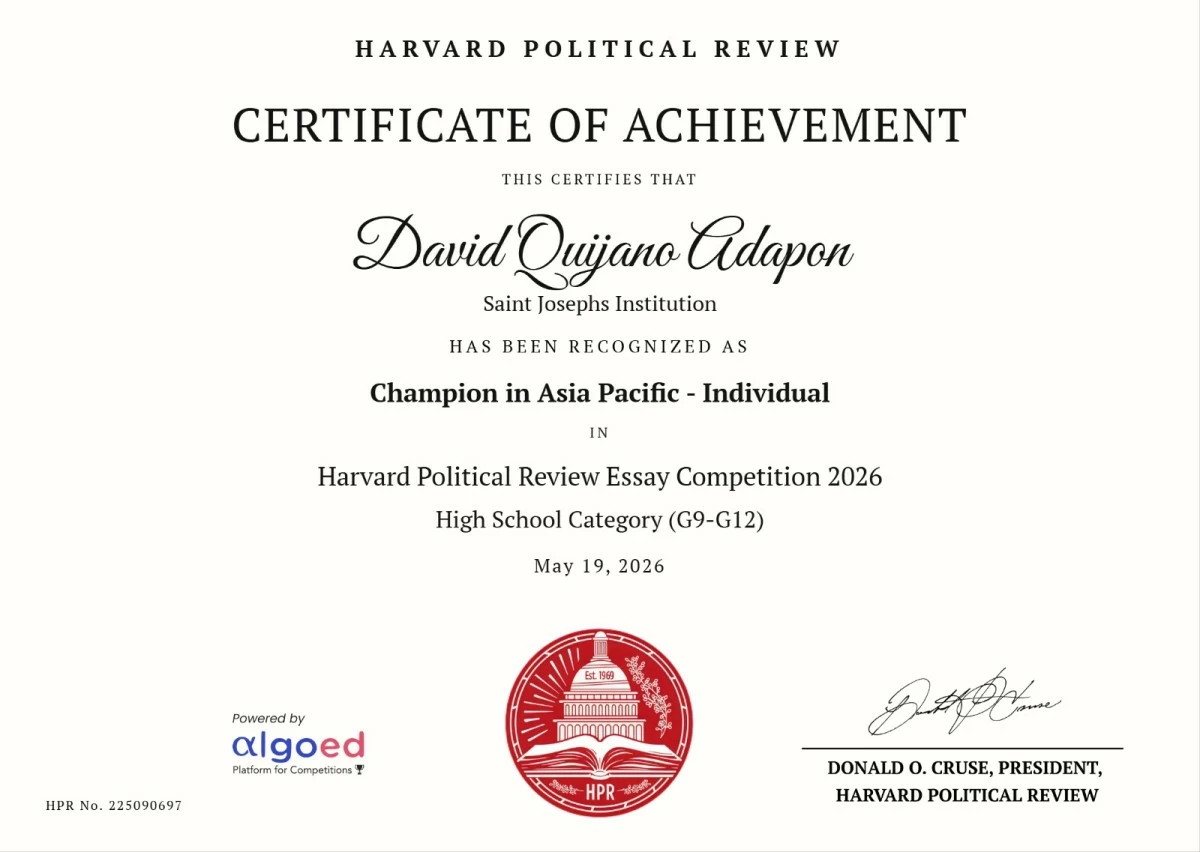
Quality journalism matters
Despite his achievement, David remains grounded in his belief that journalism still has an important place in society, especially in a time dominated by social media trends and viral content.
“I do agree to an extent that journalism is dying,” he admitted. “A lot of people address issues not in a way that is constructive or helpful, but rather to get popularity because of how trending the issue is.”
Still, this reality is exactly what draws him closer to journalistic writing. For David, responsible journalism provides something increasingly rare online: structure, facts, and accountability.
“What draws me to journalistic writing is that these public issues are addressed head on and in a structured, factual manner,” he explained. “People are informed and aware rather than engaged for the sake of engagement.”
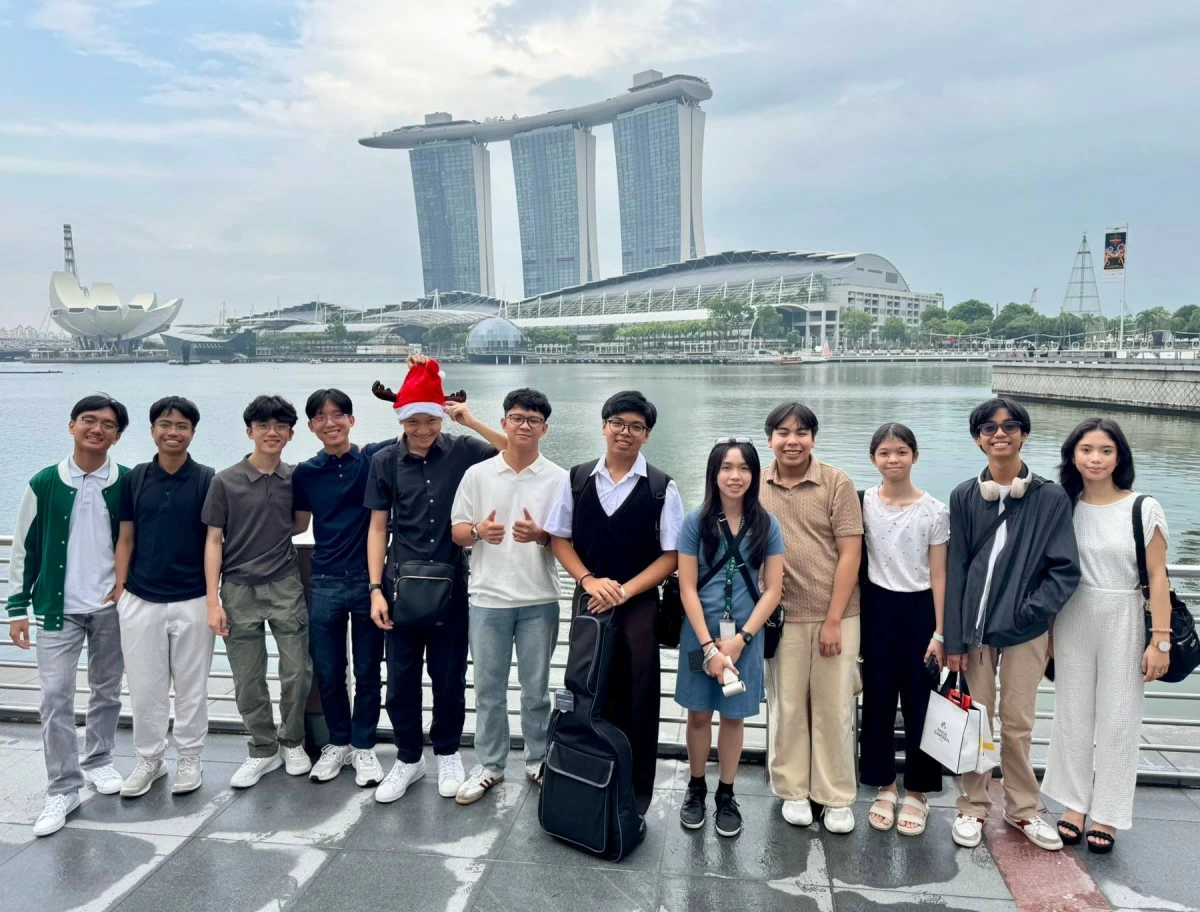
YOUNG SCHOLARS David and some of his fellow Filipino ASEAN scholars with the Marina Bay skyline behind them. (Photos: David)
He also emphasized the importance of sourcing and critical thinking in an age where misinformation spreads quickly online. As someone belonging to a younger generation immersed in digital culture, David believes youth have a major role to play in shaping the future of journalism.
“Young people are the pioneers of a new era of journalism because of their proficiency in social media,” he said. “Quality journalism enables viewers to actually form opinions instead of blindly following what is being pushed online.”
Behind an award-winning essay
Beyond writing competitions and academic recognition, David balances a disciplined routine as an ASEAN scholar under Singapore’s Ministry of Education. Before transferring to Singapore in 2025, he studied at OB Montessori Center for 10 years.
He starts his school days with breakfast to save money, maximizes short pockets of free time to review lessons, and organizes tasks through a digital to-do list. During exam season, he often spends recess breaks in the library reading or practicing lessons.
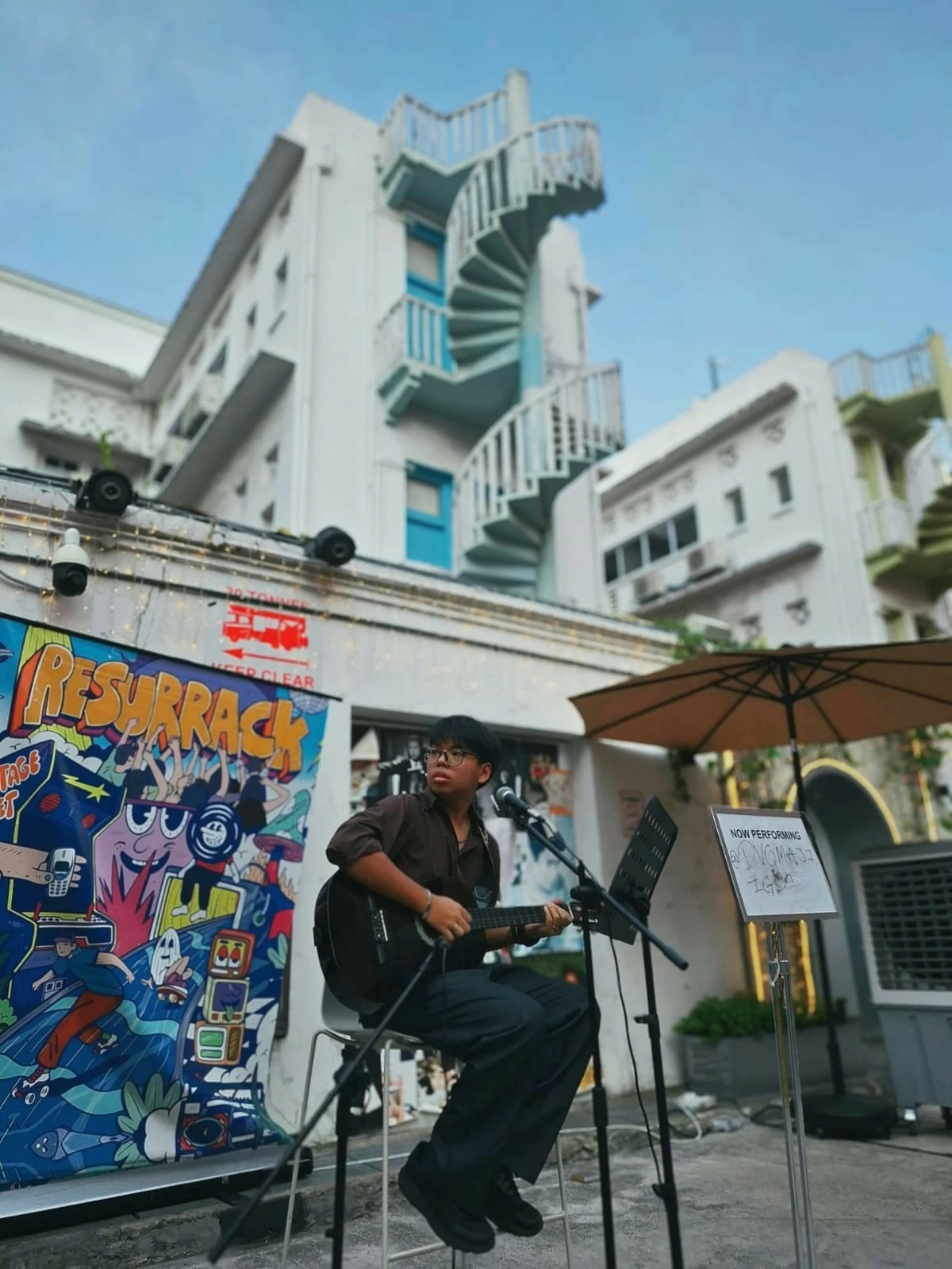
BEYOND THE ACADEME When not studying, David enjoys playing musical instruments like guitar.
Even with his growing achievements in writing, David hopes to pursue architecture in college. He said the field combines his love for creativity, teamwork, and problem-solving. For students hoping to join international writing competitions, David encourages them to take advantage of opportunities online and focus on growth rather than recognition.
For him, writing competitions are not only about awards, but also about discovering one’s perspective and voice in a rapidly changing world. And in a time when many question whether young people still care about journalism, David’s story offers a powerful reminder that there are still voices willing to think critically, speak thoughtfully, and engage with the issues that matter most.