






Manila Bulletin
 Philippines
Mindanao
Cotabato steps up dredging operations to address perennial flooding
Philippines
Mindanao
Cotabato steps up dredging operations to address perennial flooding
Philippines
Mindanao
Cotabato steps up dredging operations to address perennial flooding
Cotabato steps up dredging operations to address perennial flooding
Published May 26, 2026 03:47 pm


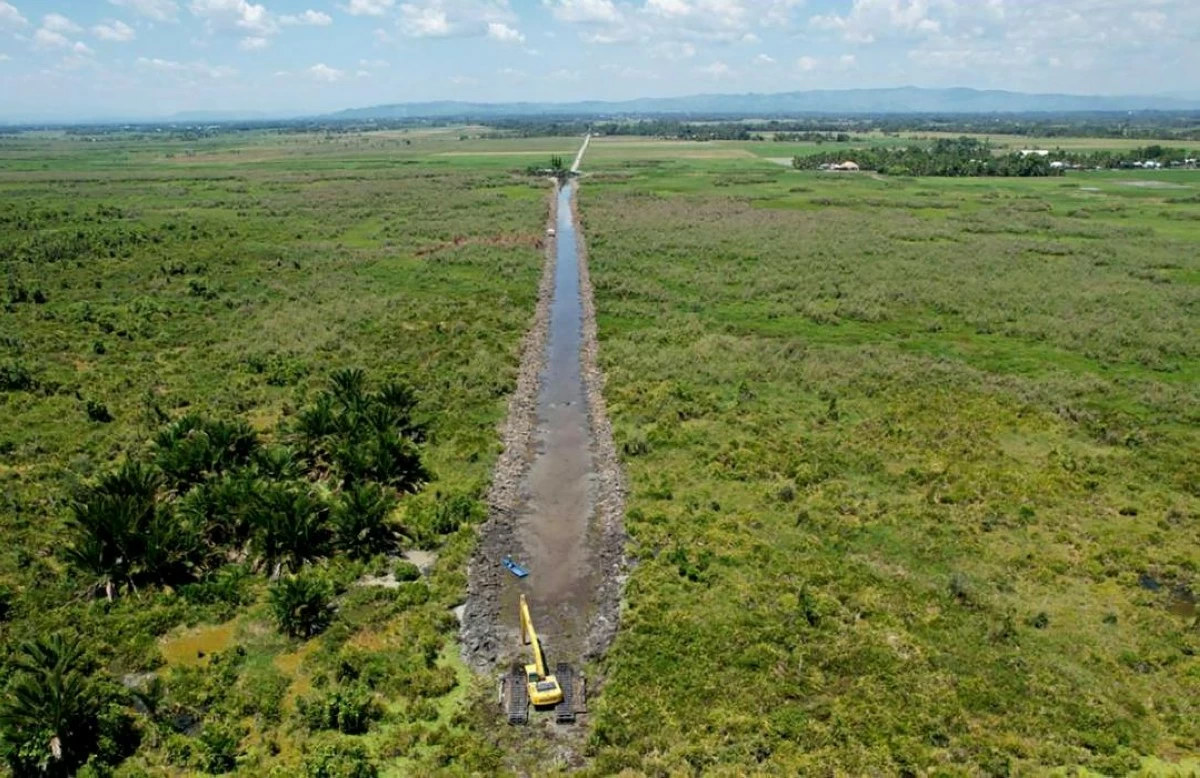
ONGOING dredging operations in Barangay Cuyapon, Kabacan, Cotabato.
DAVAO CITY – The provincial government has intensified dredging operations in silted waterways in several low-lying towns to address perennial flooding in Cotabato.
Perennial flooding has swamped hundreds of hectares of agricultural land, affecting rice production in most of the municipalities in the periphery of the Ligawasan Marsh.
The provincial government has deployed two amphibious excavators purchased for P112 million to augment ongoing clearing operations.
Engr. Resty Espelita of the Cotabato Provincial Engineers Office said the two excavators are a big boost to clearing operations.
Twenty-four kilometers of waterways have been cleared in the low-lying areas of Kabacan, M’lang, Matalam, Pigcawayan, Pikit, and Tulunan as of May 26, Espelita said. Dredging operations started in June last year in M'lang.
“But the provincial government also included in its clearing operations the connecting waterways that are already under the SGA like the town of Tugunan so that the water will be able to drain down to the Ligawasan Marsh,” said Espelita, referring to the barangays that used to be part of Pikit and now under the Special Geographic Area of the Bangsamoro Autonomous Region in Muslim Mindanao (SGA-BARMM).
Espelita disclosed that local government units in SGA-BARMM have provided fuel as counterpart in ongoing clearing operations.
Prior to clearing operations, he said that the PEO was able to identify and clear old waterways covered with silt and vegetation.
“Years and years of flooding, these waterways have been filled with silt or some were already covered with thick water hyacinths,” Espelita said.
Among the longest dredging operations conducted was in Barangay Pamalian in Tugunan. The PEO cleared 9.5-kilometers of creek with an estimated width of 30 meters and a depth of five meters.
Dredging operations are still underway to link the waterway to the Ligawasan Marsh, which serves as the catch basin of the river systems in Central Mindanao.
In Pigcawayan town, a total of 9.3 kilometers of waterway have been cleared in Barangay Bulucaon after over four months.
Hundreds of hectares of rice farms in Barangay Bulucaon have been submerged in floodwaters for over a decade.
“We are grateful for the amphibious operations because it is a big help to our rice farmers,” said Mayor Juanito Agustin.
Espelita said that dredging operations are ongoing in Barangay Cuyapon in Kabacan where at least two kilometers of waterways have been cleared.
The local government of Kabacan said that dredging operations are a big help to local rice farmers and fisherfolk.
In the neighboring town of M’lang, a total of six kilometers of waterways have been cleared, according to the PEO.
The provincial government of Cotabato has stepped up efforts to minimize or totally stop the adverse impact of perennial flooding affecting agricultural lands in low-lying areas in the province.
Gov. Emmylou Taliño-Mendoza urged local government units to carefully plan their operations before the deployment of amphibious excavators.
Mendoza added that dredging operations are part of the provincial government’s mitigation measures to address perennial flooding.
Provincial Disaster Risk Reduction Office (PDRRMO)
chief Abril Espadera said that dredging operations will significantly reduce flooding in low-lying areas."The desilting has created a bigger catching capacity on our waterways because we were able to restore its original state. It has a big impact on prevention and mitigation of flooding especially during the rainy season," Espadera said.
Perennial flooding has been affecting farmers as the province sits in the middle of the Mindanao River Basin.
Aside from Cotabato, the Mindanao River Basin spreads in the provinces of Bukidnon, Davao del Norte, Lanao del Sur, Maguindanao, Sultan Kudarat, South Cotabato, and some parts of Agusan del Sur and chartered cities Cotabato City and Davao City.
The Mindanao River Basin is the second largest river basin in the Philippines with a total area of 21,503-square kilometers. It is the second largest river system in the country next to Cagayan River in Luzon