






Manila Bulletin
 Philippines
National
AFP hints at broader coastal defense push as Marcos heads to Japan
Philippines
National
AFP hints at broader coastal defense push as Marcos heads to Japan
Philippines
National
AFP hints at broader coastal defense push as Marcos heads to Japan
AFP hints at broader coastal defense push as Marcos heads to Japan
Published May 26, 2026 02:22 pm


At A Glance
- AFP spokesperson Col. Francel Margareth Padilla said the military expects the talks between Preisdent Marcos Jr. and Japanese Prime Minister Takaichi Sanae to advance Philippine defense interests.
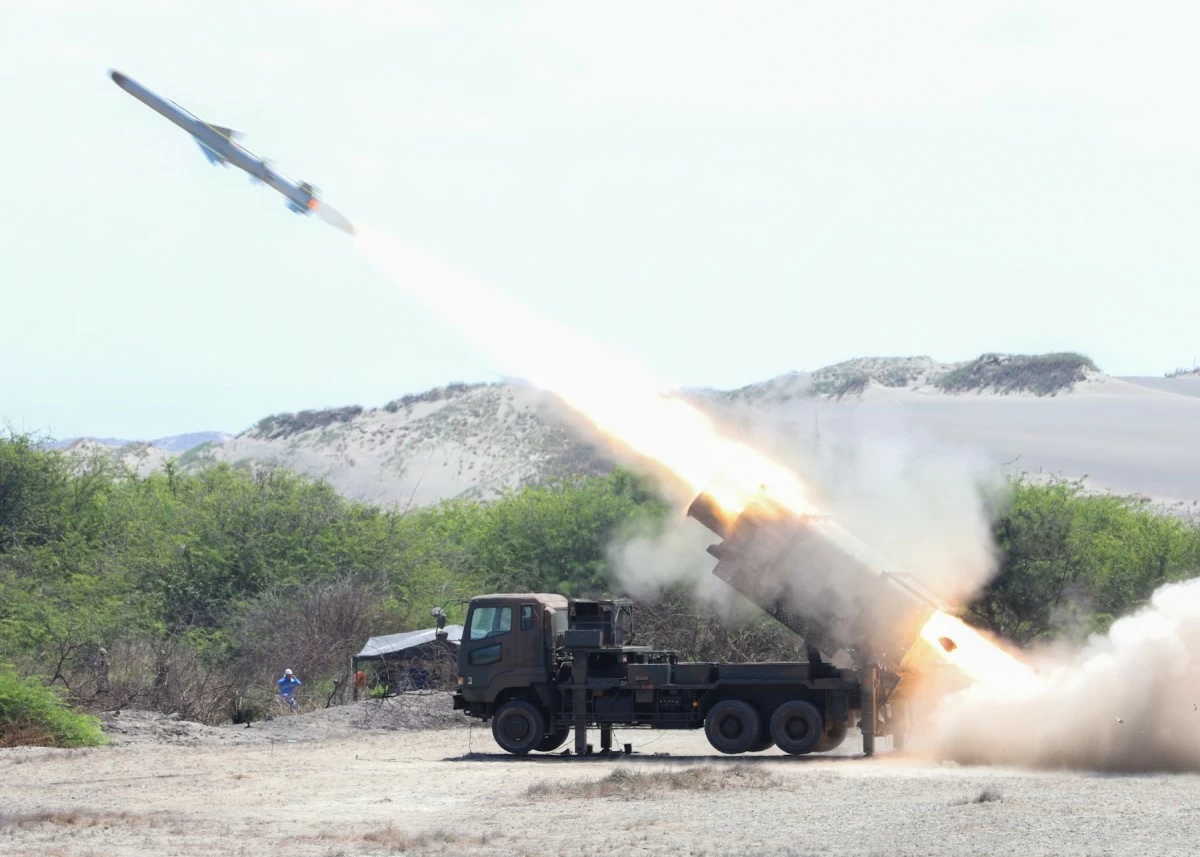
The Japan Self-Defense Force fires its Type 88 surface-to-ship missile system during a maritime strike drill as part of Exercise Balikatan at the Paoay Sand Dunes in Ilocos Norte on May 6, 2026. The event was witnessed by Department of National Defense (DND) Secretary Gilberto Teodoro Jr. and Japan Minister of Defense Shinjiro Koizumi. (Photo: Department of National Defense)
The Armed Forces of the Philippines (AFP) on Tuesday, May 26, signaled a broader push to strengthen the country’s coastal defense capability as President Ferdinand Marcos Jr. left for a four-day state visit to Japan that is expected to deepen Manila and Tokyo’s security ties.
AFP spokesperson Col. Francel Margareth Padilla said the military expects the talks between Marcos and Japanese Prime Minister Takaichi Sanae to advance Philippine defense interests.
“Well, these are higher-level talks. And of course, our expectation here will always be aligned with Philippine interests. So on the side of the Armed Forces of the Philippines, we welcome any improvement in our capabilities to enhance our defense systems. Not just in equipment, but also in skill sets,” she said.
There have been discussions about how Japan’s Type 88 surface-to-ship missile system -- which was fired by the Japan Self-Defense Forces (JSDF) in Paoay, Ilocos Norte on May 6 during the Balikatan Exercises -- could help modernize the AFP’s missile system.
The two countries have also embarked on a growing defense cooperation following the signing of the Reciprocal Access Agreement (RAA) in 2024 and the Acquisition and Cross-Servicing Agreement earlier this year.
Padilla said the AFP expects to “heighten our defenses with the sheer amount of alliances and partners that have been supporting us through the recent years.”
She, however, declined to discuss specifics of ongoing defense discussions with Japan.
“At this point in time, these are higher-level and policy issues. So we defer that to the Department of National Defense,” she said.
But retired admiral Roy Vincent Trinidad, the AFP spokesperson for the West Philippine Sea (WPS), confirmed there are discussions involving possible support from Japan for the AFP’s modernization effort.
“We welcome any move by like-minded countries to strengthen the AFP capability to perform their mandate of protecting our sovereignty, the integrity of the territory and the Filipino people,” Trinidad said when asked about reports that the AFP is interested in acquiring the Type 88 missile system.
“Details of that could not yet be published but rest assured the moment that there would be developments not only with our treaty ally, the US, but even countries that have expressed of supporting the AFP, a public announcement will be given,” he added.
In recent years, the AFP has been trying to build a credible coastal defense network as tensions continue in the WPS.
Trinidad said the AFP monitored 36 Chinese vessels in several features in the WPS this week, up from 27 the previous week.
He said China’s continued presence near Bajo de Masinloc, where 19 Chinese coast guard and People’s Liberation Army-Navy (PLAN) vessels were monitored, was part of efforts to normalize its control over the area.
“The presence in Bajo de Masinloc is there to normalize the situation in as much as they have already declared a nature reserve,” Trinidad said. “These are all illegal statements, these are false narratives which we have been pushing back against.
In Ayungin Shoal, there were nine Chinese coast guard and PLAN vessels, five in Escoda Shoal, and three in Pag-asa Island.
Countering threats
To counter these threats, the AFP is preparing for the operationalization of the Indian-made BrahMos missile system anytime soon as part of its modernization drive, according to Philippine Navy (PN) spokesperson Capt. Marissa Martinez.
And when asked if Japan’s Type 88 system could potentially add another layer to the country’s shore-based missile capability, Martinez said coastal defense requires several layers.
“Security challenges always evolve, so to answer your question, having the BrahMos itself for coastal defense might not be enough because security challenges does evolve,” she said.
She declined to discuss the missile system’s specifications but stressed that future acquisitions would be integrated into a larger defense network.
“Actually, everything has to be network-centric. So with this, in order to have a good defense, we should be able, your armed forces definitely would plan well its modernization program,” Martinez said.
Marcos earlier said his visit to Tokyo seeks to strengthen the country’s “Strengthened Strategic Partnership” with Japan at a time of rising regional security concerns and the continuing oil crisis.
Marcos is expected to pursue cooperation with Japan in the fields of maritime, defense, and security, along with trade, infrastructure, energy, and space technology.
The President also said he would raise Philippine interests in the WPS and discuss regional security issues with the Japanese prime minister.