ADVERTISEMENT

US Embassy brings English teaching program to Baguio educators

Published May 25, 2026 11:36 am
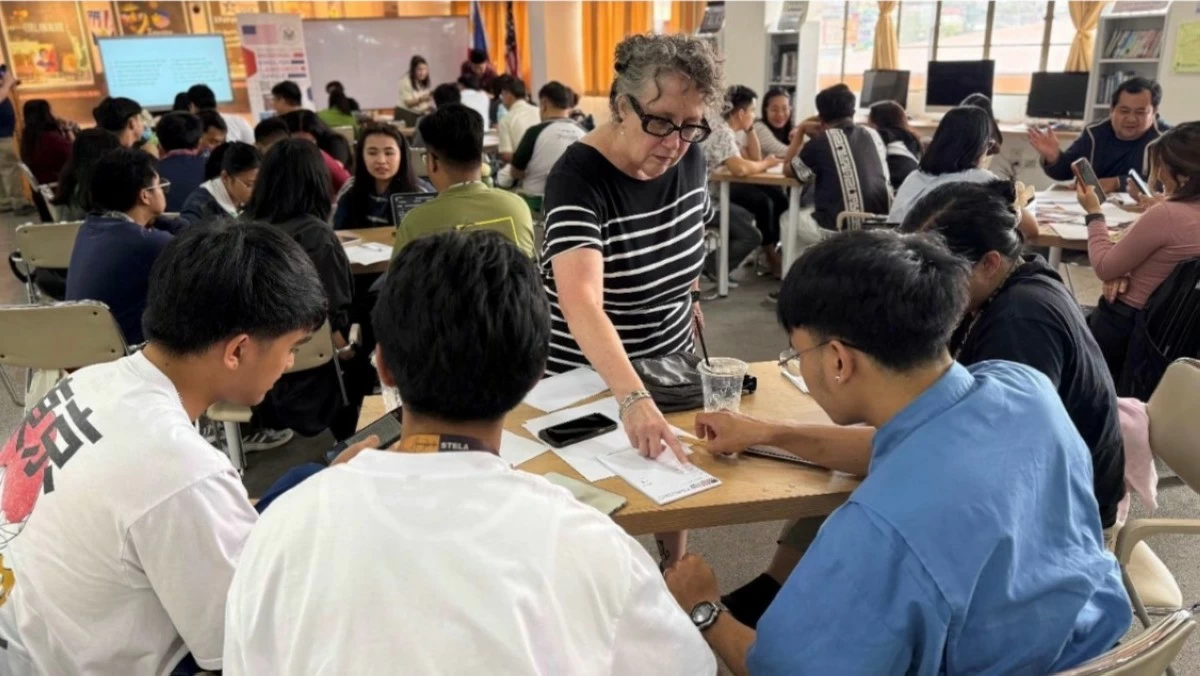
An American English Language Fellow trains college instructors on teaching complex subjects in English (Photos: US Embassy)
As English continues to shape global industries, from science and technology to research and international business, the Embassy of the United States in the Philippines is expanding efforts to strengthen English-language instruction in Philippine classrooms.
Through its Regional English Language Office (RELO), the embassy recently launched a specialized training program in Baguio City aimed at helping Filipino college instructors teach technical subjects more effectively in English.
Held on April 28 and 29 at Saint Louis University, the two-day workshop gathered 50 instructors from the fields of science, technology, engineering, mathematics, and the social sciences. The sessions were led by American English Language Fellows and focused on experiential teaching methods designed to help educators better understand the challenges students face when learning technical subjects in English.
Rather than relying solely on lectures, participants engaged in mini laboratory exercises, problem-solving activities, and interactive classroom simulations conducted entirely in English.
The initiative formed part of the broader celebration of the 80th anniversary of US-Philippines diplomatic ties and the Freedom 250 commemoration marking the 250th anniversary of US independence.
But beyond the anniversary messaging, the program reflected a longstanding aspect of US-Philippines relations: the role of English in education, professional mobility, and international collaboration.
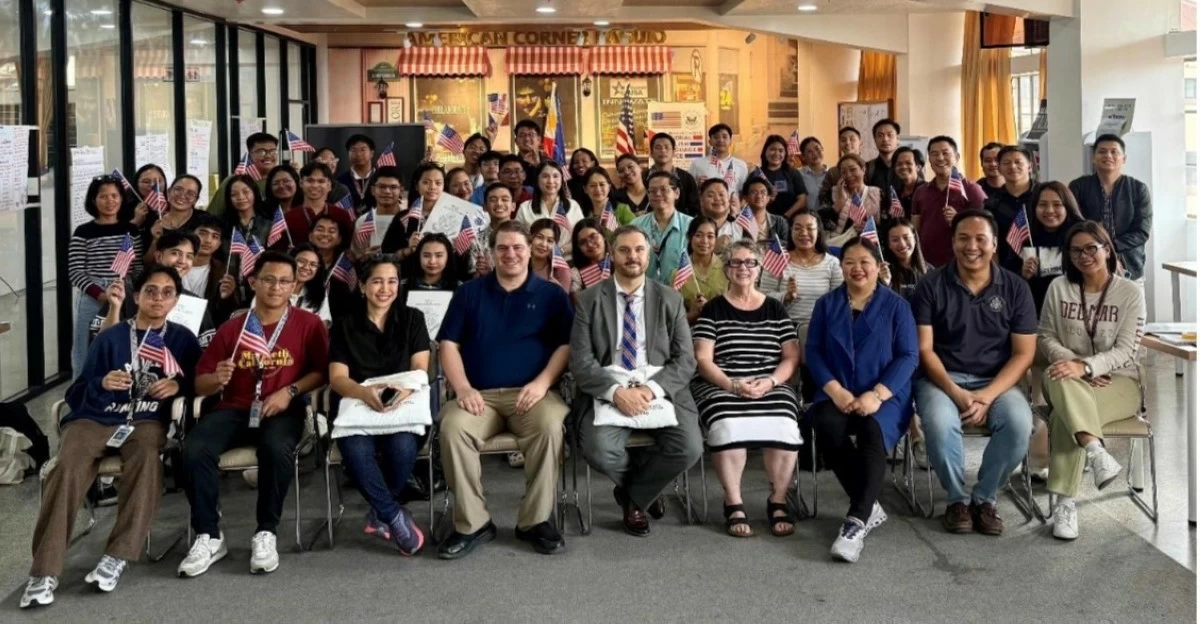
Fifty Baguio college instructors enhance their English instruction skills in a two-day workshop led by US Embassy Regional English Language Officer Jeff McIlvenna and American English Language Fellows
“By empowering Filipino faculty with tools to strengthen their English instruction, we are also helping them shape the next generation of subject matter experts who can effectively communicate complex ideas in English,” said US Embassy Regional English Language Officer Jeff McIlvenna.
“This collaboration bridges a future where the United States and the Philippines can work more easily toward shared goals, making both our nations safer, stronger, and more prosperous,” he added.
For many Filipino students, English proficiency remains closely tied to access—whether in higher education, international employment, research opportunities, or participation in global industries.
That is especially relevant in fields such as STEM, where much of the world’s academic literature, technical documentation, and international collaboration continues to operate primarily in English.
Dr. Stephanie Busbus emphasized the multiplier effect of the program, particularly for educators outside Metro Manila.
“This training has benefited the whole region through these professors and instructors learning more ways of using English as a power and a tool in facilitating content courses,” she said. “From here, we will always share and pay it forward.”
Participants also explored the American English Toolkit, a collection of educational resources developed by the US Department of State alongside American educators and professionals. The toolkit includes interactive learning materials, virtual workshops, games, and classroom activities designed to support English-language instruction while incorporating elements of American culture, history, and the arts.
The workshop in Baguio forms part of the embassy’s broader English-language programming in the Philippines, where educational exchanges and language training have long remained central components of US public diplomacy.

Related Tags

US Embassy BAGUIO education
ADVERTISEMENT
.most-popular .layout-ratio{ padding-bottom: 79.13%; } @media (min-width: 768px) and (max-width: 1024px) { .widget-title { font-size: 15px !important; } }

{{ articles_filter_1561_widget.title }}

.most-popular .layout-ratio{ padding-bottom: 79.13%; } @media (min-width: 768px) and (max-width: 1024px) { .widget-title { font-size: 15px !important; } }

{{ articles_filter_1562_widget.title }}

.most-popular .layout-ratio{ padding-bottom: 79.13%; } @media (min-width: 768px) and (max-width: 1024px) { .widget-title { font-size: 15px !important; } }

{{ articles_filter_1563_widget.title }}

{{ articles_filter_1564_widget.title }}

.mb-article-details { position: relative; } .mb-article-details .article-body-preview, .mb-article-details .article-body-summary{ font-size: 17px; line-height: 30px; font-family: "Libre Caslon Text", serif; color: #000; } .mb-article-details .article-body-preview iframe , .mb-article-details .article-body-summary iframe{ width: 100%; margin: auto; } .read-more-background { background: linear-gradient(180deg, color(display-p3 1.000 1.000 1.000 / 0) 13.75%, color(display-p3 1.000 1.000 1.000 / 0.8) 30.79%, color(display-p3 1.000 1.000 1.000) 72.5%); position: absolute; height: 200px; width: 100%; bottom: 0; display: flex; justify-content: center; align-items: center; padding: 0; } .read-more-background a{ color: #000; } .read-more-btn { padding: 17px 45px; font-family: Inter; font-weight: 700; font-size: 18px; line-height: 16px; text-align: center; vertical-align: middle; border: 1px solid black; background-color: white; } .hidden { display: none; }
function initializeAllSwipers() { // Get all hidden inputs with cms_article_id document.querySelectorAll('[id^="cms_article_id_"]').forEach(function (input) { const cmsArticleId = input.value; const articleSelector = '#article-' + cmsArticleId + ' .body_images'; const swiperElement = document.querySelector(articleSelector); if (swiperElement && !swiperElement.classList.contains('swiper-initialized')) { new Swiper(articleSelector, { loop: true, pagination: false, navigation: { nextEl: '#article-' + cmsArticleId + ' .swiper-button-next', prevEl: '#article-' + cmsArticleId + ' .swiper-button-prev', }, }); } }); } setTimeout(initializeAllSwipers, 3000); const intersectionObserver = new IntersectionObserver( (entries) => { entries.forEach((entry) => { if (entry.isIntersecting) { const newUrl = entry.target.getAttribute("data-url"); if (newUrl) { history.pushState(null, null, newUrl); let article = entry.target; // Extract metadata const author = article.querySelector('.author-section').textContent.replace('By', '').trim(); const section = article.querySelector('.section-info ').textContent.replace(' ', ' '); const title = article.querySelector('.article-title h1').textContent; // Parse URL for Chartbeat path format const parsedUrl = new URL(newUrl, window.location.origin); const cleanUrl = parsedUrl.host + parsedUrl.pathname; // Update Chartbeat configuration if (typeof window._sf_async_config !== 'undefined') { window._sf_async_config.path = cleanUrl; window._sf_async_config.sections = section; window._sf_async_config.authors = author; } // Track virtual page view with Chartbeat if (typeof pSUPERFLY !== 'undefined' && typeof pSUPERFLY.virtualPage === 'function') { try { pSUPERFLY.virtualPage({ path: cleanUrl, title: title, sections: section, authors: author }); } catch (error) { console.error('ping error', error); } } // Optional: Update document title if (title && title !== document.title) { document.title = title; } } } }); }, { threshold: 0.1 } ); function showArticleBody(button) { const article = button.closest("article"); const summary = article.querySelector(".article-body-summary"); const body = article.querySelector(".article-body-preview"); const readMoreSection = article.querySelector(".read-more-background"); // Hide summary and read-more section summary.style.display = "none"; readMoreSection.style.display = "none"; // Show the full article body body.classList.remove("hidden"); } document.addEventListener("DOMContentLoaded", () => { let loadCount = 0; // Track how many times articles are loaded const offset = [1, 2, 3, 4, 5, 6, 7, 8, 9, 10]; // Offset values const currentUrl = window.location.pathname.substring(1); let isLoading = false; // Prevent multiple calls if (!currentUrl) { console.log("Current URL is invalid."); return; } const sentinel = document.getElementById("load-more-sentinel"); if (!sentinel) { console.log("Sentinel element not found."); return; } function isSentinelVisible() { const rect = sentinel.getBoundingClientRect(); return ( rect.top < window.innerHeight && rect.bottom >= 0 ); } function onScroll() { if (isLoading) return; if (isSentinelVisible()) { if (loadCount >= offset.length) { console.log("Maximum load attempts reached."); window.removeEventListener("scroll", onScroll); return; } isLoading = true; const currentOffset = offset[loadCount]; window.loadMoreItems().then(() => { let article = document.querySelector('#widget_1690 > div:nth-last-of-type(2) article'); intersectionObserver.observe(article) loadCount++; }).catch(error => { console.error("Error loading more items:", error); }).finally(() => { isLoading = false; }); } } window.addEventListener("scroll", onScroll); });

Sign up by email to receive news.