






Manila Bulletin
 Business
Trade & Industry
Ube, semicon, new trade deals drive Philippine export boom
Business
Trade & Industry
Ube, semicon, new trade deals drive Philippine export boom
Business
Trade & Industry
Ube, semicon, new trade deals drive Philippine export boom
Ube, semicon, new trade deals drive Philippine export boom
Published May 25, 2026 12:00 am
|
Updated May 23, 2026 01:13 pm


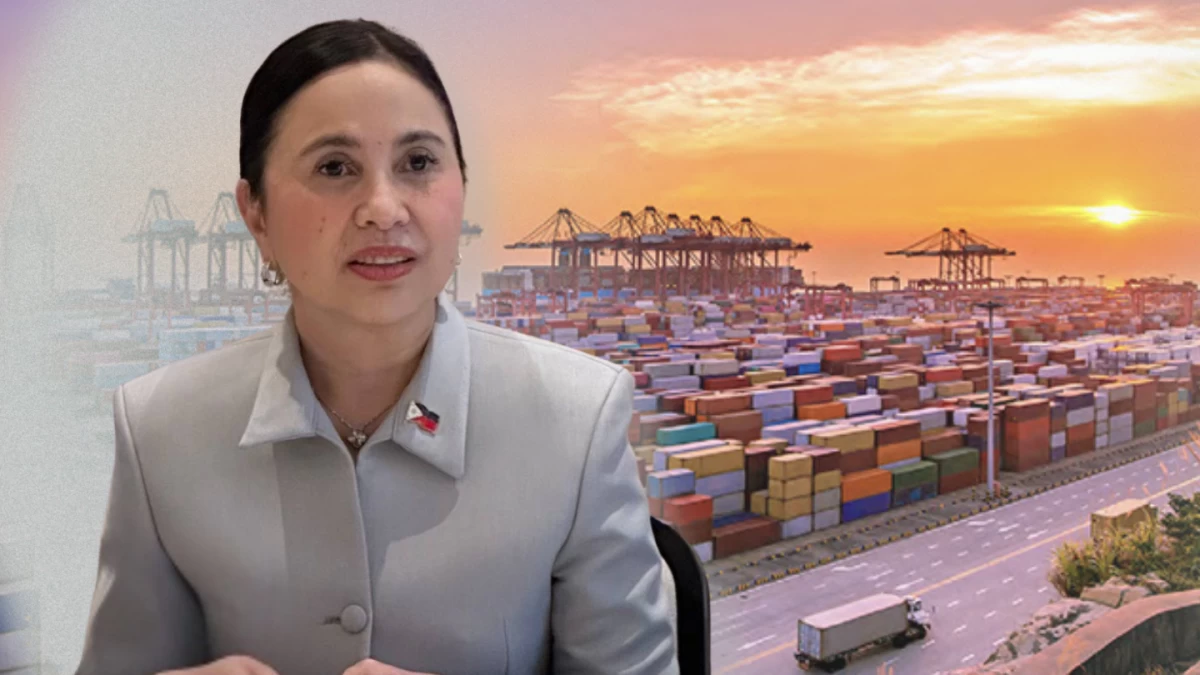
Trade Secretary Cristina Roque
The Department of Trade and Industry (DTI) remains optimistic that the boom in artificial intelligence (AI), agricultural trends, and an aggressive push for new free-trade agreements (FTAs) will shield the country’s export sector from deepening disruptions in the Middle East.
Trade and Industry Secretary Cristina Roque stated that the country is still positioned to sustain or even surpass last year’s record performance, despite rising energy prices and fractured global supply chains.
“We’re hoping for that,” Trade Secretary Cristina Roque told reporters last week, when asked if the country could sustain last year’s record export performance.
The total value of merchandise exports reached a record-high $84.48 billion in 2025, up 15.3 percent from the $73.27 billion recorded in 2024, according to the Philippine Statistics Authority (PSA).
Preliminary data from the PSA showed that exports maintained their upward trajectory in the first quarter, expanding 12.7 percent to $22.70 billion from $20.14 billion in the same period last year.
March alone posted the highest monthly export performance on record at $8.17 billion, an increase of 20.4 percent from $6.78 billion in the same month last year.
The growth in outbound shipments during the month coincided with the first full month of the ongoing war in the Middle East, which has since triggered a surge in oil and energy prices and disrupted supply chains for essential goods.
Roque said this may be the reason why export numbers for April may not be as strong as those in the first three months, although she noted that the overall outlook for the rest of the year remains bright.
“The demand is there,” the DTI chief said, citing the strength of the country’s top export commodities such as electronics and mineral and agricultural products.
The surge in merchandise exports from January to March was mainly driven by electronic products, whose sales rose by 24.5 percent to $13.06 billion from $10.49 billion in the previous year.
The DTI has said that the robust performance of electronic products reflects growing global demand for semiconductor components and devices used in artificial intelligence (AI), electric vehicles, and the Internet of Things.
In line with this, demand for gold and other mineral-based products also strengthened during the three-month period, posting gains of 84 percent and 55.7 percent, respectively.
Roque said overseas appetite for agricultural products remains strong, fueled by longtime favorites such as bananas, coconuts, and pineapples, as well as ube, which has become a trending product in foreign markets.
She noted that interest in these products would likely remain unchanged throughout the year, even if the Middle East conflict continues to threaten global supply chains.
“Because we don’t have a [problem]. The problem is worldwide. It’s not just us here,” she said.
To further encourage growth, Roque said the government plans to conclude four free trade agreements (FTAs) this year to widen market access for the country’s merchandise exports.
The Philippines is expected to complete negotiations for trade pacts with the European Union, Chile, Canada, and India, she said.
Earlier, Roque said the government is studying a potential FTA with Paraguay after it was brought up during the recent state visit of Paraguayan President Santiago Peña Palacios to Manila.
In January, the Philippines made it easier for exporters to access the United Arab Emirates (UAE) under a preferential tariff treatment following the signing of a comprehensive economic partnership agreement (CEPA) between the two countries.