







Three magnitude 5 tremors hit Mindanao within 24 hours
Published May 25, 2026 11:28 am


At A Glance
- Phivolcs science research specialist Bhenz Rodriguez told the Manila Bulletin that the Davao Oriental and Surigao del Sur earthquakes were not related.
Philippine Institute of Volcanology and Seismology
The Philippine Institute of Volcanology and Seismology (Phivolcs) reported three earthquakes, ranging from magnitude 5.0 to 5.5, that struck Mindanao within 24 hours, including a 5.2-magnitude offshore tremor off Davao Oriental on Monday morning, May 25.
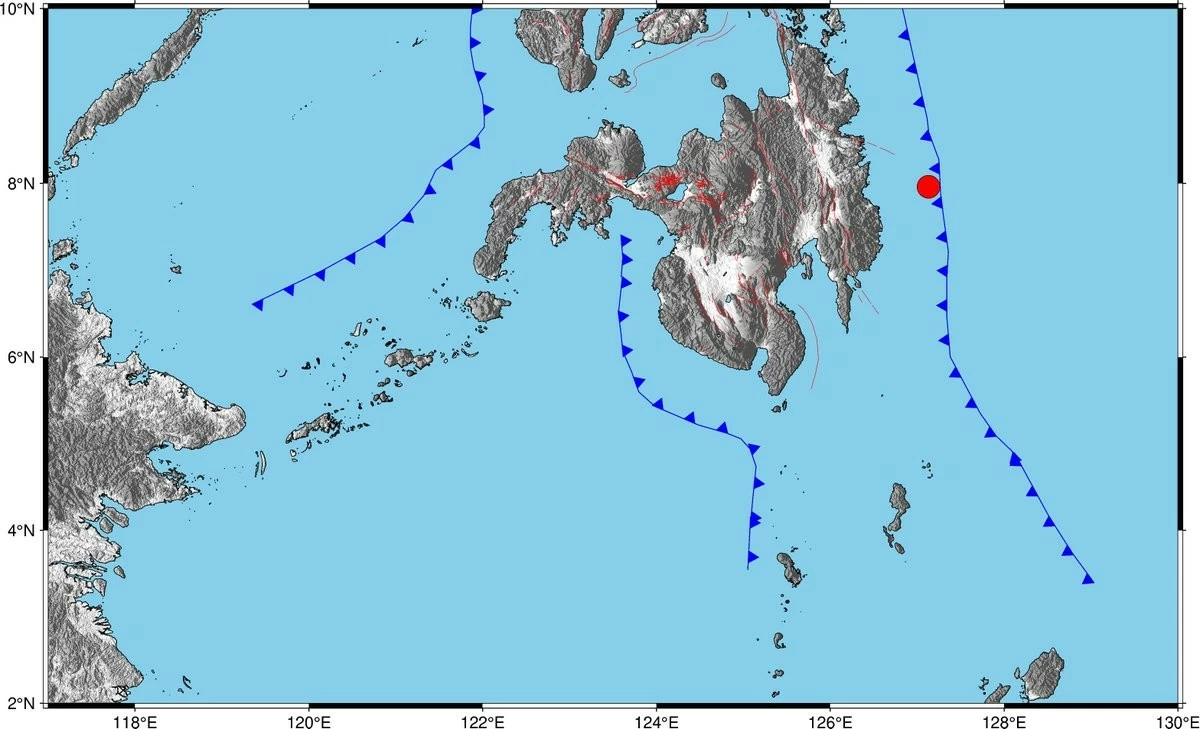
The latest quake, measuring magnitude 5.2, occurred at 10:32 a.m. and was traced 75 kilometers northeast of Baganga, Davao Oriental, at a depth of 10 kilometers.
Intensity I (scarcely perceptible) was recorded in Nabunturan, Davao de Oro.
Phivolcs said aftershocks may occur following the offshore earthquake.
The event came after two earlier earthquakes near Bayabas, Surigao del Sur—a magnitude 5.0 tremor at 9:19 p.m. on May 24 and a magnitude 5.5 quake at 12:48 a.m. on May 25.
The magnitude 5.5 earthquake was felt at Intensity IV (moderately strong) in Bayabas and the City of Tandag in Surigao del Sur, and in Claver, Surigao del Norte.
It was also recorded at Intensity III (weak) in Cagwait and Lingig in Surigao del Sur, and Hinundayan in Southern Leyte.
Intensity II (slightly felt) was reported in the City of Bislig in Surigao del Sur; Nabunturan, Compostela, Montevista, and Monkayo in Davao de Oro; San Francisco, Sogod in Southern Leyte; Baybay City, Abuyog, and Hilongos in Leyte; Nabunturan in Davao de Oro; and Gingoog City in Misamis Oriental.
It was also recorded at Intensity I in San Fernando, Bukidnon, and Dulag, Leyte.
The magnitude 5.0 quake was recorded at Intensity III in Tandag City, Surigao del Sur, and Intensity I in Nabunturan, Davao de Oro.
Phivolcs science research specialist Bhenz Rodriguez told the Manila Bulletin that the Davao Oriental and Surigao del Sur earthquakes were not related.
He said both may have been generated by movement along the Philippine Trench but originated from different segments.
Rodriguez added that the segment of the trench involved is highly active, making weak to moderate earthquakes after stronger quakes still possible.