






 Business
Trade & Industry
Philippine domestic trade slumps in Q1 as high fuel prices, supply shortages bite
Business
Trade & Industry
Philippine domestic trade slumps in Q1 as high fuel prices, supply shortages bite
Philippine domestic trade slumps in Q1 as high fuel prices, supply shortages bite


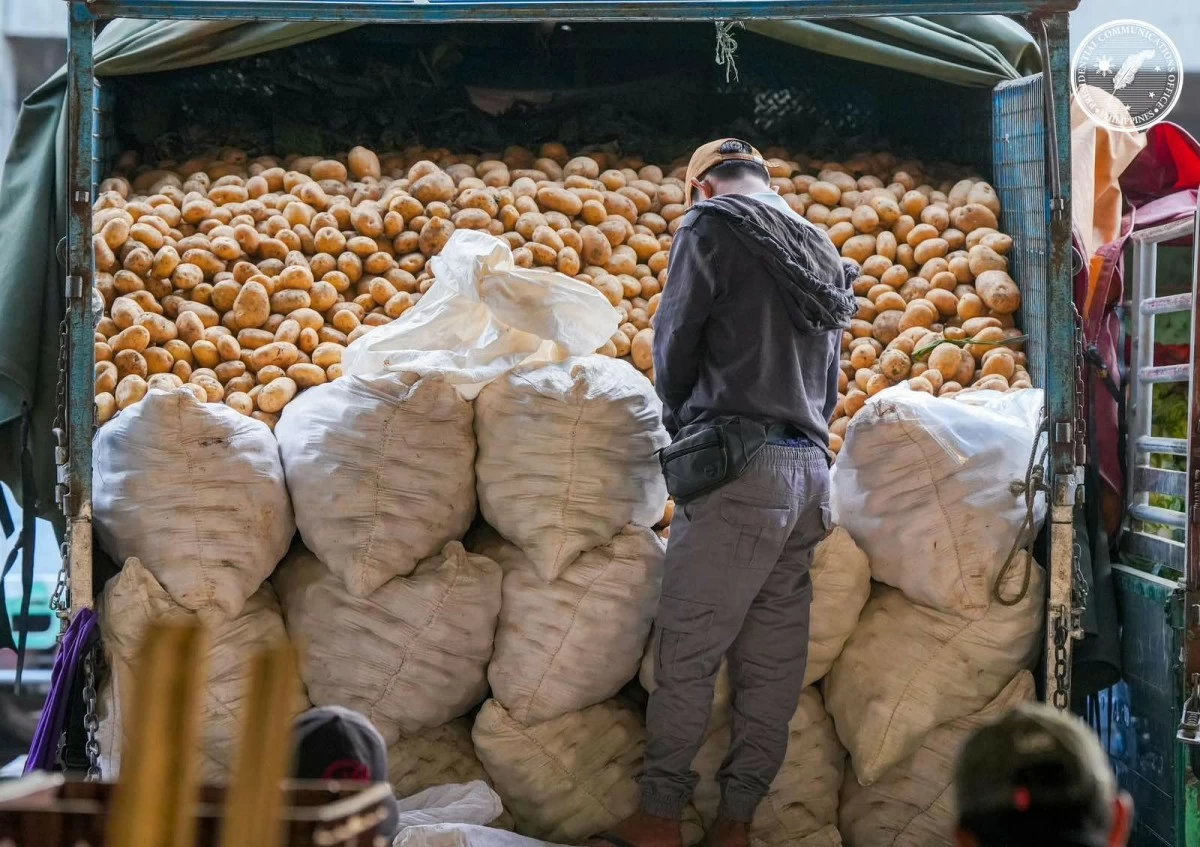
The value and volume of domestic trade in the Philippines declined sharply in the first quarter of 2026 as escalating Middle East tensions toward the end of the quarter heightened prices and contributed to supply shortages, especially of fuel used to transport goods across the country.
The latest preliminary Philippine Statistics Authority (PSA) data on Monday, May 25, showed that the total value of domestic trade fell by 19.8 percent to ₱820.81 billion in the first quarter from ₱1.02 trillion during the same period last year.
Domestic trade refers to the value and volume of commodities transported from one region or province to another.
Despite the overall decline, road transport continued to account for the bulk of domestic trade value during the quarter.
Goods traded by road reached ₱526.11 billion, up 1.2 percent from ₱520.04 billion in the first quarter of 2025, accounting for 64.1 percent of total domestic trade value.
Meanwhile, commodities traded through water transport plunged by 41.6 percent to ₱294.12 billion from ₱503.28 billion a year ago, dragging down overall domestic trade activity.
Goods traded by air rose by seven percent to ₱570 million from ₱530 million, although air cargo accounted for only 0.1 percent of total domestic trade value.
By commodity section, machinery and mechanical appliances, electrical equipment, and related parts posted the highest outflow value at ₱200.96 billion, equivalent to 24.5 percent of total domestic trade value in the first quarter.
This was followed by optical, photographic, cinematographic, measuring, checking, precision, medical or surgical instruments, and related parts and accessories at ₱118.7 billion, or 14.5 percent of total.
Prepared foodstuffs, beverages, spirits and vinegar, tobacco and manufactured tobacco substitutes, and other nicotine-related products ranked third with ₱117.36 billion, accounting for 14.3 percent of total domestic trade value.
Across regions, CALABARZON recorded the highest outflow value of traded commodities at ₱331.62 billion, or 40.4 percent of total domestic trade value.
Central Visayas followed with ₱100.5 billion, or 12.2 percent, while Davao Region ranked third with ₱98.41 billion, or 12 percent.
Cordillera Administrative Region (CAR) registered the lowest outflow value at ₱720 million, or 0.1 percent.
In terms of inflow value, National Capital Region (NCR) remained the country’s biggest destination for domestic trade, receiving ₱357.73 billion worth of commodities, equivalent to 43.6 percent of total.
SOCCSKSARGEN followed with ₱93.3 billion, or 11.4 percent, while Negros Island Region (NIR) posted ₱85.33 billion, or 10.4 percent.
CALABARZON also posted the highest favorable domestic trade balance in value terms at ₱247.82 billion, followed by Central Visayas with ₱74.37 billion, and Davao Region with ₱72.11 billion.
On the other hand, NCR registered the largest unfavorable trade balance at ₱277.15 billion, followed by SOCCSKSARGEN with ₱87.03 billion, and NIR with ₱73.6 billion.
In terms of volume, domestic trade also declined across all modes of transport.
The total volume of domestic trade fell by 35.3 percent to 10.17 million tons during the first quarter from 15.72 million tons in the same period last year.
Road transport accounted for the largest share at 5.15 million tons, or 50.6 percent of total domestic trade volume, although this was still down 20.1 percent from 6.44 million tons a year ago.
Waterborne trade volume dropped more sharply by 45.9 percent to 5.02 million tons from 9.28 million tons, while air cargo volume declined by 19.9 percent to 4,570 tons from 5,710 tons.
By commodity section, mineral products accounted for the highest outflow volume at 3.07 million tons, representing 30.2 percent of total domestic trade volume.
Prepared foodstuffs, beverages, spirits and vinegar, tobacco and manufactured tobacco substitutes, and other nicotine-related products followed with 2.5 million tons, or 24.6 percent of total, while vegetable products accounted for 2.4 million tons, or 23.6 percent.
Davao Region posted the highest outflow volume at 1.94 million tons, equivalent to 19.1 percent of total domestic trade volume, followed by Central Luzon with 1.61 million tons, and CALABARZON with 1.53 million tons.
NCR led in terms of inflow volume at 2.36 million tons, or 23.2 percent of total, followed by SOCCSKSARGEN with 1.73 million tons, and Central Luzon with 1.13 million tons.
Davao Region posted the highest favorable domestic trade balance in volume terms at 1.4 million tons, followed by Ilocos Region with 910,000 tons, and Central Luzon with 480,000 tons.
Meanwhile, NCR recorded the largest unfavorable trade balance at 1.61 million tons, followed by SOCCSKSARGEN with 1.58 million tons, and Zamboanga Peninsula with 290,000 tons.