







BOC streamlines temporary entry rules for cable-laying ships


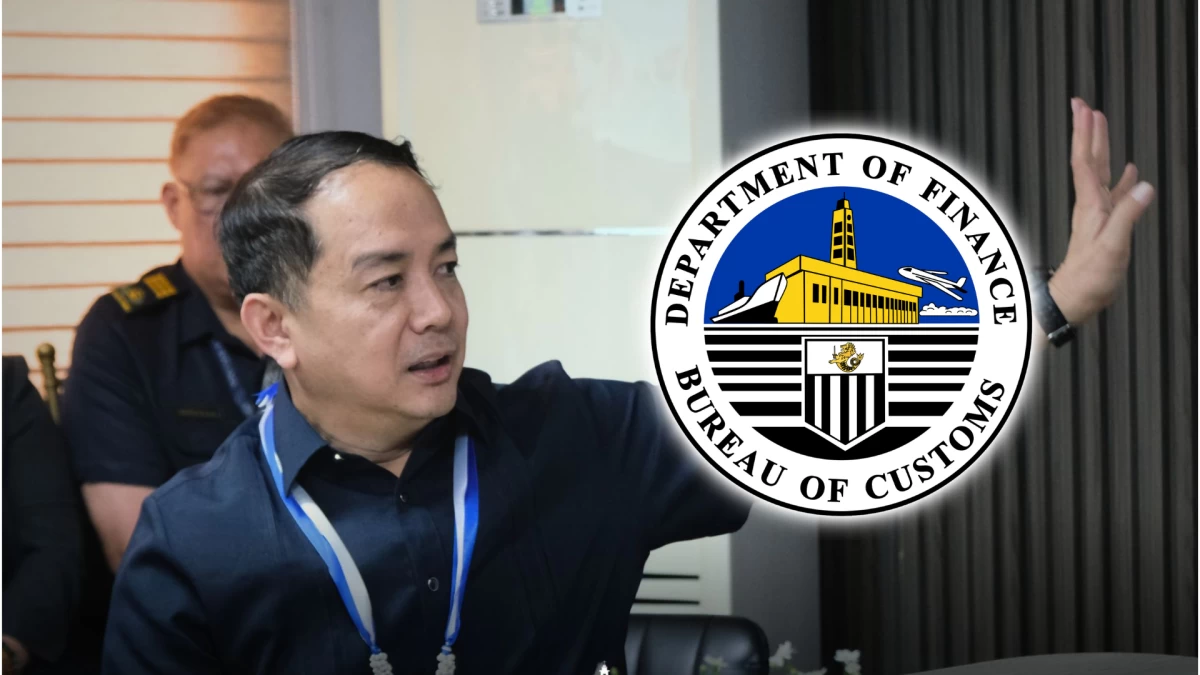
The Bureau of Customs (BOC) has issued new rules streamlining the temporary admission of foreign cable-laying and repair vessels, as the government moves to facilitate submarine cable and offshore energy projects deemed critical to the country’s digital and energy infrastructure.
Under the BOC’s Customs Administrative Order (CAO) No. 2-2026 signed this month by Customs Commissioner Ariel F. Nepomuceno and Finance Secretary Frederick D. Go, the country’s second-largest revenue agency prescribed uniform rules on the conditional importation or temporary admission of international cable-laying and repair vessels (ICLRVs).
The new BOC CAO specifically covers foreign-owned and foreign-registered ICLRVs temporarily admitted for the survey, installation, maintenance, upgrading, or repair of submarine cables, including seabed cable-support activities related to information and communications technology (ICT) infrastructure and offshore energy-generation systems.
The BOC said the new rules seek to adopt transparent customs procedures aligned with international standards and best practices while facilitating the timely and cost-efficient implementation of submarine cable and repair projects.
This CAO was anchored on the Customs Modernization and Tariff Act (CMTA) under Republic Act (RA) No. 10863, the country’s landmark customs reform law enacted in 2016 that modernized customs procedures, aligned Philippine trade rules with international standards, and strengthened trade facilitation and border control mechanisms.
More importantly, the order implemented provisions of the 1990 Convention on Temporary Admission, more commonly known as the Istanbul Convention, an international treaty that harmonized global rules on the temporary duty- and tax-free admission of certain goods and professional equipment.
Under the new rules, the Philippines undertook to grant temporary admission consistent with the CMTA and the Istanbul Convention, with temporarily admitted goods granted conditional relief from import duties and taxes.
The BOC noted that the Philippines acceded to Annex B.2. of the Istanbul Convention, which grants temporary admission to professional equipment “without reservation.”
The CAO explained that the convention covers equipment necessary for the exercise of a profession or specialized task, adding that facilitating temporary admission of professional equipment contributes to the “international exchange of specialized skills and techniques,” the “free flow of information,” and the “enhancement of knowledge of other peoples and countries.”
Under the order, ICLRVs were expressly recognized as professional equipment entitled to duty- and tax-free temporary admission.
The new rules require that the vessels be owned and imported by a person established or resident outside the Philippines and used solely under the supervision of the visiting foreign operator.
Importers or operators must also file documentary requirements such as special permits from the Maritime Industry Authority (MARINA), charter agreements, proof of vessel value, vessel registry certificates, survey reports, reexportation undertakings, and proof of posting of security equivalent to 100 percent of duties, taxes, and other charges.
The temporary admission period will initially cover six months, extendible for another six months upon meritorious grounds including force majeure, technical or mechanical issues, or incomplete or ongoing projects.
The BOC also clarified that auxiliary cables, pipes, or other project materials not forming a permanent part of the vessel would still be subject to regular importation requirements, duties, taxes, and applicable permits unless exempted by law.
District and port collectors were instructed to process entries strictly under the conditional importation system, with duties and taxes imposed only if the vessel fails to comply with prescribed conditions.
While vessel underguarding would generally not be required, collection districts were directed to monitor ICLRVs to ensure that the vessels remain identifiable, traceable, and used exclusively for approved cable-laying or repair activities while in Philippine waters.
For short-term projects, vessels staying in the Philippines for not more than 15 days—extendible once for another 15 days—would no longer be required to file a goods declaration.
However, operators would still need to submit notices of arrival, routing plans, project scope documents, proof of exclusive use, reexportation undertakings, and MARINA permits.
The order also allows authorized submarine cable projects to span multiple customs jurisdictions or collection districts without requiring new import entries or additional duty assessments whenever the vessel moves between covered ports.
Violations of the order would subject vessels to penalties under the CMTA, including payment of duties, taxes, and other charges.
The CAO will take effect 15 days after publication in the Official Gazette or a newspaper of national circulation.