






Manila Bulletin
 Philippines
National
'Sanib-pwersa para sa West Philippine Sea!' PMA Class of 2030 breaks ground as first batch to formally supply officers to Coast Guard
Philippines
National
'Sanib-pwersa para sa West Philippine Sea!' PMA Class of 2030 breaks ground as first batch to formally supply officers to Coast Guard
Philippines
National
'Sanib-pwersa para sa West Philippine Sea!' PMA Class of 2030 breaks ground as first batch to formally supply officers to Coast Guard
'Sanib-pwersa para sa West Philippine Sea!' PMA Class of 2030 breaks ground as first batch to formally supply officers to Coast Guard
Published May 24, 2026 07:00 am


At A Glance
- The Philippine Military Academy (PMA) formally welcomed Class of 2030 on May 23 at Fort Del Pilar in Baguio City, marking the first batch of cadets who may directly join the Philippine Coast Guard (PCG) upon graduation under a new officer allocation program.
- PMA Superintendent Vice Adm. Caesar Bernard Valencia said 367 cadets — 290 males and 77 females — took part in the oath-taking and reception rites at Fort General Gregorio H. del Pilar.
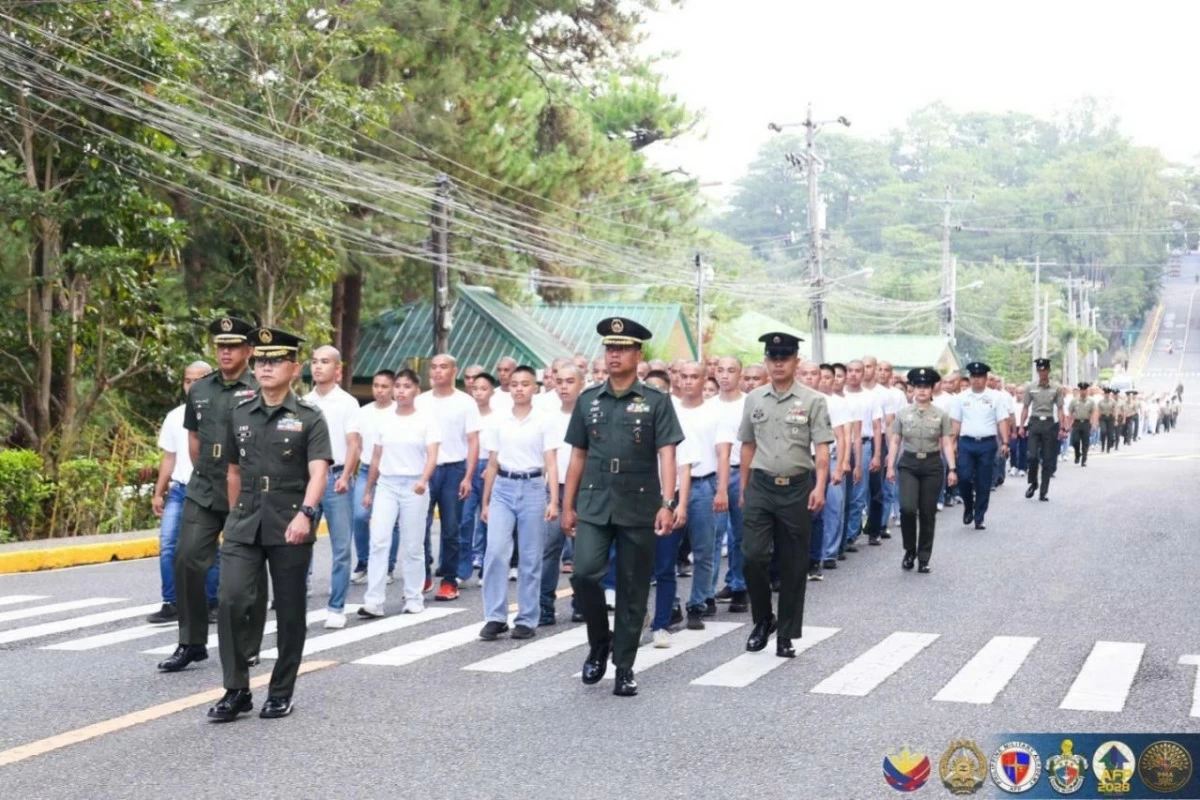
(Photo: Philippine Military Academy)
The Philippine Military Academy (PMA) on Saturday, May 23, welcomed the Class of 2030, the first batch of cadets who may formally enter the Philippine Coast Guard (PCG) upon graduation under a new government-backed officer allocation program meant to tighten coordination between the country’s armed services amid tensions in the West Philippine Sea (WPS).
PMA Vice Adm. Caesar Bernard Valencia, PMA Superintendent, said the academy formally received 367 incoming cadets composed of 290 males and 77 females during the oath-taking ceremony and reception rites at Fort General Gregorio H. del Pilar in Baguio City.
He said the development opened a new chapter for the PMA, which has long served as the country’s main training ground for AFP officers, as the Coast Guard is now formally included in the academy’s officer development program under Joint Memorandum Circular No. 1, Series of 2025.
Previously, PMA graduates could only choose to go to the three major service branches of the AFP - Philippine Army, Philippine Air Force, and Philippine Navy - during their training.
PCG Commandant, Adm. Ronnie Gil Gavan said the program would strengthen “interoperability” between the AFP and the Coast Guard, particularly in maritime security operations.
“This initiative is a critical gain from leadership development and seamless coordination between the military and the PCG in sustaining the defense and protection of national security interests, especially in the West Philippine Sea,” Gavan said.
Brains behind
The country faces continued maritime confrontations with China in disputed waters and while the PCG is a civilian uniformed service under the Department of Transportation (DOTr), it has increasingly operated alongside the military in patrol and resupply missions in the WPS.
And Gavan credited Department of National Defense (DND) Secretary Gilberto Teodoro Jr. for pushing the idea forward.
“We recognize Defense Secretary Gilberto Teodoro Jr as the champion of the idea. We also express our gratitude to President Ferdinand Marcos Jr, Transportation Secretary Giovanni Lopez, Armed Forces of the Philippines Chief Romeo Brawner Jr, PMA leadership, PMA Alumni Association, Department of Budget and Management, and PCG Officers Corps for the realization of the program,” he said.
Under the joint circular signed in 2025, PMA graduates may now transition directly into Coast Guard service while remaining subject to military training standards and service obligations.
The agreement also seeks to improve manpower planning and maritime security cooperation between agencies.
Valencia said the academy was also revising its curriculum to prepare cadets for modern security threats.
“The academy is aggressively undertaking initiatives to enhance our academic and military curriculum, elevating it to be at par with the highest international standards,” he said.
“Your children will be trained not just in the classic arts of war, but in critical and systems thinking, cybersecurity, international defense, and strategic leadership,” the PMA chief added.
Batch 2030
Members of PMA Class 2030 will undergo the academy’s enhanced Bachelor of Science in Management major in Security Studies curriculum, first introduced for Classes 2028 and 2029.
The program focuses on competencies linked to modern warfare, territorial defense, and emerging operational challenges.
The academy said the incoming cadets survived a highly selective process.
Out of 33,640 applicants nationwide, only 24,630 qualified to take the PMA Entrance Examination in 2025. Of those, 1,436 passed the tests and screening process. Only 367 were admitted into the class.
The largest share of incoming cadets came from the Cordillera region with 12 percent, followed by the National Capital Region and Calabarzon with 11 percent each.
During the reception rites, the incoming cadets were received by second class cadet squad leaders from PMA “SIKLAB KASILAG” Class of 2028 as they formally entered the Cadet Corps Armed Forces of the Philippines New Cadet Battalion.