ADVERTISEMENT

PH on trial: SC's defining stand on accountability

Published May 24, 2026 12:05 am  |  Updated May 23, 2026 04:03 pm
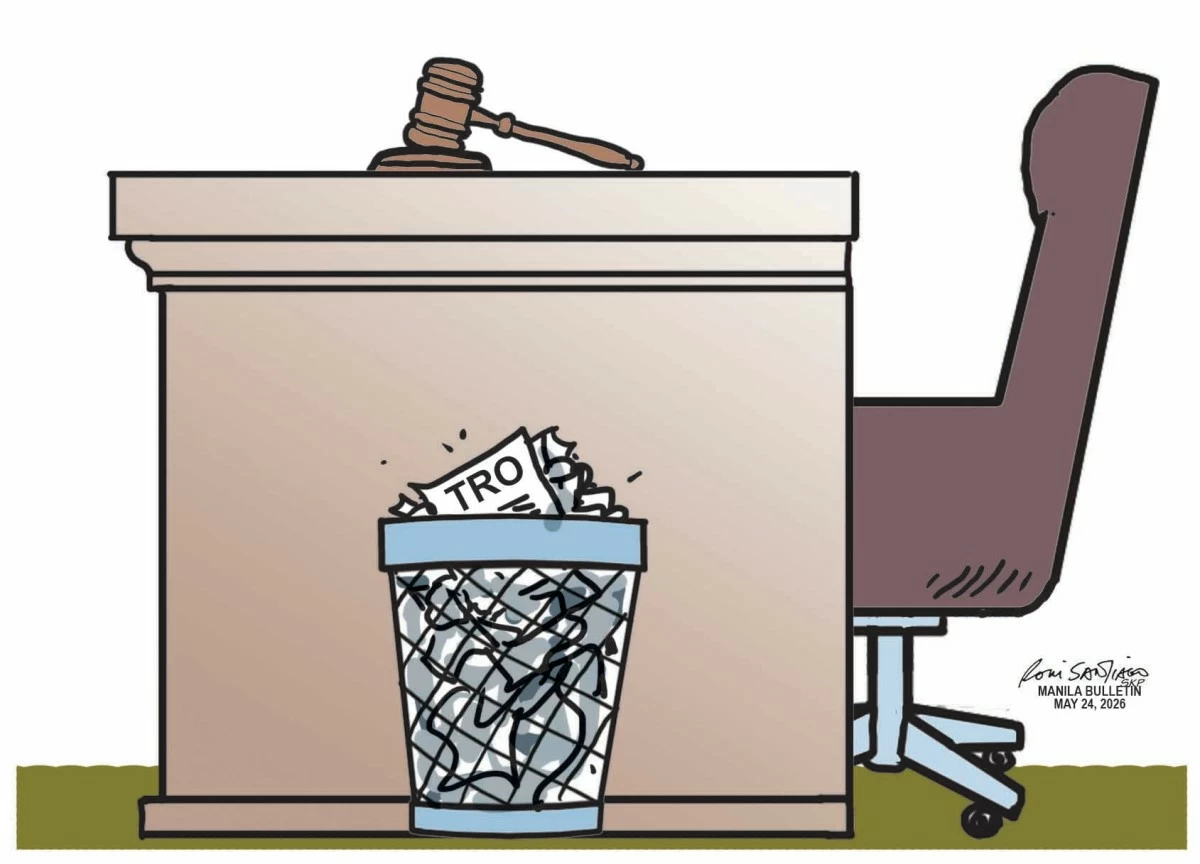
The Supreme Court’s razor-thin 9-5-1 vote denying Senator Ronald “Bato” dela Rosa’s plea for a temporary restraining order against a possible International Criminal Court (ICC) arrest is a critical turning point for institutional independence in the Philippines which has long been haunted by political patronage and selective justice. At stake is not merely the fate of a former police chief and chief architect of the Duterte administration’s bloody anti-drug campaign. What now stands before the nation is a far larger and more consequential question: Can the Philippines hold its own leaders accountable under international law?
For years, critics argued that the country’s institutions bent too easily before executive power. The brutal “drug war,” which left thousands dead, many of them urban poor residents killed in shadowy police operations, became the starkest symbol of that imbalance. The latest Supreme Court (SC) ruling, however tentative or procedural it may appear, sends a signal that the judiciary does not serve as a protective shield for the excesses of any administration.
The political implications are profound. The decision reflects an emerging assertion of judicial autonomy at a time when democratic institutions worldwide are under strain from populist strongmen and disinformation-driven politics. By refusing to halt the possible enforcement of an ICC order, the High Court implicitly recognized that legal accountability cannot simply be dismissed as foreign interference whenever politically inconvenient. It also underscores a difficult but necessary truth that sovereignty does not grant immunity from scrutiny when allegations involve widespread human rights violations.
Yet reducing this moment to an elite political showdown between rival factions would be a dangerous oversimplification. Beyond the Senate speeches, televised hearings, and social media outrage lies the human cost too often buried beneath political theater. Thousands of families continue to mourn fathers, sons, daughters, and neighbors whose deaths remain unresolved. Many came from communities already trapped in poverty and systemic neglect. For them, this legal battle is not about constitutional technicalities or partisan loyalty. This is about whether justice remains possible in a society where the powerful have historically escaped accountability.
The economic consequences are equally significant. Nations are not judged solely by their growth figures or infrastructure projects. Investors and international institutions increasingly assess whether a country upholds the rule of law, protects civil liberties, and maintains credible democratic institutions. The Supreme Court’s refusal to obstruct possible ICC processes may reassure global markets that the Philippines is still capable of institutional restraint and legal self-correction.
This matters because investor confidence thrives on predictability and institutional stability. Sovereign credit ratings, foreign direct investment, and trade partnerships are influenced not only by fiscal performance but also by governance standards. A judiciary perceived as independent strengthens confidence that contracts will be honored, regulations enforced fairly, and political power checked by law. Conversely, a state seen as tolerating impunity risks reputational damage that could affect economic competitiveness in an increasingly values-conscious global economy.
Still, the current administration must avoid the temptation to exploit the issue to distance itself from its predecessor. Accountability cannot be selective, reactive, or transactional. If the government truly seeks to restore faith in democratic institutions, it must move beyond symbolic gestures and commit decisively to transparency, police reform, and human rights protections. That includes strengthening domestic investigative mechanisms so that justice need not depend on international tribunals to function.
The Supreme Court’s decision does not deliver final justice, just yet. It does, however, mark a critical turning point, reminding the nation that institutions matter most when they are tested by power. Whether this becomes the beginning of genuine accountability, or merely another episode in the country’s cycle of political spectacle, will depend on what the government chooses to do next.

Related Tags

Editorial Manila Bulletin
ADVERTISEMENT
.most-popular .layout-ratio{ padding-bottom: 79.13%; } @media (min-width: 768px) and (max-width: 1024px) { .widget-title { font-size: 15px !important; } }

{{ articles_filter_1561_widget.title }}

.most-popular .layout-ratio{ padding-bottom: 79.13%; } @media (min-width: 768px) and (max-width: 1024px) { .widget-title { font-size: 15px !important; } }

{{ articles_filter_1562_widget.title }}

.most-popular .layout-ratio{ padding-bottom: 79.13%; } @media (min-width: 768px) and (max-width: 1024px) { .widget-title { font-size: 15px !important; } }

{{ articles_filter_1563_widget.title }}

{{ articles_filter_1564_widget.title }}

.mb-article-details { position: relative; } .mb-article-details .article-body-preview, .mb-article-details .article-body-summary{ font-size: 17px; line-height: 30px; font-family: "Libre Caslon Text", serif; color: #000; } .mb-article-details .article-body-preview iframe , .mb-article-details .article-body-summary iframe{ width: 100%; margin: auto; } .read-more-background { background: linear-gradient(180deg, color(display-p3 1.000 1.000 1.000 / 0) 13.75%, color(display-p3 1.000 1.000 1.000 / 0.8) 30.79%, color(display-p3 1.000 1.000 1.000) 72.5%); position: absolute; height: 200px; width: 100%; bottom: 0; display: flex; justify-content: center; align-items: center; padding: 0; } .read-more-background a{ color: #000; } .read-more-btn { padding: 17px 45px; font-family: Inter; font-weight: 700; font-size: 18px; line-height: 16px; text-align: center; vertical-align: middle; border: 1px solid black; background-color: white; } .hidden { display: none; }
function initializeAllSwipers() { // Get all hidden inputs with cms_article_id document.querySelectorAll('[id^="cms_article_id_"]').forEach(function (input) { const cmsArticleId = input.value; const articleSelector = '#article-' + cmsArticleId + ' .body_images'; const swiperElement = document.querySelector(articleSelector); if (swiperElement && !swiperElement.classList.contains('swiper-initialized')) { new Swiper(articleSelector, { loop: true, pagination: false, navigation: { nextEl: '#article-' + cmsArticleId + ' .swiper-button-next', prevEl: '#article-' + cmsArticleId + ' .swiper-button-prev', }, }); } }); } setTimeout(initializeAllSwipers, 3000); const intersectionObserver = new IntersectionObserver( (entries) => { entries.forEach((entry) => { if (entry.isIntersecting) { const newUrl = entry.target.getAttribute("data-url"); if (newUrl) { history.pushState(null, null, newUrl); let article = entry.target; // Extract metadata const author = article.querySelector('.author-section').textContent.replace('By', '').trim(); const section = article.querySelector('.section-info ').textContent.replace(' ', ' '); const title = article.querySelector('.article-title h1').textContent; // Parse URL for Chartbeat path format const parsedUrl = new URL(newUrl, window.location.origin); const cleanUrl = parsedUrl.host + parsedUrl.pathname; // Update Chartbeat configuration if (typeof window._sf_async_config !== 'undefined') { window._sf_async_config.path = cleanUrl; window._sf_async_config.sections = section; window._sf_async_config.authors = author; } // Track virtual page view with Chartbeat if (typeof pSUPERFLY !== 'undefined' && typeof pSUPERFLY.virtualPage === 'function') { try { pSUPERFLY.virtualPage({ path: cleanUrl, title: title, sections: section, authors: author }); } catch (error) { console.error('ping error', error); } } // Optional: Update document title if (title && title !== document.title) { document.title = title; } } } }); }, { threshold: 0.1 } ); function showArticleBody(button) { const article = button.closest("article"); const summary = article.querySelector(".article-body-summary"); const body = article.querySelector(".article-body-preview"); const readMoreSection = article.querySelector(".read-more-background"); // Hide summary and read-more section summary.style.display = "none"; readMoreSection.style.display = "none"; // Show the full article body body.classList.remove("hidden"); } document.addEventListener("DOMContentLoaded", () => { let loadCount = 0; // Track how many times articles are loaded const offset = [1, 2, 3, 4, 5, 6, 7, 8, 9, 10]; // Offset values const currentUrl = window.location.pathname.substring(1); let isLoading = false; // Prevent multiple calls if (!currentUrl) { console.log("Current URL is invalid."); return; } const sentinel = document.getElementById("load-more-sentinel"); if (!sentinel) { console.log("Sentinel element not found."); return; } function isSentinelVisible() { const rect = sentinel.getBoundingClientRect(); return ( rect.top < window.innerHeight && rect.bottom >= 0 ); } function onScroll() { if (isLoading) return; if (isSentinelVisible()) { if (loadCount >= offset.length) { console.log("Maximum load attempts reached."); window.removeEventListener("scroll", onScroll); return; } isLoading = true; const currentOffset = offset[loadCount]; window.loadMoreItems().then(() => { let article = document.querySelector('#widget_1690 > div:nth-last-of-type(2) article'); intersectionObserver.observe(article) loadCount++; }).catch(error => { console.error("Error loading more items:", error); }).finally(() => { isLoading = false; }); } } window.addEventListener("scroll", onScroll); });

Sign up by email to receive news.