







High price of certainty in New Clark City
Published May 23, 2026 12:05 am
|
Updated May 22, 2026 05:23 pm


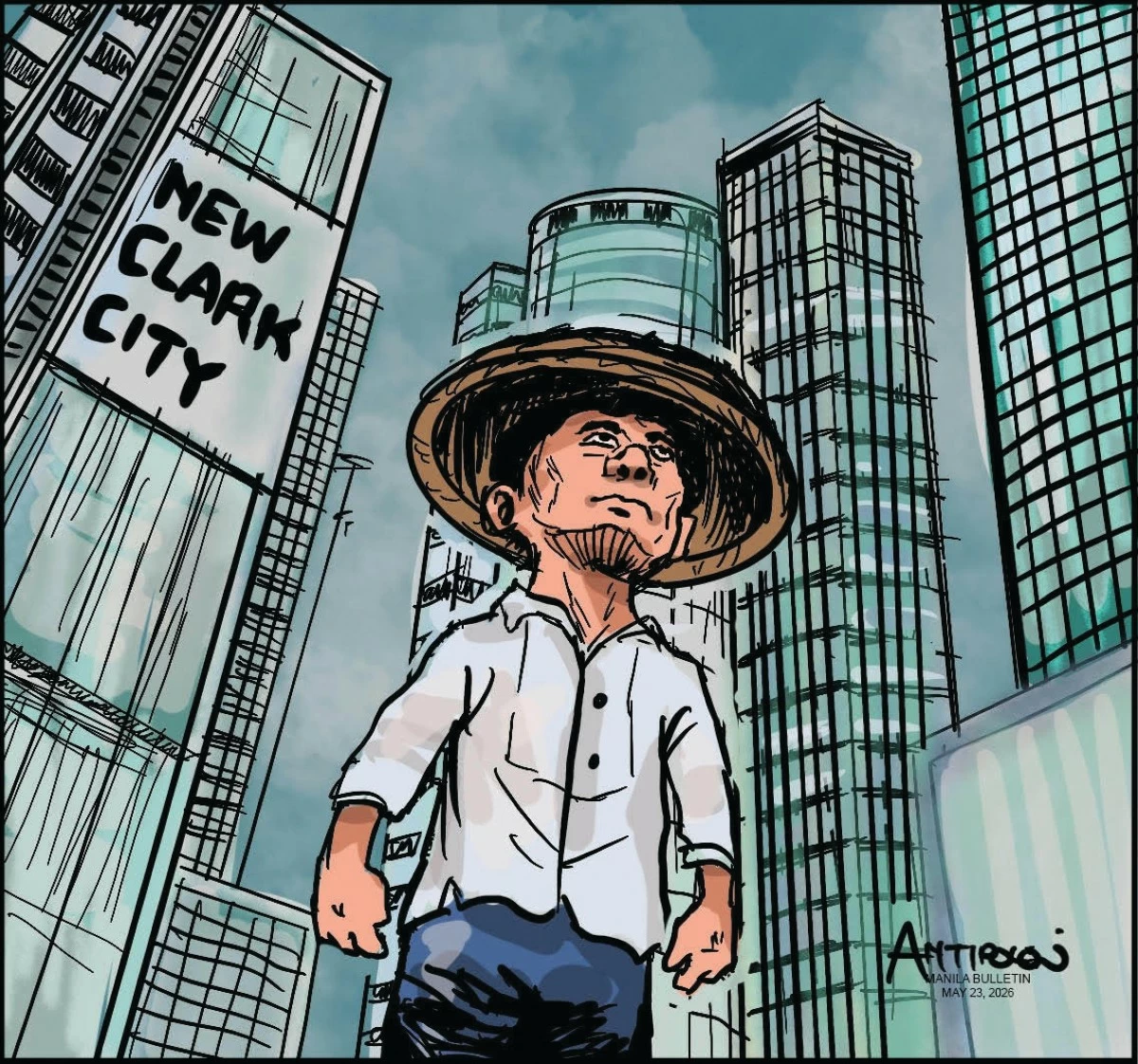
Washington’s latest proposal for a new artificial intelligence (AI) hub in New Clark City resembles an extraterritorial arrangement. The United States (US) is asking Manila to grant diplomatic immunity and US common law jurisdiction to the 1,600-hectare industrial zone—an unprecedented request. Philippine agencies, led by the Bases Conversion and Development Authority (BCDA), denied the idea, noting that treating a commercial tech zone like an embassy violates local law. Yet, as extreme as the American demands are, they reveal the critical challenge: the Philippines has a lot of work to do if it wants to attract top-tier tech investments.
The planned hub is envisioned as the centerpiece of “Pax Silica,” a US-led economic alliance meant to offset China’s dominance in global AI and microchip supply chains. Washington frames this as the American alternative to Beijing, relying on private corporations instead of state-owned enterprises. But private tech firms are risk-averse. Washington’s demands for predictability and speed demonstrate that American investors are concerned about how business actually gets done in Manila.
To be fair, these American concerns did not appear out of thin air; they are built on decades of watching the Philippines’ fluid regulatory environment. The country has a reputation for regulatory volatility whenever a new political administration takes office. Infrastructure contracts signed under one president are often reviewed, renegotiated, or canceled by the next. For tech giants investing billions of dollars into long-term AI infrastructure, the fear that a change in leadership could completely rewrite the rules of the game is an insurmountable barrier to investment. Washington is asking for a legal safeguard because it is afraid to rely on Philippine institutions.
In the fast-moving world of AI, technology becomes obsolete in months, not years. Tech firms cannot afford to wait through years of local litigation or bureaucratic impasses. The local legal and bureaucratic systems compound the problem. The Philippines has historically lagged behind its Southeast Asian neighbors in the ease of doing business due to administrative bottlenecks, overlapping agencies, and prolonged judicial processes. By asking for US common law to apply on-site, Washington is attempting to circumvent the local legal framework it perceives as suboptimal to protect expensive equipment and intellectual property.
Geopolitics makes the situation even more uncertain. While President Ferdinand Marcos Jr. has championed a close alliance with the US, foreign investors know how rapidly Philippine foreign policy can pivot. The shift from the previous administration’s Beijing-leaning stance to the current administration’s Washington-leaning alignment proves that policy can change overnight. American investors are looking for guarantees that can survive the next election cycle.
The BCDA is legally correct to deny a deal that would create an American sovereign enclave on Philippine soil. Yielding would violate the Constitution and trigger a public backlash. However, just saying “no” will not suffice. If Manila wants to host this hub and secure the interest of the 20 American investors already eyeing the project, it must address the main fears driving these US demands.
The Philippines does not need to surrender its sovereignty, but it does need to streamline and stabilize its regulatory framework. This means ensuring that contracts are strictly honored, reducing bureaucratic delays in New Clark City, and insulating investment laws from political interference. Washington’s demands are exceptionally broad, but they hold up a mirror to the country's institutional weak spots. If the Philippines wants to be a serious player in global tech, it should prove it can offer investors reliability without being forced to sign away its own land.