






Manila Bulletin
 Philippines
National
House leadership bats for better protection, representation of IPs
Philippines
National
House leadership bats for better protection, representation of IPs
Philippines
National
House leadership bats for better protection, representation of IPs
House leadership bats for better protection, representation of IPs
Published May 22, 2026 07:17 am


At A Glance
- Speaker Faustino "Bojie" Dy III has supported stronger emergency response mechanisms and continuous representation for IPs, emphasizing their vulnerability during disasters and the need for faster aid delivery.
- Dy urged the NCIP to consolidate nationwide IP data to help agencies quickly identify and prioritize beneficiaries while legislative frameworks are being developed.
- The House approved HB No. 8699, promoting preservation of indigenous writing systems; and HB No. 8869, exempting indigents and IPs from professional and civil service exam fees, both spearheaded by Rep. Sandro Marcos.
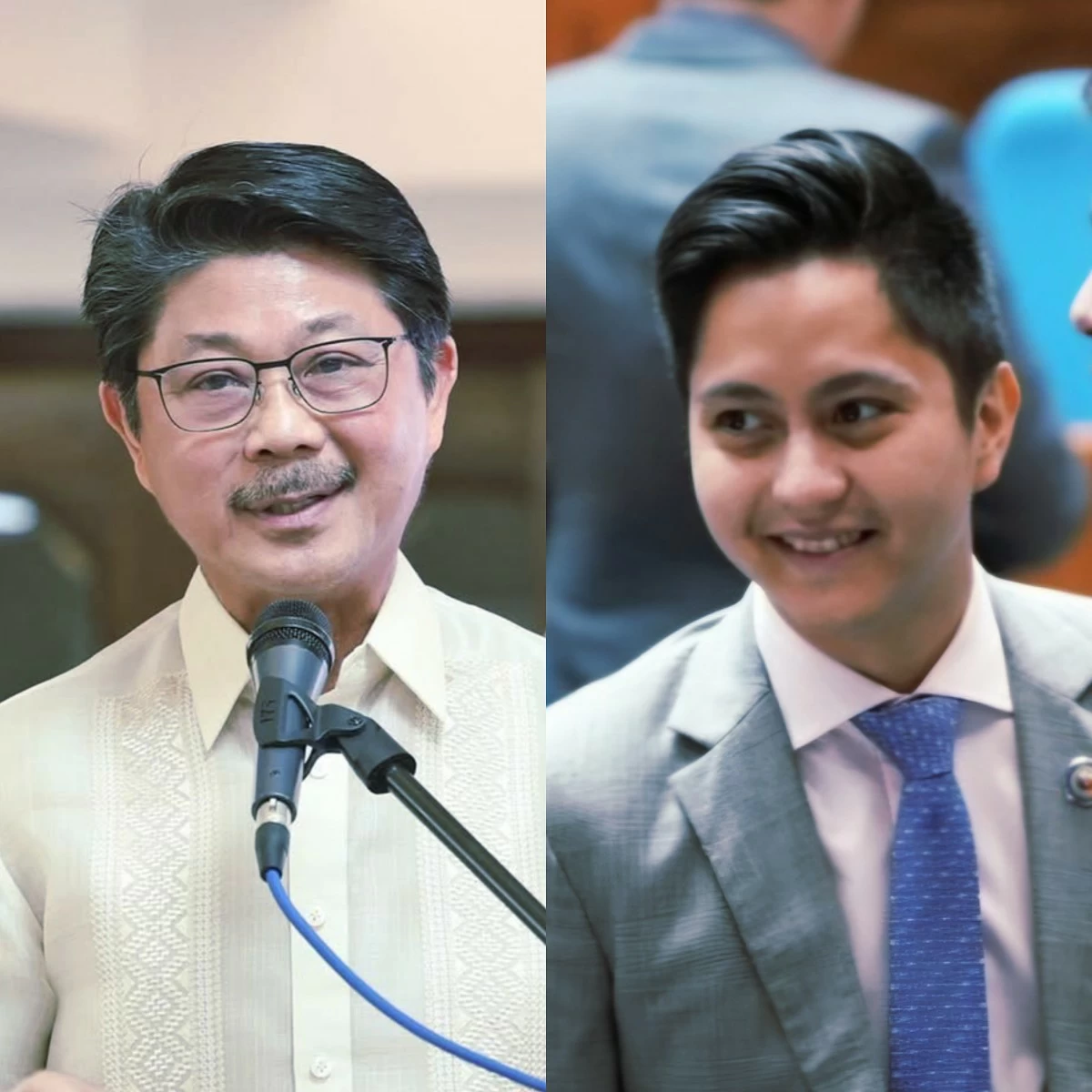
House Speaker Faustino “Bojie” Dy III (left), Majority Leader Sandro Marcos (Facebook)
House Speaker Faustino “Bojie” Dy III has expressed support for measures aimed at strengthening emergency response mechanisms and institutional representation for Indigenous Peoples (IPs).
“Kailangan nating siguraduhin na walang sinuman ang maiiwan, lalo na ang ating mga Indigenous Peoples na kadalasan ay nasa malalayong komunidad at mas vulnerable kapag may kalamidad o sakuna,” Dy, Isabela's 6th district representative, said in a recent statement.
(We need to ensure that no one is left behind, especially our Indigenous Peoples who often live in remote communities and are more vulnerable during disasters or calamities.)
“Mahalaga ang mabilis, maayos, at organisadong pagtugon para agad makarating ang tulong sa kanila,” he noted.
(It is important to have a quick, orderly, and organized response so that aid can immediately reach them.)
In a meeting with officials of the National Commission on Indigenous Peoples (NCIP), the Speaker was briefed on the need to institutionalize a dedicated quick response mechanism for Indigenous Peoples (IPs), particularly during calamities, disasters, and other emergencies.
The NCIP noted that while indigenous communities are among the most vulnerable sectors during crises, there is currently no specific legal framework mandating a focused quick response system for IPs.
Dy acknowledged the importance of the proposal, saying indigenous communities, especially those in geographically isolated and disadvantaged areas, often face delays in accessing relief and government assistance during emergencies.
As an immediate recommendation while legislative measures are being prepared, Dy suggested that the NCIP begin collating and consolidating the names and profiles of IP nationwide for submission to the Department of Social Welfare and Development (DSWD).
The Speaker said such a database could help government agencies identify IP beneficiaries more quickly and ensure they are prioritized for assistance during emergencies and disasters.
“Habang pinag-aaralan natin ang institutional mechanisms, maaari nating simulan agad ang mas maayos na koordinasyon at data gathering para mas mabilis silang maabot at matulungan kapag may krisis,” Dy said.
(While we study the institutional mechanisms, we can already begin better coordination and data gathering to reach and help them faster during crises.)
The NCIP also raised the need to strengthen the implementation of consultative mechanisms that would ensure broader IP representation in policymaking processes at both the local and national levels.
Dy expressed support for the initiative, and emphasized the importance of giving indigenous communities a stronger voice in government discussions and decisions that directly affect their welfare, ancestral domains, culture, and future.
“Hindi sapat na minsan lamang natin sila pinakikinggan. Kailangang may tunay at tuluy-tuloy na representasyon ang ating mga [IPs] sa policymaking process dahil mahalaga ang kanilang pananaw, karanasan, at kontribusyon sa ating bansa."
(It is not enough that we listen to them only once. Our IPs must have genuine and continuous representation in the policymaking process because their perspectives, experiences, and contributions are vital to our nation.)
Dy reaffirmed the commitment of the House of Representatives to support measures that promote inclusion, protect vulnerable communities, and strengthen disaster preparedness and response systems across the country.
Bills passed on 3rd reading
In line with this, the 300-plus strong lower chamber recently approved on third amd final reading two such bills for inclusion concerning indigenous communities.
House Majority Leader Ilocos Norte 1st district Rep. Sandro Marcos was the prime mover of both bills.
The first is House Bill (HB) No. 8699, which seeks to be known as the “Philippine Indigenous and Traditional Writing Systems Act". It is aimed at promoting the protection, preservation, conservation and wider appreciation of indigenous and traditional scripts in the country.
It gained final approval in plenary last Wednesday, May 20 following a nominal vote result of 266-0-1 (yes-no-abstain).
“Our indigenous and traditional writing systems are not museum pieces. They are living marks of who we are as Filipinos, and under the leadership of President Ferdinand ‘Bongbong’ Marcos Jr. and Speaker Bojie Dy, we want our young people to see them not as relics of the past, but as part of the story they inherit and carry forward,” Rep. Marcos stated.
Under the bill, these writing systems shall be included in relevant subjects in basic and higher education, including elective or specialized courses in colleges and universities.
It also mandates the development and publication of reference materials such as dictionaries, grammar guides, textbooks and scholarly works on Philippine indigenous and traditional writing systems.
To make the scripts more accessible to ordinary Filipinos and the global community, the measure calls for digital learning resources, online courses, mobile applications, digital archives and databases that will support wider access, documentation and long-term preservation.
The second measure, also passed on third and final reading Wednesday, was HB No. 8869, or the proposed “Free Professional Examinations Act". It also had a nominal vote result of 266-0-1.
The measure seeks to remove one of the biggest barriers preventing many Filipinos from becoming licensed professionals or entering government service — the cost of examinations administered by the Professional Regulation Commission (PRC) and the Civil Service Commission (CSC).
Rep. Marcos said the bill recognizes that many deserving Filipinos have the talent and determination to succeed but are held back by poverty and lack of access to opportunities.
“This measure is about giving every qualified Filipino a fair chance to become a professional, secure better employment, and uplift their families through education and hard work,” he added.
Under the bill, qualified indigents would be exempted from paying written examination fees for PRC licensure examinations and CSC eligibility examinations. Members of indigenous peoples and indigenous cultural communities may also avail themselves of the benefit upon certification by the NCIP.