ADVERTISEMENT

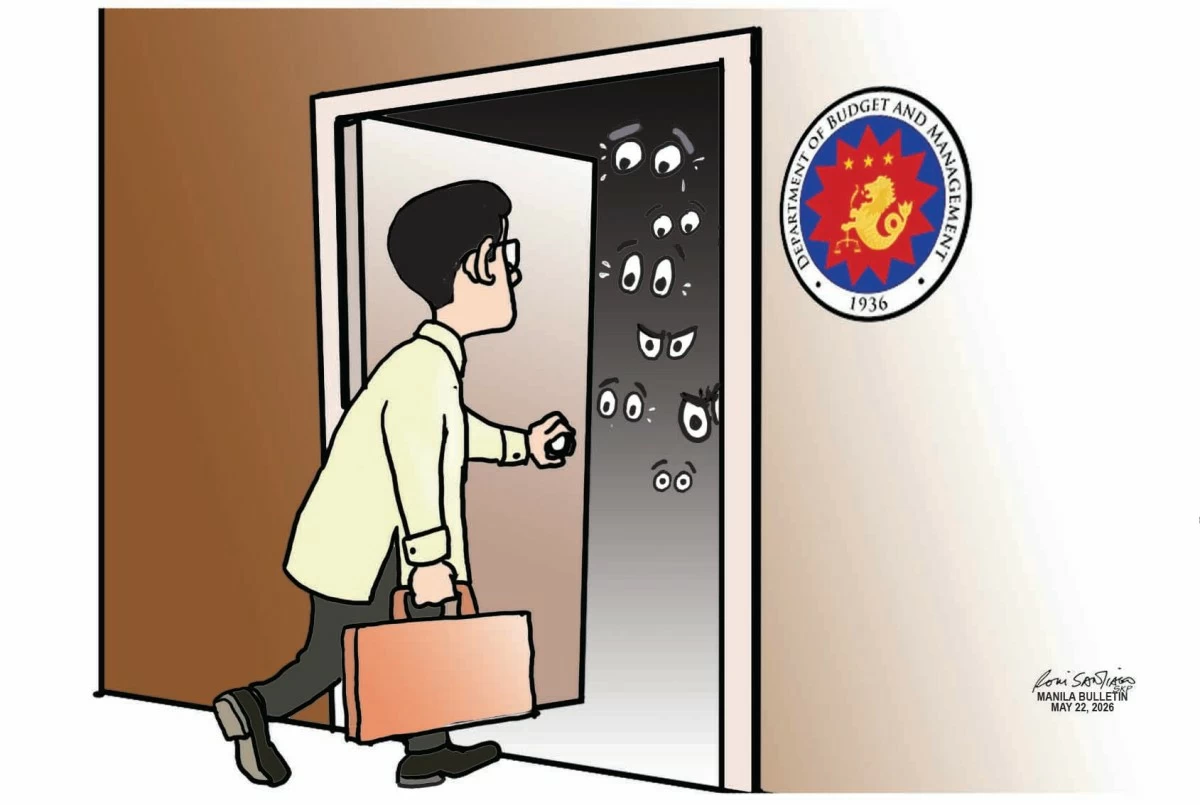
Can new DBM chief end culture of corruption?

Published May 22, 2026 12:05 am  |  Updated May 21, 2026 04:52 pm
The appointment of Kim Robert C. De Leon as the new secretary of the Department of Budget and Management (DBM) comes at a time when public confidence in government spending is dangerously fragile. The lingering outrage over the flood control scandal, coupled with frustrations over delayed services, rising fuel costs, and persistent poverty, has left many Filipinos questioning whether public funds still truly serve the public good.
In this difficult climate, his powerful declaration—“every peso must go to the people”—is a challenge he has placed upon himself and upon the entire government. It confronted the nation’s deepest wound: corruption disguised as public service. When De Leon vowed that the budget would no longer be “abused again for another flood control scandal,” he recognized the anger of ordinary Filipinos who watch billions allocated for infrastructure swept away by corruption while communities continue to drown during storms. Filipinos no longer want rhetorics. They want proof. They want roads that do not collapse, flood projects that actually prevent flooding, and services that arrive on time.
The real test now begins. He must translate his message into action through radical transparency and uncompromising accountability. Every major infrastructure project funded by taxpayers should be publicly traceable online: from budget allocation to contractor selection to project completion. Citizens should know where their money goes, who handles it, and whether projects serve their interests and are delivered on time. Transparency must no longer be treated as a public relations tool but as a permanent operating principle.
Equally important is speed. He correctly declared that “sluggishness is forbidden” in the DBM. Bureaucratic inefficiency has long been one of the invisible burdens crushing economic growth and public trust. Delayed approvals, slow fund releases, and endless paperwork weaken public confidence and discourage investors. Faster and more disciplined governance would send a powerful signal that the government can still function effectively for the people.
Yet De Leon cannot fight this battle alone. President Ferdinand Marcos Jr. must give him unwavering political support, especially when powerful interests resist reforms. Real accountability often threatens entrenched networks that benefit from weak oversight and opaque transactions. If the administration truly wants reform, it must protect honest officials willing to expose waste, ghost projects, and corruption. Reform cannot survive if integrity is punished while silence is rewarded.
The entire bureaucracy must also cooperate. Every agency receiving public funds must embrace stricter auditing, faster reporting, and measurable outcomes. Government workers who perform honestly and efficiently should be recognized, while those who betray public trust must face swift consequences. Discipline must become institutional, not selective.
The private sector likewise plays a critical role. Businesses, contractors, and industry leaders must reject bribery, collusion, and overpriced contracts that bleed public resources dry. Ethical corporate participation in public projects can help restore confidence that development funds are being used responsibly. Transparency partnerships between government and private watchdog groups can also strengthen monitoring systems and reduce opportunities for corruption.
Finally, every Filipino must become an active guardian of accountability. Citizens cannot demand reform while remaining silent observers. Communities, civil society organizations, media institutions, and ordinary taxpayers must monitor projects, report anomalies, and demand explanations from officials. Democracy works best when citizens remain vigilant.
The new DBM chief’s promise offers a rare glimpse of hope at a moment when many Filipinos are close to losing faith in governance itself. Hope survives only when words are translated into results. If he succeeds in proving that honesty, efficiency, and compassion can still exist in public office, he may restore something far greater than confidence in a department. He may restore the Filipino people’s faith and belief that the government can still work for them.

Related Tags

Editorial DBM
ADVERTISEMENT
.most-popular .layout-ratio{ padding-bottom: 79.13%; } @media (min-width: 768px) and (max-width: 1024px) { .widget-title { font-size: 15px !important; } }

{{ articles_filter_1561_widget.title }}

.most-popular .layout-ratio{ padding-bottom: 79.13%; } @media (min-width: 768px) and (max-width: 1024px) { .widget-title { font-size: 15px !important; } }

{{ articles_filter_1562_widget.title }}

.most-popular .layout-ratio{ padding-bottom: 79.13%; } @media (min-width: 768px) and (max-width: 1024px) { .widget-title { font-size: 15px !important; } }

{{ articles_filter_1563_widget.title }}

{{ articles_filter_1564_widget.title }}

.mb-article-details { position: relative; } .mb-article-details .article-body-preview, .mb-article-details .article-body-summary{ font-size: 17px; line-height: 30px; font-family: "Libre Caslon Text", serif; color: #000; } .mb-article-details .article-body-preview iframe , .mb-article-details .article-body-summary iframe{ width: 100%; margin: auto; } .read-more-background { background: linear-gradient(180deg, color(display-p3 1.000 1.000 1.000 / 0) 13.75%, color(display-p3 1.000 1.000 1.000 / 0.8) 30.79%, color(display-p3 1.000 1.000 1.000) 72.5%); position: absolute; height: 200px; width: 100%; bottom: 0; display: flex; justify-content: center; align-items: center; padding: 0; } .read-more-background a{ color: #000; } .read-more-btn { padding: 17px 45px; font-family: Inter; font-weight: 700; font-size: 18px; line-height: 16px; text-align: center; vertical-align: middle; border: 1px solid black; background-color: white; } .hidden { display: none; }
function initializeAllSwipers() { // Get all hidden inputs with cms_article_id document.querySelectorAll('[id^="cms_article_id_"]').forEach(function (input) { const cmsArticleId = input.value; const articleSelector = '#article-' + cmsArticleId + ' .body_images'; const swiperElement = document.querySelector(articleSelector); if (swiperElement && !swiperElement.classList.contains('swiper-initialized')) { new Swiper(articleSelector, { loop: true, pagination: false, navigation: { nextEl: '#article-' + cmsArticleId + ' .swiper-button-next', prevEl: '#article-' + cmsArticleId + ' .swiper-button-prev', }, }); } }); } setTimeout(initializeAllSwipers, 3000); const intersectionObserver = new IntersectionObserver( (entries) => { entries.forEach((entry) => { if (entry.isIntersecting) { const newUrl = entry.target.getAttribute("data-url"); if (newUrl) { history.pushState(null, null, newUrl); let article = entry.target; // Extract metadata const author = article.querySelector('.author-section').textContent.replace('By', '').trim(); const section = article.querySelector('.section-info ').textContent.replace(' ', ' '); const title = article.querySelector('.article-title h1').textContent; // Parse URL for Chartbeat path format const parsedUrl = new URL(newUrl, window.location.origin); const cleanUrl = parsedUrl.host + parsedUrl.pathname; // Update Chartbeat configuration if (typeof window._sf_async_config !== 'undefined') { window._sf_async_config.path = cleanUrl; window._sf_async_config.sections = section; window._sf_async_config.authors = author; } // Track virtual page view with Chartbeat if (typeof pSUPERFLY !== 'undefined' && typeof pSUPERFLY.virtualPage === 'function') { try { pSUPERFLY.virtualPage({ path: cleanUrl, title: title, sections: section, authors: author }); } catch (error) { console.error('ping error', error); } } // Optional: Update document title if (title && title !== document.title) { document.title = title; } } } }); }, { threshold: 0.1 } ); function showArticleBody(button) { const article = button.closest("article"); const summary = article.querySelector(".article-body-summary"); const body = article.querySelector(".article-body-preview"); const readMoreSection = article.querySelector(".read-more-background"); // Hide summary and read-more section summary.style.display = "none"; readMoreSection.style.display = "none"; // Show the full article body body.classList.remove("hidden"); } document.addEventListener("DOMContentLoaded", () => { let loadCount = 0; // Track how many times articles are loaded const offset = [1, 2, 3, 4, 5, 6, 7, 8, 9, 10]; // Offset values const currentUrl = window.location.pathname.substring(1); let isLoading = false; // Prevent multiple calls if (!currentUrl) { console.log("Current URL is invalid."); return; } const sentinel = document.getElementById("load-more-sentinel"); if (!sentinel) { console.log("Sentinel element not found."); return; } function isSentinelVisible() { const rect = sentinel.getBoundingClientRect(); return ( rect.top < window.innerHeight && rect.bottom >= 0 ); } function onScroll() { if (isLoading) return; if (isSentinelVisible()) { if (loadCount >= offset.length) { console.log("Maximum load attempts reached."); window.removeEventListener("scroll", onScroll); return; } isLoading = true; const currentOffset = offset[loadCount]; window.loadMoreItems().then(() => { let article = document.querySelector('#widget_1690 > div:nth-last-of-type(2) article'); intersectionObserver.observe(article) loadCount++; }).catch(error => { console.error("Error loading more items:", error); }).finally(() => { isLoading = false; }); } } window.addEventListener("scroll", onScroll); });

Sign up by email to receive news.