







Visayas power reserves reach critical lows
Published May 21, 2026 05:15 pm


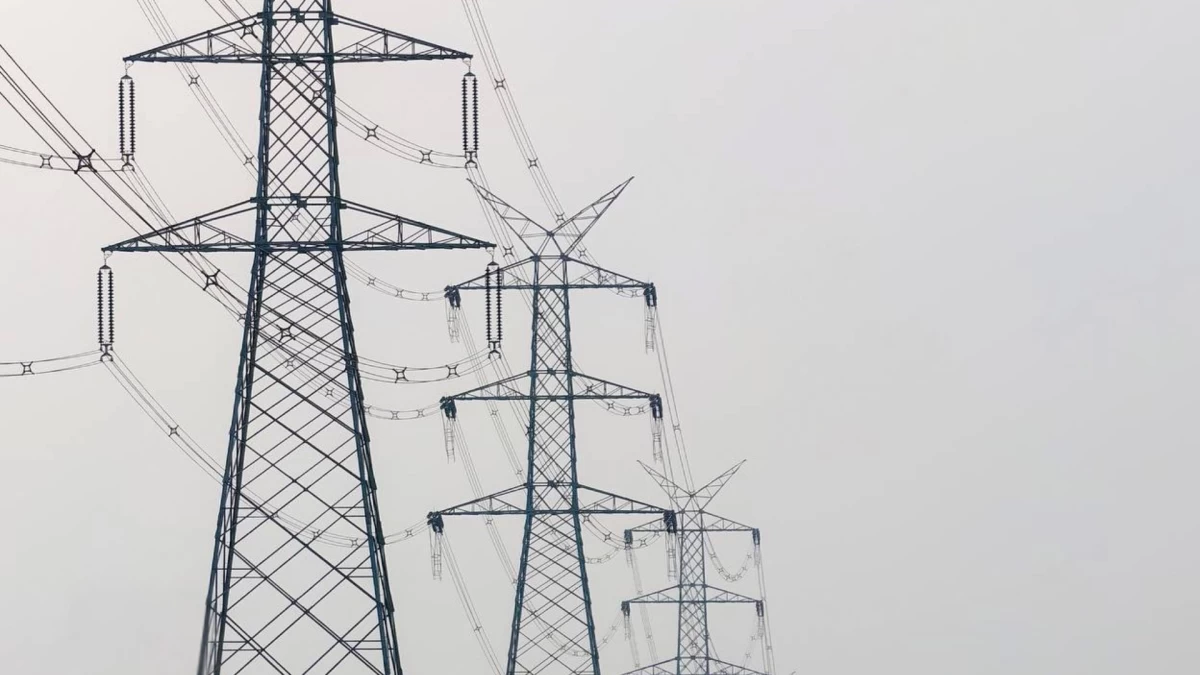
High-voltage transmission towers cut across the landscape in Pampanga on Wednesday, May 13. The National Grid Corporation of the Philippines placed the Visayas grid under yellow alert following the forced outage of three power plants, highlighting the region's heavy reliance on power imports from the Luzon and Mindanao grids to meet surging electricity demand. (Photo by Santi San Juan | Manila Bulletin)
Visayas power grid faces extended period of thin supply after the National Grid Corporation of the Philippines (NGCP) placed the region under high alert for the seventh consecutive day.
The grid operator issued its eighth yellow alert for the month on Thursday, May 21, as three major power generation units remained offline and regional electricity demand continued to climb. The alert, which signals that the system’s operating margin is insufficient to meet mandatory reserve requirements, was scheduled to last until 9 p.m.
Available capacity on the grid stood at 2,668 megawatts, while peak demand was projected to reach 2,486 megawatts. The tight supply conditions follow the emergency shutdowns of Therma Visayas Inc.’s Units 1 and 2, as well as Panay Energy Development Corp.’s Unit 3, all of which forced outages last week.
Therma Visayas Inc. said it is working to restore its units to stable operations and is coordinating with the NGCP, the Department of Energy (DOE), and the Energy Regulatory Commission (ERC). The company did not provide a specific timeline for when the plants would return to service.
The prolonged power instability has drawn sharp criticism from regional business leaders, who warn that the precarious energy supply is threatening economic growth and stoking inflationary pressures in key commercial hubs like Mandaue City.
Power accounts for roughly 40 percent of operating costs for local businesses, according to Mark Anthony Ynoc, the immediate past president of the Mandaue Chamber of Commerce and Industry. Ynoc noted that sustained power constraints erode the region's market competitiveness, as businesses inevitably pass higher energy and operational costs onto consumers, driving up the cost of goods.
Local officials and business groups have been actively pitching the Visayas as a prime destination for capital-intensive, high-value industries, including data centers, electric vehicle assembly plants, and semiconductor manufacturing.
However, industry analysts warned that the lack of a stable and cost-effective power supply could deter foreign investors, who require highly reliable energy infrastructure before committing capital to the region.