ADVERTISEMENT

US indicts former Cuban President Raúl Castro over 1996 downing of planes

Published May 21, 2026 10:54 am
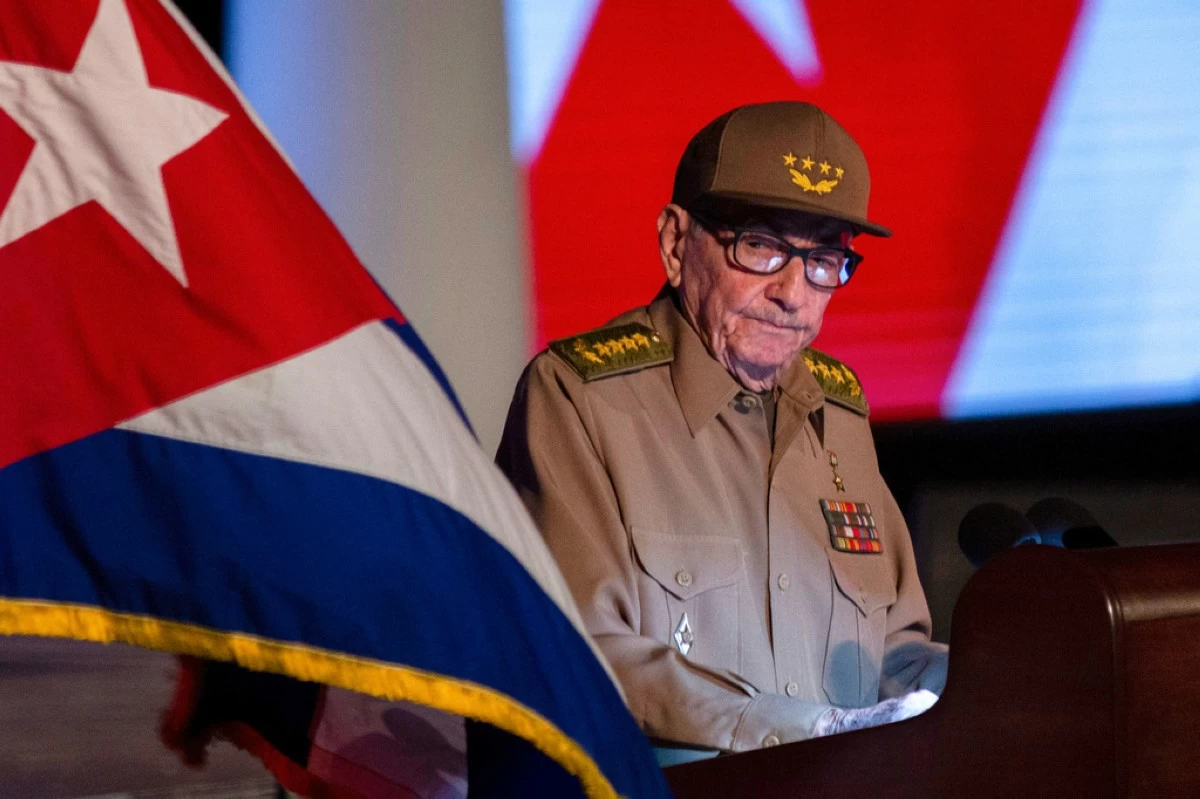
Former Cuban President Raul Castro looks at the Cuban flag during his speech at the event celebrating the 65th anniversary of the triumph of the revolution in Santiago, Cuba, Jan. 1, 2024. (AP Photo/Ismael Francisco, File)
Federal prosecutors on Wednesday charged former Cuban President Raúl Castro with ordering the 1996 shootdown of civilian planes operated by Miami-based exiles in 1996 off the coast of the Caribbean island, a major escalation of pressure by the Trump administration on the socialist government.
The allegations come as part of escalating pressure by the Trump administration on Cuba's socialist government to open its economy to American investment and remove U.S. adversaries. In addition, a U.S. blockade of fuel and other goods has caused widespread blackouts, food shortages and an economic collapse on the island.
Castro, now 94, was Cuba's defense minister at the time the two small planes were shot down. They were operated by the exile group Brothers to the Rescue, which had been dropping leaflets over Havana urging Cubans to rise up against their government. Russian-made fighter jets downed the two unarmed civilian aircraft, killing all four men aboard the planes.
Here's what to know about Castro, the indictment and the 1996 incident.
What does the indictment allege?
Castro is accused in the indictment of authorizing the use of deadly force against Brothers to the Rescue, after the group had flown planes that dropped pro-Democracy leaflets over Cuba in January 1996. U.S. prosecutors said Castro and his older brother, Fidel Castro, who was president at the time, were the final decision makers on orders to kill.
In February 1996, Raúl Castro ordered Cuban military officials to begin training, using MiG fighter jets from Russia, on finding, tracking and intercepting the group's small planes off the island's coast, the indictment says. The two planes were shot down on Feb. 24, killing four U.S. nationals, including three U.S. citizens. A third plane managed to escape.
Castro and five other people, including MiG pilots, were charged in the indictment. Castro is accused of conspiracy to kill U.S. nationals and multiple counts of murder and destruction of aircraft. The murder and conspiracy charges carry a maximum punishment of the death penalty or life in prison upon conviction, but it's unclear whether Castro will ever set foot in a U.S. courtroom.
Will Castro ever face the charges in U.S.?
Acting U.S. Attorney General Todd Blanche, who announced the indictment Wednesday in Miami, said he expected Castro to appear in the U.S. for prosecution, either by “his own will or by another way.”
Blanche said the federal government often indicts people who are outside the United States and uses a variety of methods to bring them to justice.
Former Venezuelan President Nicolás Maduro was indicted on drug-related charges before he and his wife were seized by U.S. Special Forces in the Venezuelan capital in January.
What happened in 1996?
At about 1:30 p.m. on Feb. 24, 1996, the three Brothers to the Rescue planes took off from an airport in Miami-Dade County, Florida.
Over international waters, outside of Cuban airspace, two of the three unarmed Cessna planes were shot down by the Cuban MiG pilots without any warning, U.S. prosecutors said. The MiG pilots then began following the third plane, which escaped being destroyed, authorities said.
A Cuban official, however, insisted at a United Nations Security Council meeting in late February 1996 that the two planes were violating Cuban airspace when they were shot down and one of the civilian pilots had ignored warnings to not enter that airspace, according to Security Council records. The official also alleged the U.S. took no effective measures to prevent such airspace violations by U.S. pilots, despite warnings from Cuba.
Brothers to the Rescue dates back to 1980, during the unexpected emigration of 125,000 Cubans to the United States. It aimed to help the Cuban refugees in the Florida straits by dropping supplies from small planes and alerting the U.S. Coast Guard during the monthslong crisis.
What has been the reaction to the indictment?
Cuba's current president, Miguel Díaz-Canel, condemned the indictment against Castro and accused U.S. officials of lying about the 1996 shootdown of the planes. He called it “a political action without any legal basis, that only seeks to bolster the case they are fabricating to justify the folly of a military aggression against Cuba.”
He wrote on X that the shootdown of the planes was “legitimate self-defense” after repeated and dangerous violations of Cuba's airspace by “notorious terrorists.”
The Cuban government said in a statement that the Cuban people fully support Castro. “Homeland or Death, We Will Prevail,” the statement said.
Marlene Alejandre-Triana, whose father, Armando Alejandre Jr, was among those killed in the 1996 shootdown, called the charges “long overdue.” She said her father only wanted to bring freedom to his Cuban homeland.
The charges against Castro were also welcomed by members of the Cuban community in Miami.
“He's a criminal,” said Peter Hernandez, whose family owns a fruit and vegetable market in the Little Havana neighborhood and whose parents moved from Cuba to South Florida before he was born. He added he would support the U.S. sending its military to arrest Castro.

Related Tags

world news Former Cuban president Raul Castro indictment
ADVERTISEMENT
.most-popular .layout-ratio{ padding-bottom: 79.13%; } @media (min-width: 768px) and (max-width: 1024px) { .widget-title { font-size: 15px !important; } }

{{ articles_filter_1561_widget.title }}

.most-popular .layout-ratio{ padding-bottom: 79.13%; } @media (min-width: 768px) and (max-width: 1024px) { .widget-title { font-size: 15px !important; } }

{{ articles_filter_1562_widget.title }}

.most-popular .layout-ratio{ padding-bottom: 79.13%; } @media (min-width: 768px) and (max-width: 1024px) { .widget-title { font-size: 15px !important; } }

{{ articles_filter_1563_widget.title }}

{{ articles_filter_1564_widget.title }}

.mb-article-details { position: relative; } .mb-article-details .article-body-preview, .mb-article-details .article-body-summary{ font-size: 17px; line-height: 30px; font-family: "Libre Caslon Text", serif; color: #000; } .mb-article-details .article-body-preview iframe , .mb-article-details .article-body-summary iframe{ width: 100%; margin: auto; } .read-more-background { background: linear-gradient(180deg, color(display-p3 1.000 1.000 1.000 / 0) 13.75%, color(display-p3 1.000 1.000 1.000 / 0.8) 30.79%, color(display-p3 1.000 1.000 1.000) 72.5%); position: absolute; height: 200px; width: 100%; bottom: 0; display: flex; justify-content: center; align-items: center; padding: 0; } .read-more-background a{ color: #000; } .read-more-btn { padding: 17px 45px; font-family: Inter; font-weight: 700; font-size: 18px; line-height: 16px; text-align: center; vertical-align: middle; border: 1px solid black; background-color: white; } .hidden { display: none; }
function initializeAllSwipers() { // Get all hidden inputs with cms_article_id document.querySelectorAll('[id^="cms_article_id_"]').forEach(function (input) { const cmsArticleId = input.value; const articleSelector = '#article-' + cmsArticleId + ' .body_images'; const swiperElement = document.querySelector(articleSelector); if (swiperElement && !swiperElement.classList.contains('swiper-initialized')) { new Swiper(articleSelector, { loop: true, pagination: false, navigation: { nextEl: '#article-' + cmsArticleId + ' .swiper-button-next', prevEl: '#article-' + cmsArticleId + ' .swiper-button-prev', }, }); } }); } setTimeout(initializeAllSwipers, 3000); const intersectionObserver = new IntersectionObserver( (entries) => { entries.forEach((entry) => { if (entry.isIntersecting) { const newUrl = entry.target.getAttribute("data-url"); if (newUrl) { history.pushState(null, null, newUrl); let article = entry.target; // Extract metadata const author = article.querySelector('.author-section').textContent.replace('By', '').trim(); const section = article.querySelector('.section-info ').textContent.replace(' ', ' '); const title = article.querySelector('.article-title h1').textContent; // Parse URL for Chartbeat path format const parsedUrl = new URL(newUrl, window.location.origin); const cleanUrl = parsedUrl.host + parsedUrl.pathname; // Update Chartbeat configuration if (typeof window._sf_async_config !== 'undefined') { window._sf_async_config.path = cleanUrl; window._sf_async_config.sections = section; window._sf_async_config.authors = author; } // Track virtual page view with Chartbeat if (typeof pSUPERFLY !== 'undefined' && typeof pSUPERFLY.virtualPage === 'function') { try { pSUPERFLY.virtualPage({ path: cleanUrl, title: title, sections: section, authors: author }); } catch (error) { console.error('ping error', error); } } // Optional: Update document title if (title && title !== document.title) { document.title = title; } } } }); }, { threshold: 0.1 } ); function showArticleBody(button) { const article = button.closest("article"); const summary = article.querySelector(".article-body-summary"); const body = article.querySelector(".article-body-preview"); const readMoreSection = article.querySelector(".read-more-background"); // Hide summary and read-more section summary.style.display = "none"; readMoreSection.style.display = "none"; // Show the full article body body.classList.remove("hidden"); } document.addEventListener("DOMContentLoaded", () => { let loadCount = 0; // Track how many times articles are loaded const offset = [1, 2, 3, 4, 5, 6, 7, 8, 9, 10]; // Offset values const currentUrl = window.location.pathname.substring(1); let isLoading = false; // Prevent multiple calls if (!currentUrl) { console.log("Current URL is invalid."); return; } const sentinel = document.getElementById("load-more-sentinel"); if (!sentinel) { console.log("Sentinel element not found."); return; } function isSentinelVisible() { const rect = sentinel.getBoundingClientRect(); return ( rect.top < window.innerHeight && rect.bottom >= 0 ); } function onScroll() { if (isLoading) return; if (isSentinelVisible()) { if (loadCount >= offset.length) { console.log("Maximum load attempts reached."); window.removeEventListener("scroll", onScroll); return; } isLoading = true; const currentOffset = offset[loadCount]; window.loadMoreItems().then(() => { let article = document.querySelector('#widget_1690 > div:nth-last-of-type(2) article'); intersectionObserver.observe(article) loadCount++; }).catch(error => { console.error("Error loading more items:", error); }).finally(() => { isLoading = false; }); } } window.addEventListener("scroll", onScroll); });

Sign up by email to receive news.