






Manila Bulletin
 Lifestyle
Food
Chef Frances Tariga brings her global culinary journey home at Tadhana in Makati
Lifestyle
Food
Chef Frances Tariga brings her global culinary journey home at Tadhana in Makati
Lifestyle
Food
Chef Frances Tariga brings her global culinary journey home at Tadhana in Makati
Chef Frances Tariga brings her global culinary journey home at Tadhana in Makati
From Sampaloc to Dubai and New York, Chef Frances Tariga crafts a deeply personal tasting menu at Tadhana that reimagines Filipino flavors through inventive fine dining
Published May 21, 2026 06:54 am


The restaurant that’s the current talk of the town is Tadhana, and it is a homecoming of sorts for Chef Frances Tariga. It’s located on the penthouse floor of the Levanto Building on Jupiter Street, Makati, and it features a tasting menu that I’ll salute for inventiveness, playfulness, quality ingredients, rich taste and flavors, and for serving as a compelling chronicle of Chef Frances’ life journey so far. From Sampaloc, to Dubai, and on to Manhattan, Chef Frances has consistently made a mark with culinary prowess, and it’s only fitting that the “country of origin” now gets to understand, appreciate, and indulge in the consistent global acclaim.
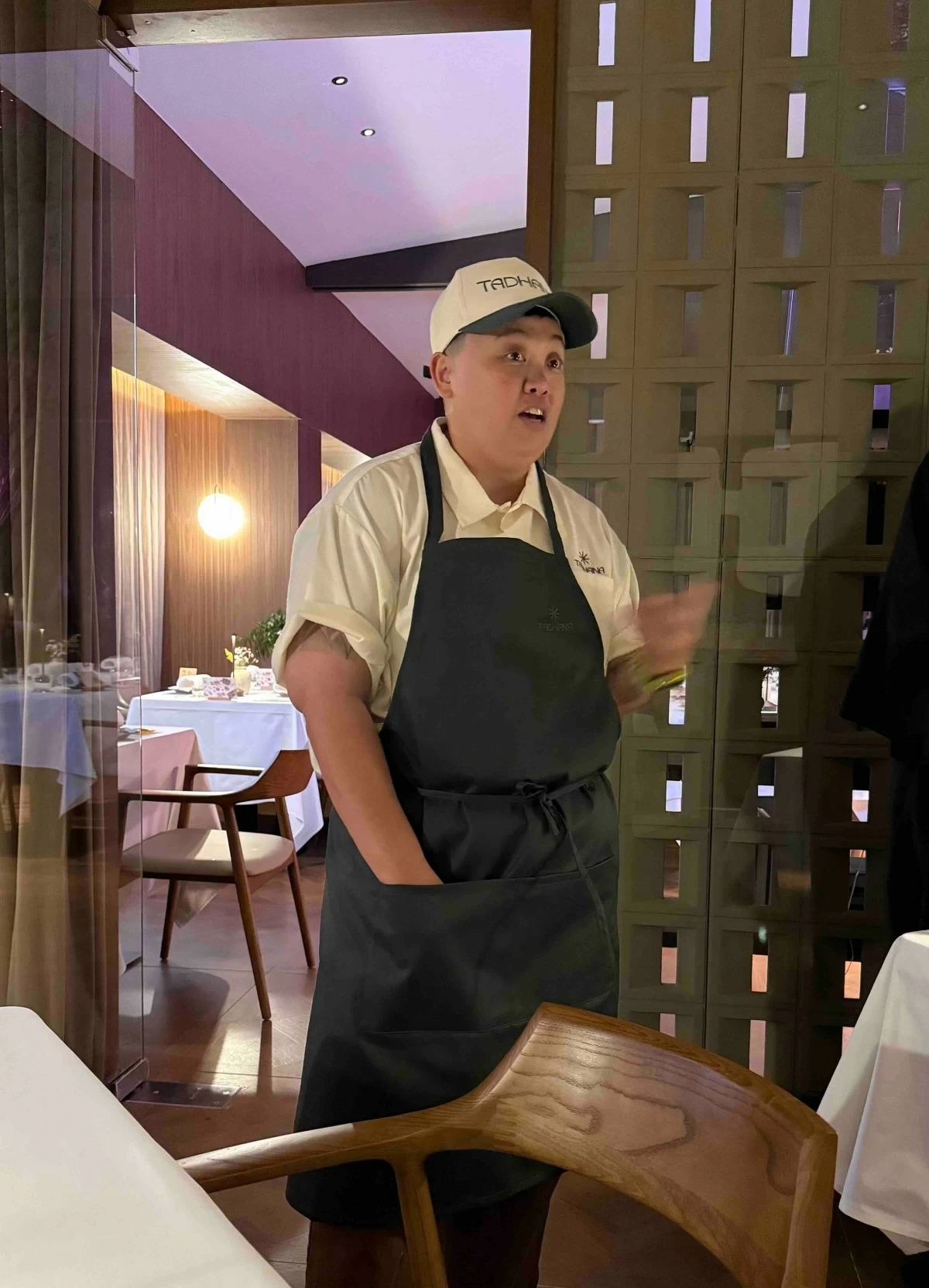
Chef Frances Tariga (Photo: Philip Cu Unjieng)
Tadhana isn’t a big restaurant with bountiful seating capacity. The kitchen and prep area roughly occupy one-third of the total floor area, and it’s like one is asked to acknowledge that these two areas are the collective nerve center where the magic happens. The dining tables that are arrayed are for us to be among the select chosen, the ones who are lucky enough to discover the kitchen wizardry on any given night.
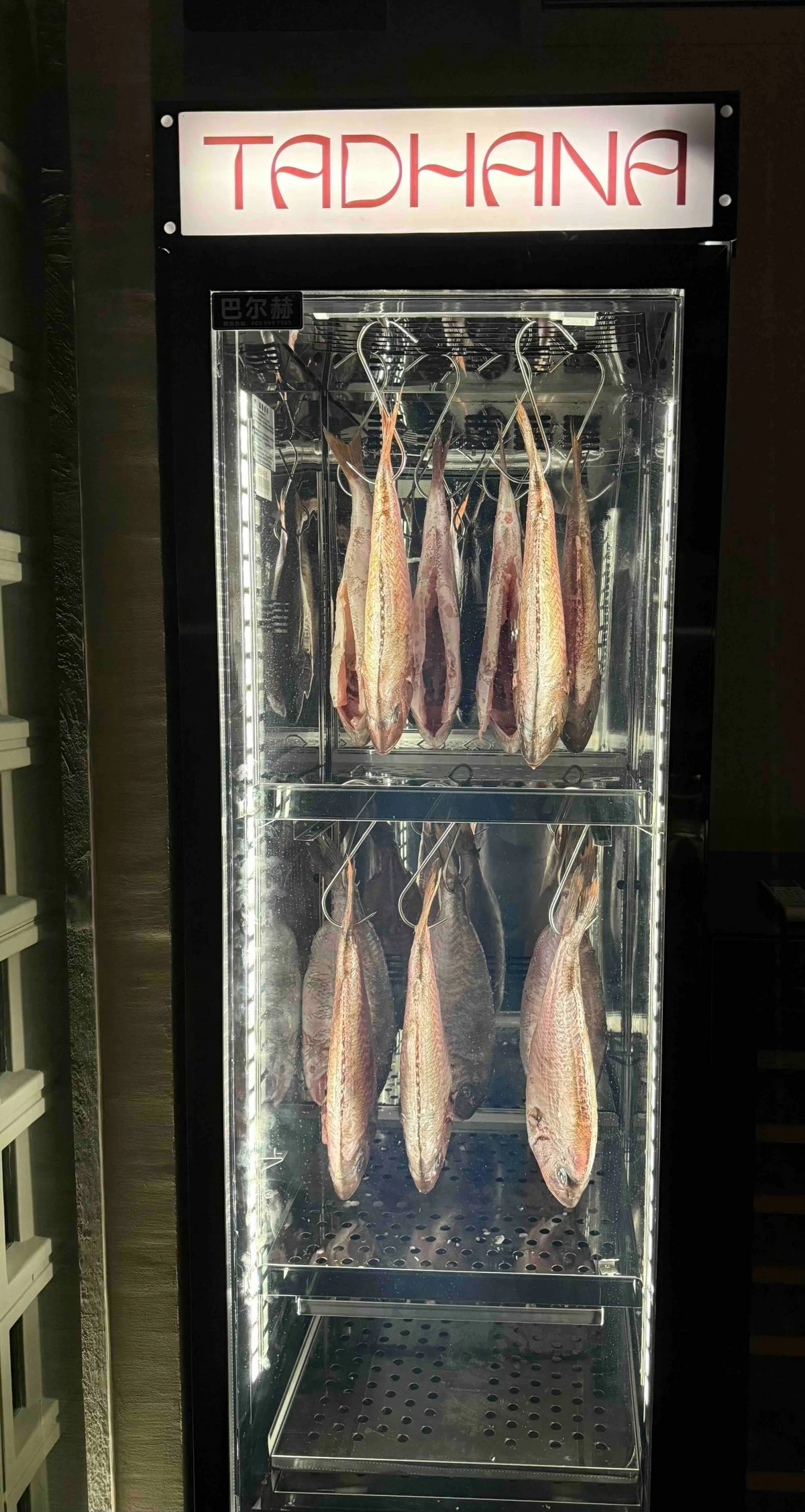
Dry-aged fish (Photo: Philip Cu Unjieng)
Those who regularly follow my content will know that in my column of April 26, 2026, “When degustation becomes ‘disgustation,’” I spoke of the hype and bandwagon effect that accompany degustation concepts in our dining landscape, and how we shouldn’t presume that all tasting menus are worth their price tag. Enough has been written elsewhere about Chef Frances’ provenance, so let’s head straight to my Tadhana experience, for at the end of the day, that’s what really counts. Did I fully enjoy the two hours and some, would I encourage friends to book their table, and would I relish a second round?
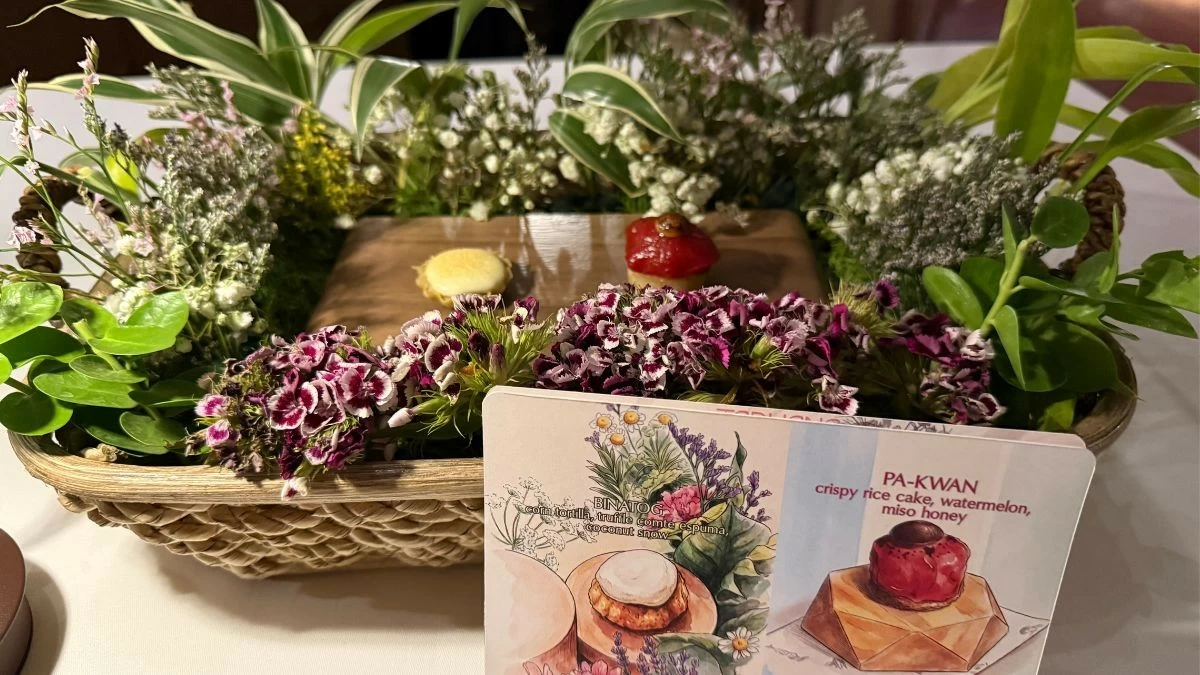
Binatog and Pa-Kwan (Photo: Philip Cu Unjieng)
The first course is the duo of Binatog and Pa-Kwan. The Binatog is a corn tortilla, with truffle comte espuma, and coconut know. The Pa-Kwan is a crispy rice cake, with watermelon and miso honey. The Binatog is corn-dominant and packs a lot of flavor, while the Pa-Kwan plays luscious because of the watermelon, but packs some surprising heat. Chef Frances says the Pa-Kwan is a quiet tribute to her wife, Kennedy.
The second course is again a tag team of Kwek Kwek and Ensalada. While much loved as street food during her youth, the real connection to that original Kwek Kwek would be the bagsik dust that’s used, as it reminded me of how street food in Manila will have that gritty reality, so extra points to Chef Frances for playful verisimilitude. The ensalada is Dubai-inspired: spiced lavash, with baba ganoush, and mulberry gel.
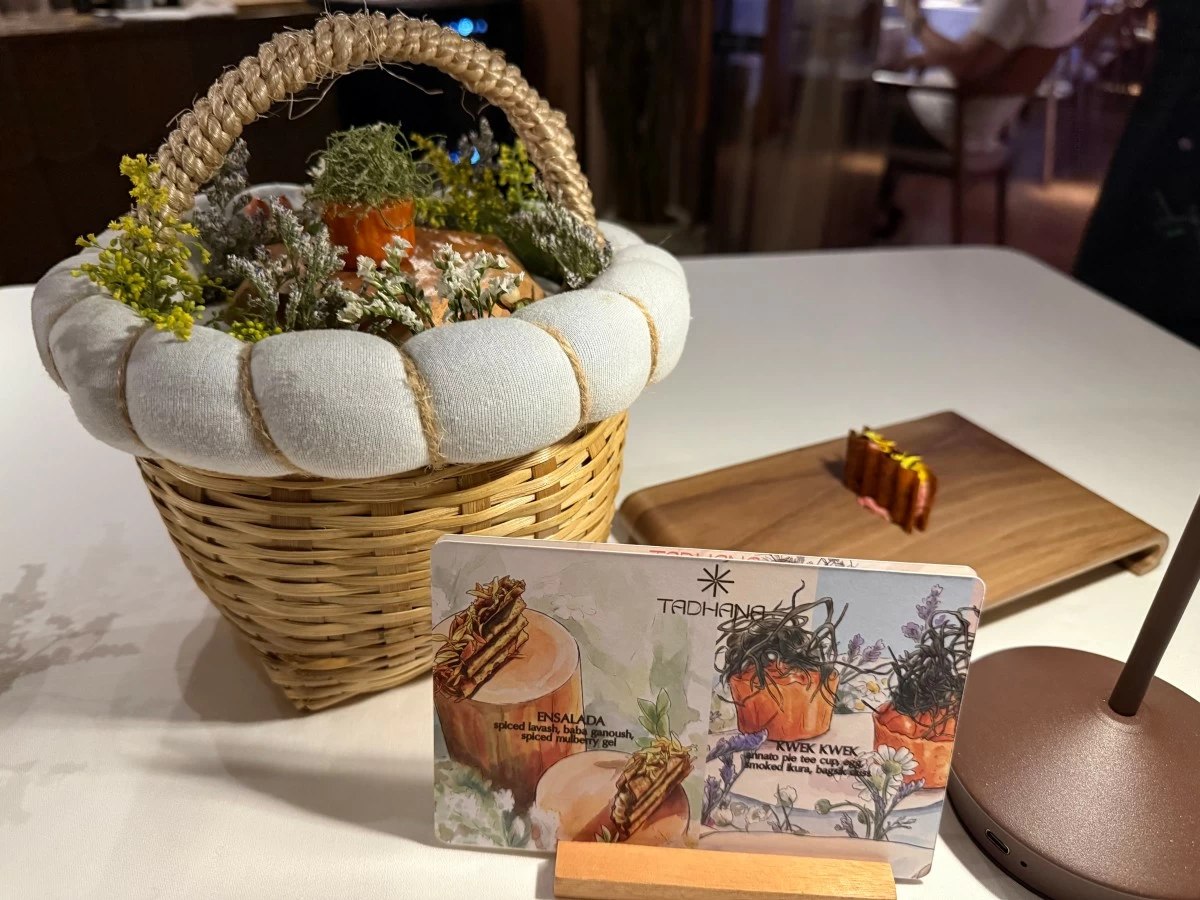
Kwek Kwek and Ensalada (Photo: Philip Cu Unjieng)
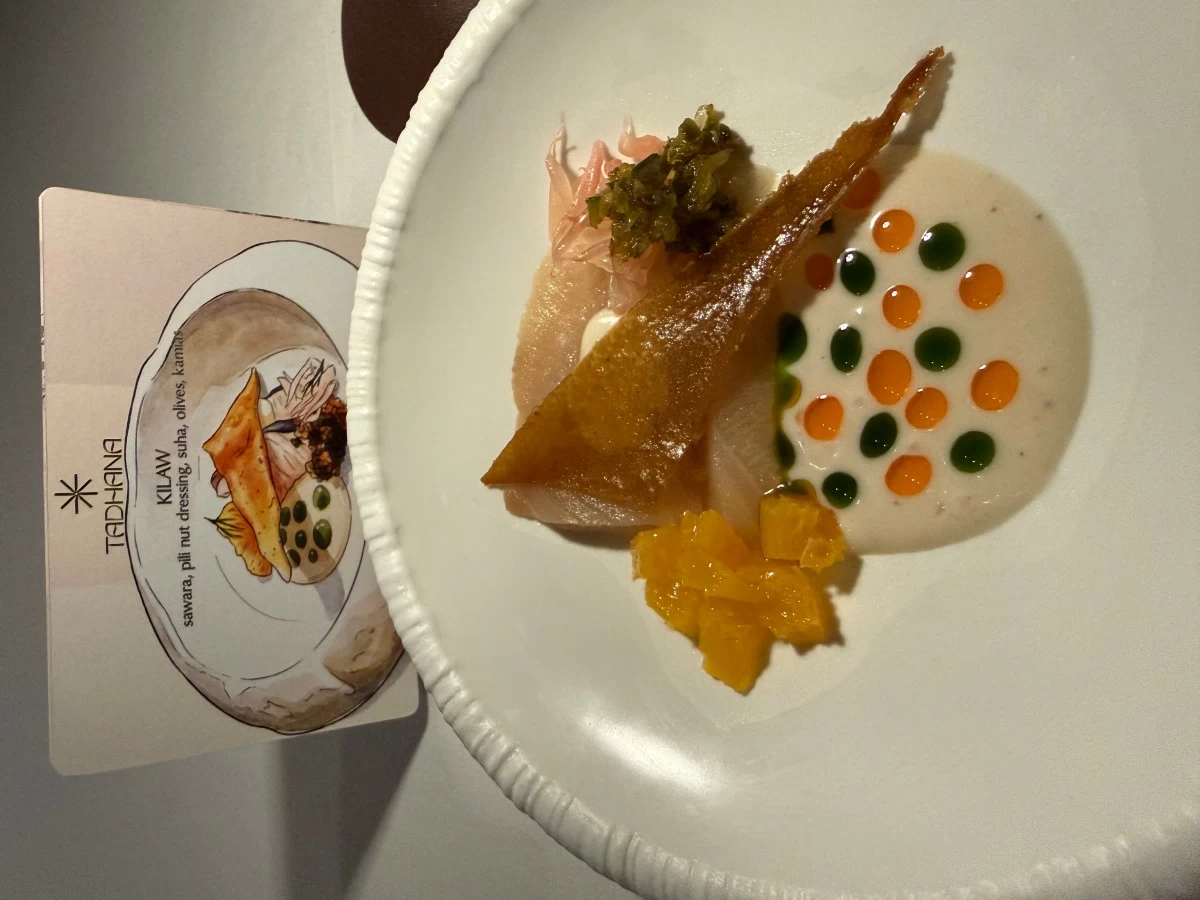
The Kilaw (Photo: Philip Cu Unjieng)
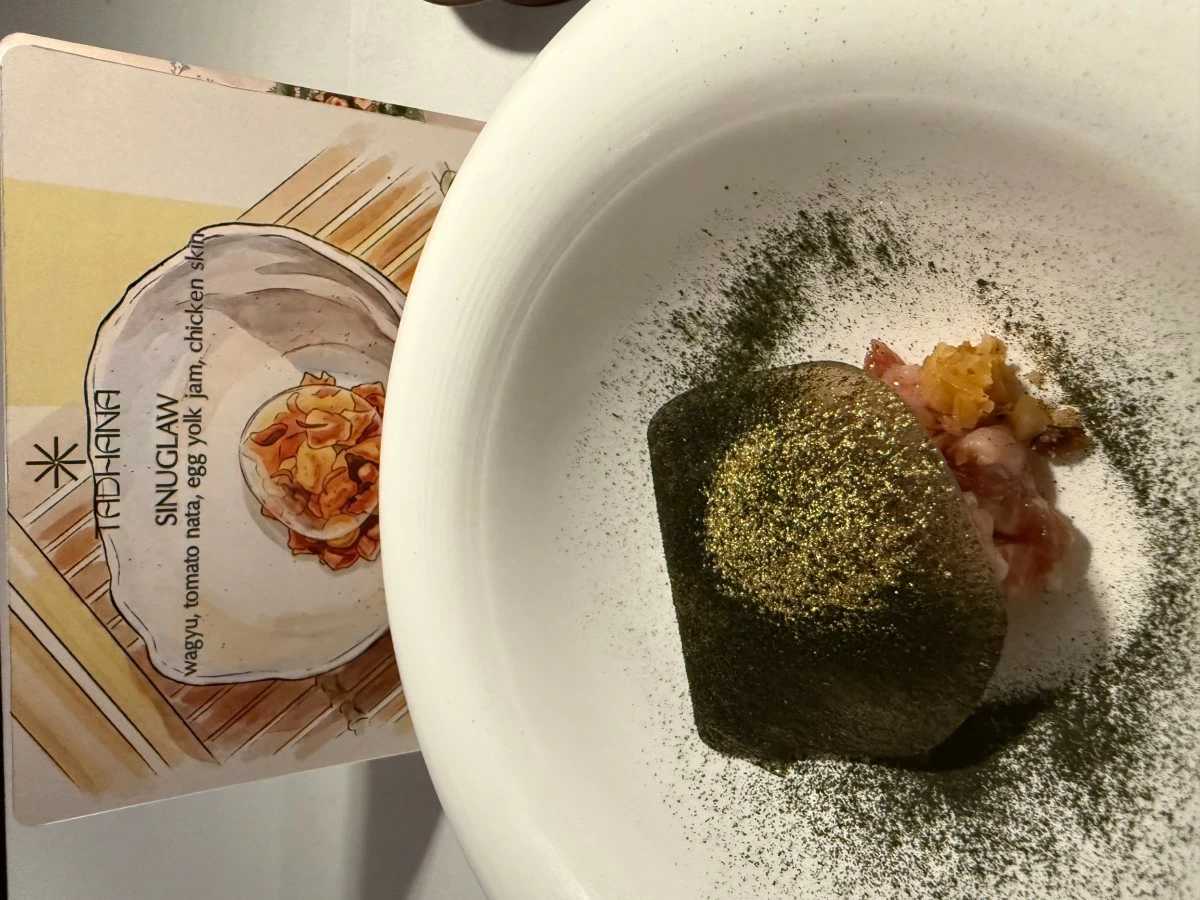
Sinuglaw (Photo: Philip Cu Unjieng)
The Kilaw is dry-aged Sawara from Japan (our tanguingue), with pili nut dressing, suha, olives, and kamias. This was served cold, and with the combination of fruits was so refreshing. I admired the play on textures and flavors, and this was an early contender for my favorite of the tasting menu.
Singulaw is morsels of Wagyu, tomato nata, egg yolk jam, and chicken skin. Chef Frances considers this one of the signature dishes of Tadhana, and I’d describe it as their take on steak tartare, but made Filipino, with an enthralling upgrade.
When you’re served the Giant-An, one’s first impression is that this is a play on squash soup. But the coco custard, the blue crab, seafood veloute, and Kaluga caviar all make this Tadhana’s surprising and welcome interpretation of chawan-mushi. Chef Frances would offer Filipino-Japanese omakase in New York, so I’m guessing this would be connected to that stage of her culinary career.
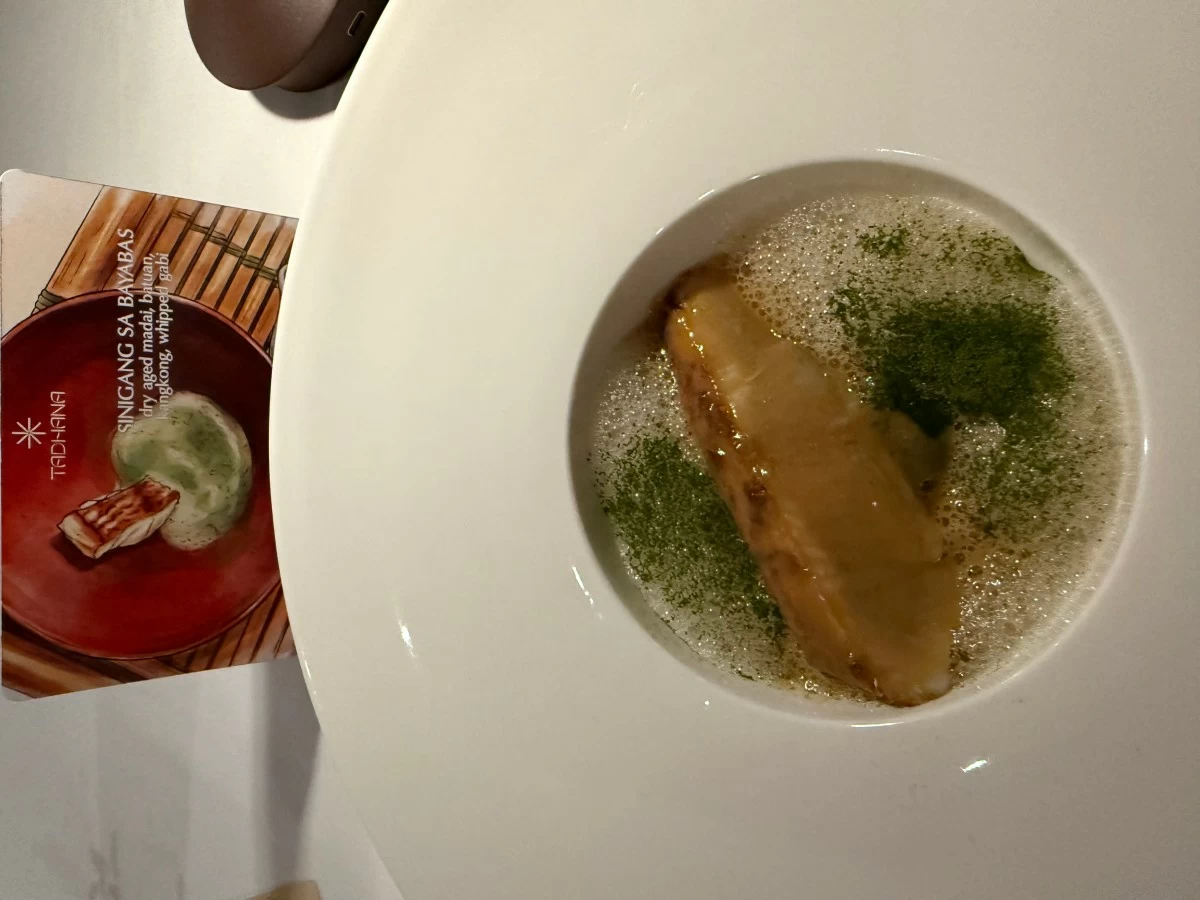
Sinigang sa Bayabas (Photo: Philip Cu Unjieng)
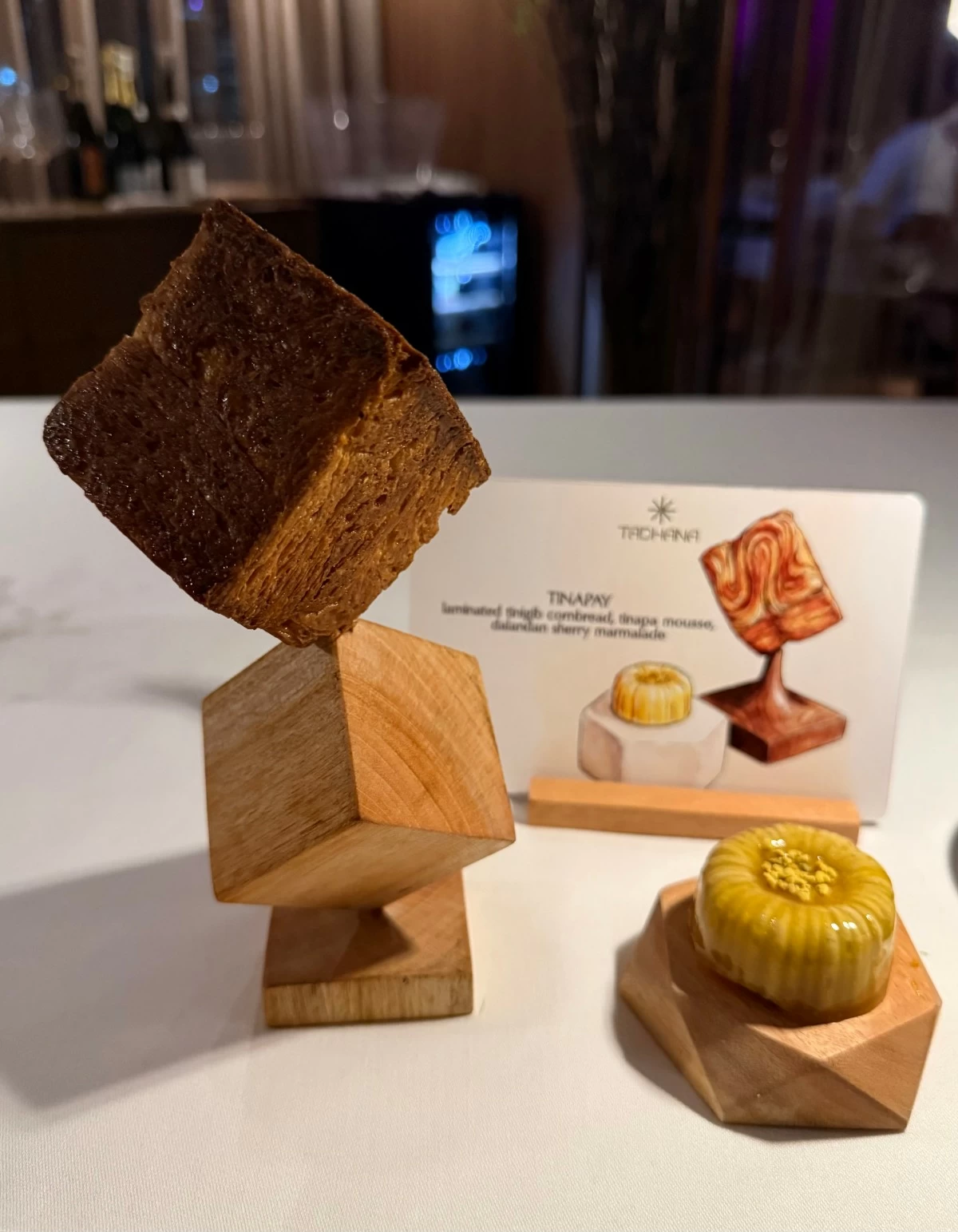
Tinapay (Photo: Philip Cu Unjieng)
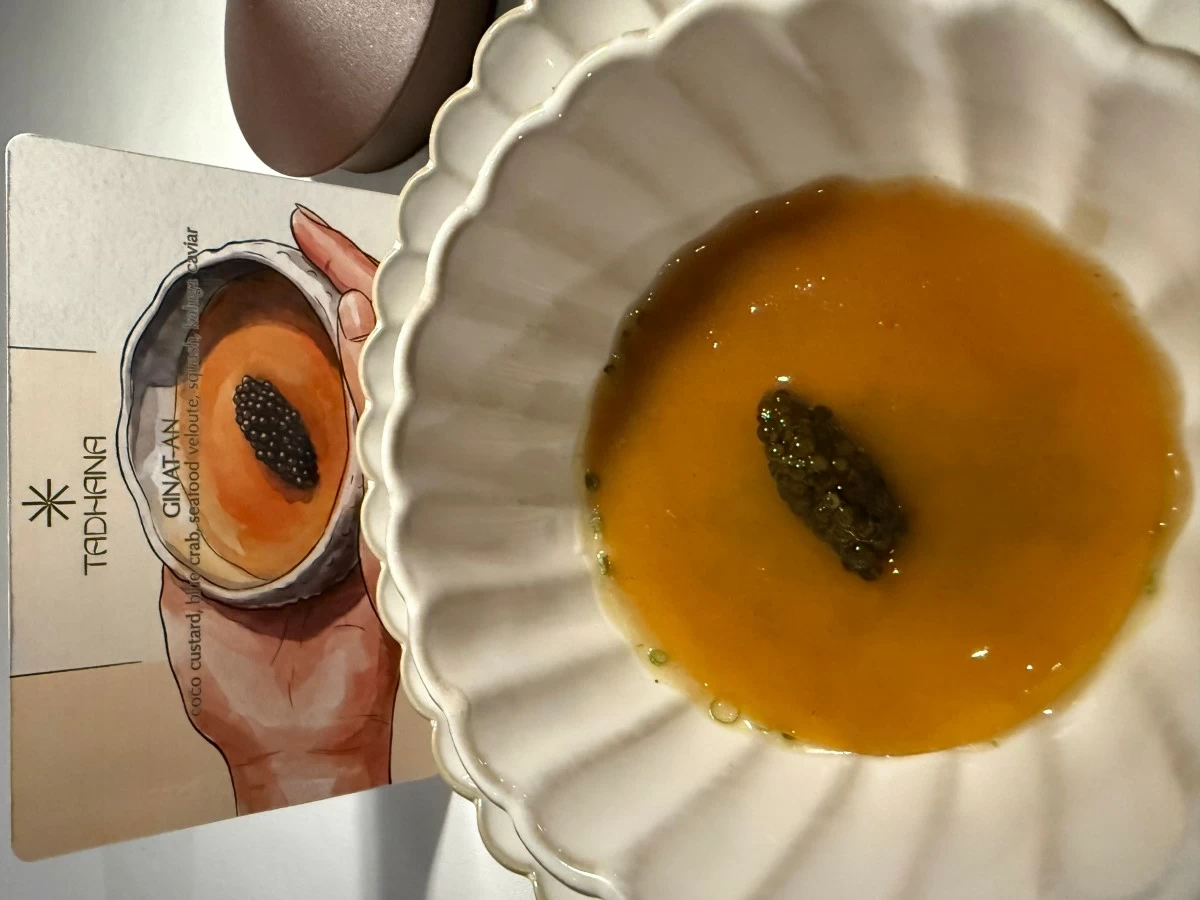
Ginat-An (Photo: Philip Cu Unjieng)
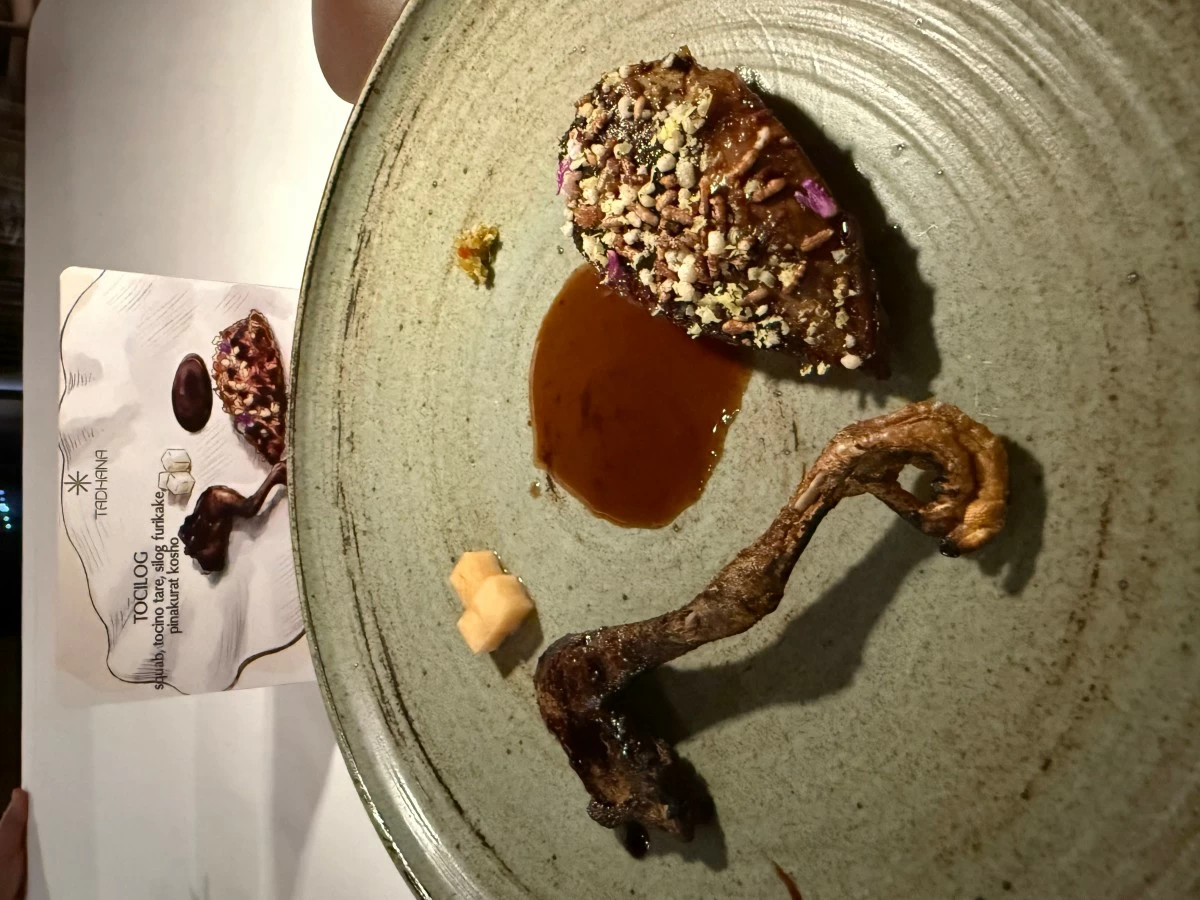
Tocilog (Photo: Philip Cu Unjieng)
The Tinapay arrives like some gravity-defying architectural wonder. Visually, the best surprise one could imagine. It’s laminated tinigib bread, with a tinapa mousse that’s hidden underneath a dalandan sherry marmalade. If you finish this off, be prepared to begin feeling that one is already full, and getting through the next courses will be a chore.
Siningang Sa Bayabas is the official soup course, and it’s dry-aged Madai, with batuan, kangkong, and whipped gabi. Like a meal unto itself, here is another front-runner for best course of the night. Yes, it’s that good.
Tocilog is the poultry/game entree. It’s squab, with a tocino tare, silog furikake, and pinakurat kosho. This is Chef Frances nimbly blending culinary traditions, so it’s a Filipino classic now reimagined. Very dark and deep sauces and flavors.
The Kamias Granita is Tadhana’s palate cleanser. Candied kamias, with macerated seasonal fruit. It’s tart in a good way, and really cuts through the previous dishes.
The Inihaw at Gulay is the last main course before the desserts. It’s Iberico Secreto pork, with pickled pakbet vegetables, and banana mole. It’s a relatively small serving, and you will be thankful for that at this point. This is not one of those tasting menus that leave you hungry at the end and thinking of what midnight snack you’ll indulge in at home.
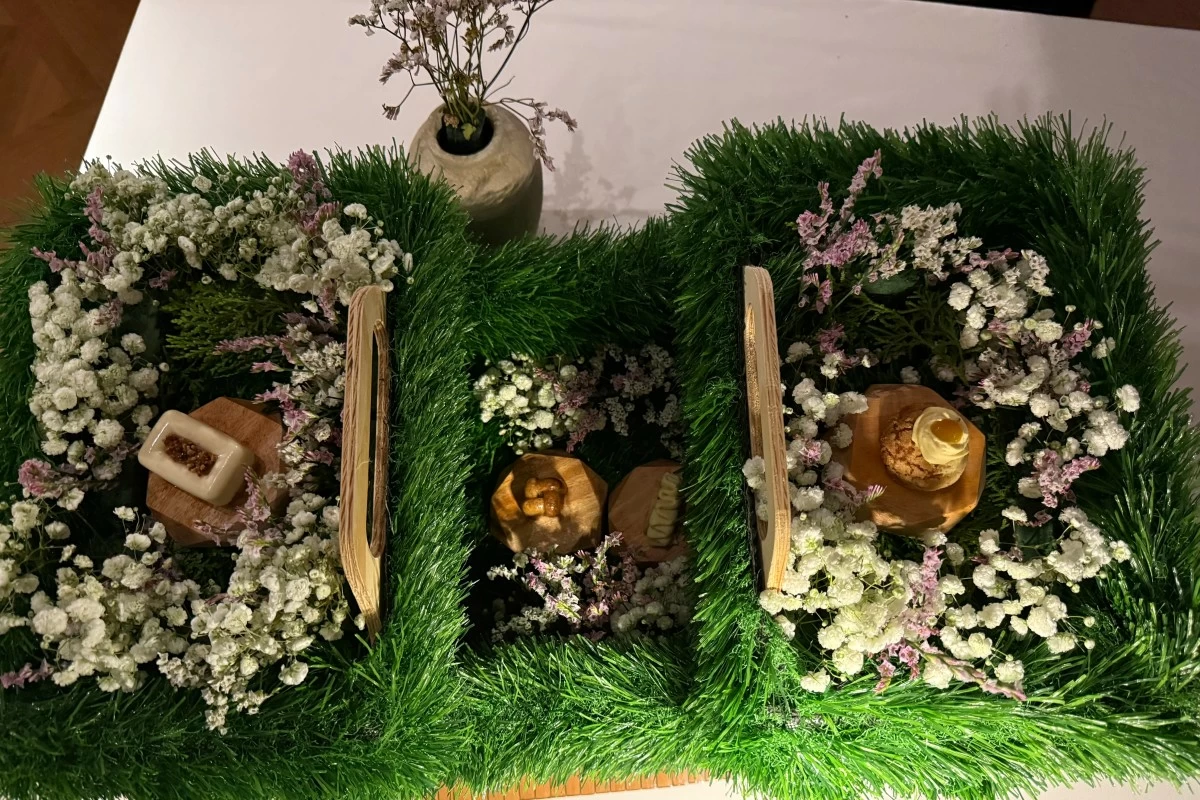
The Dessert Hamper (Photo: Philip Cu Unjieng)
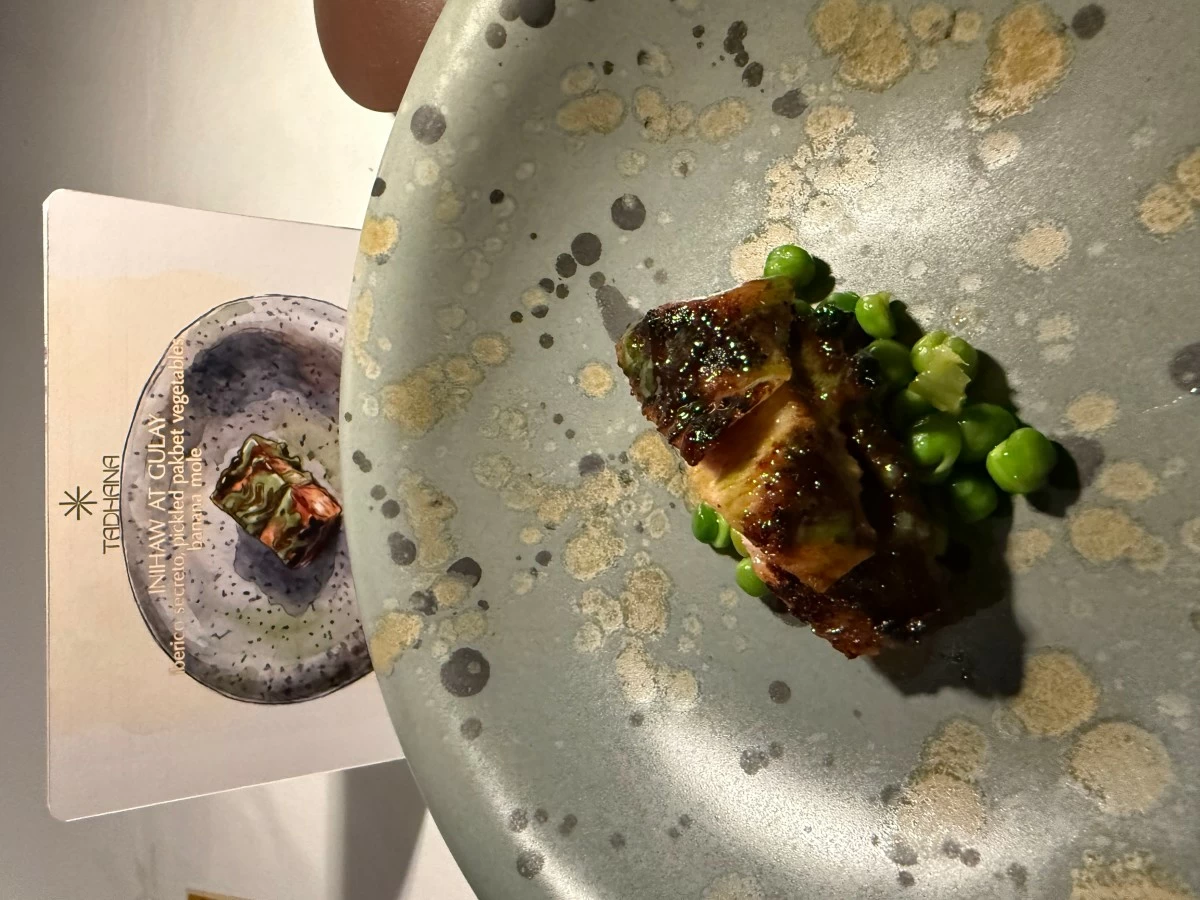
Inihaw at Gulay (Photo: Philip Cu Unjieng)
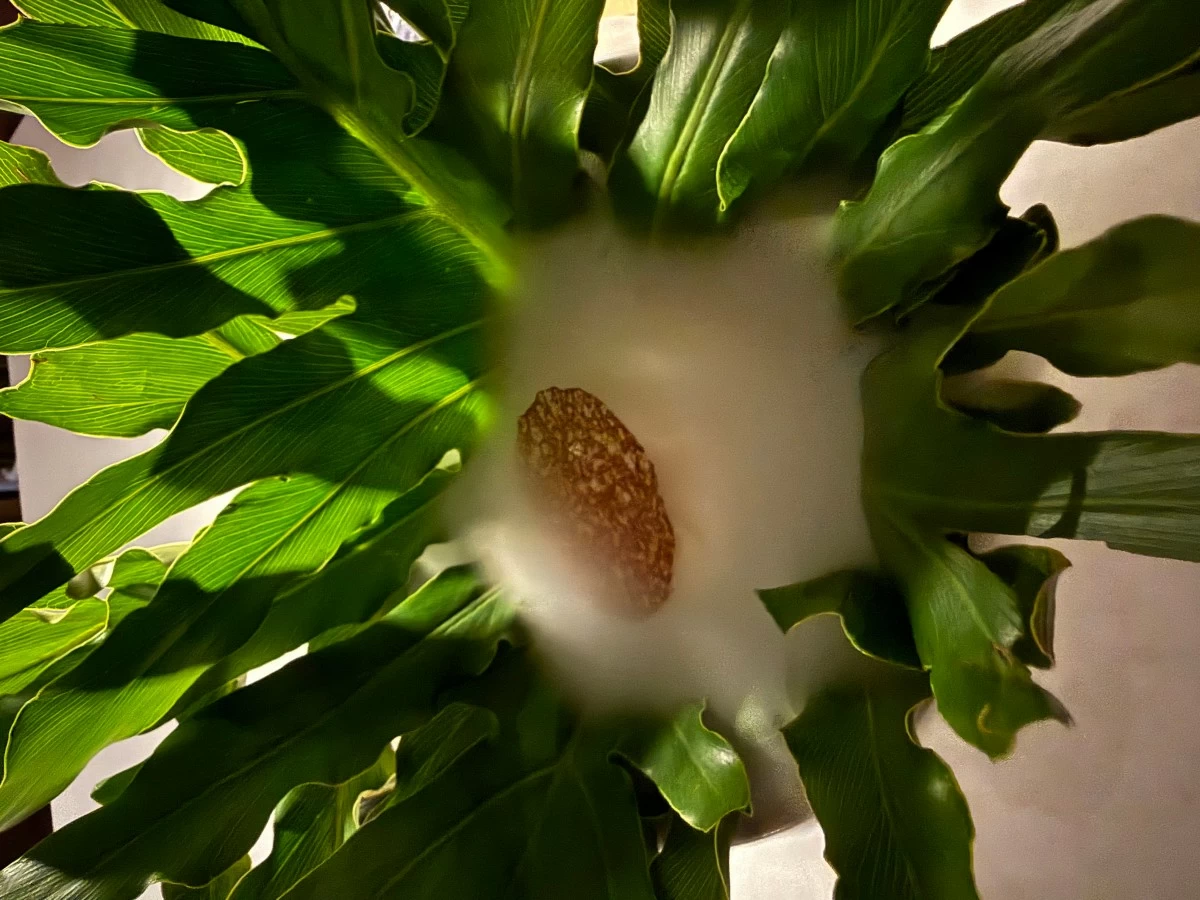
The seasonal sorbet with dry ice (Photo: Philip Cu Unjieng)
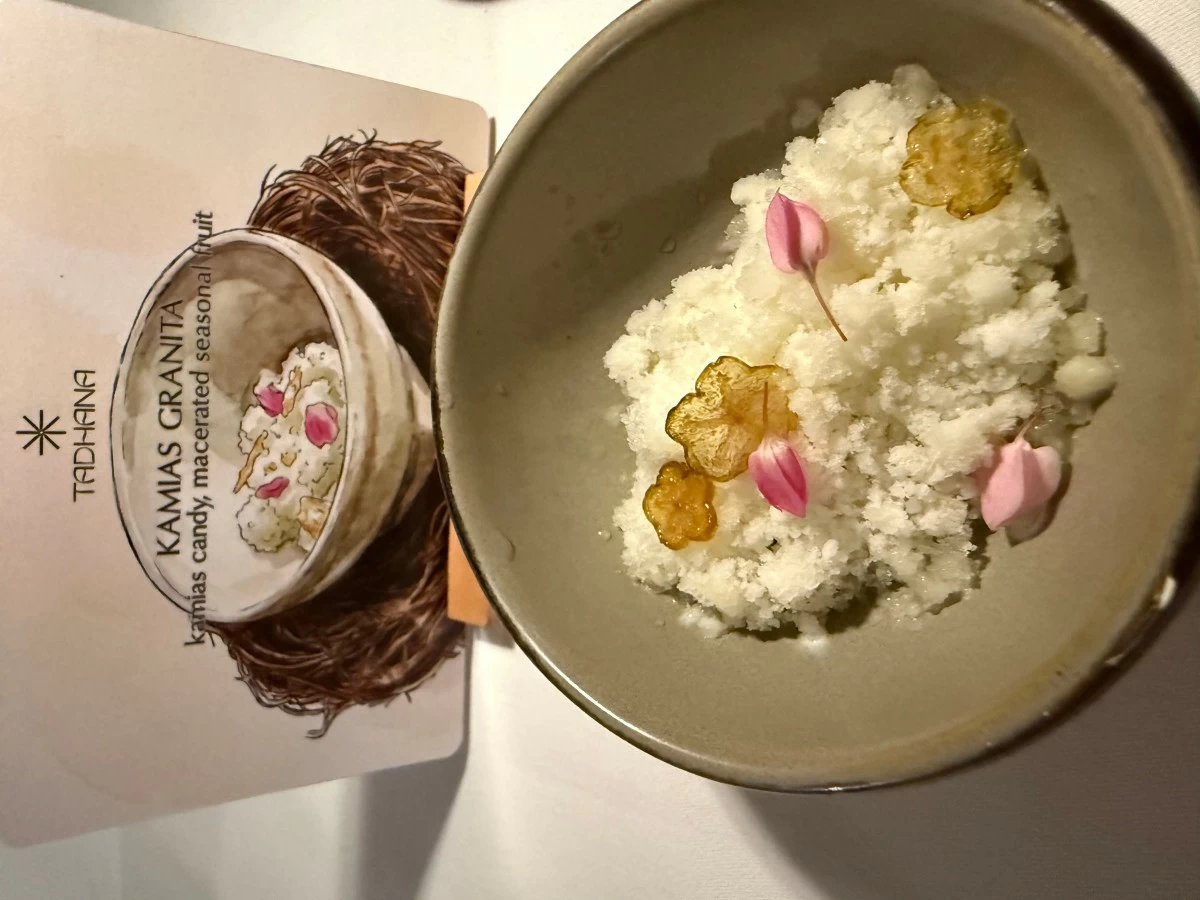
Kamias Granita (Photo: Philip Cu Unjieng)
The Seasonal Sorbet employs dry ice in the presentation. The one we had the night I dined at Tadhana was a kaimito sorbet, and it was excellent. May you be fortunate enough to find it at Tadhana when kaimito is still in season.
A hamper of traditional Filipino desserts is then served: Chef Frances’ versions of maja blanca, turon, pili, and Guimaras mango au craquelin. Hats off to the whimsical inventiveness of this collection. I especially liked the Turon, which came as a sable cookie, banana sponge, feta mousse, and langka. Full credit to Chef Frances for making all those ingredients coalesce so successfully.
Tadhana is truly about fertile imagination and fecund creativity, a mission vision of interpreting the future of Filipino dishes on a global footing. It’s not perfect, and to be perfectly honest, there will inevitably be a least favorite. Mine was the Tocilog. But I will salute the effort and praise the consistency. Definitely one I would recommend, and hope to repeat very soon. Tadhana officially opened to the public on May 15. Do book your table very soon!
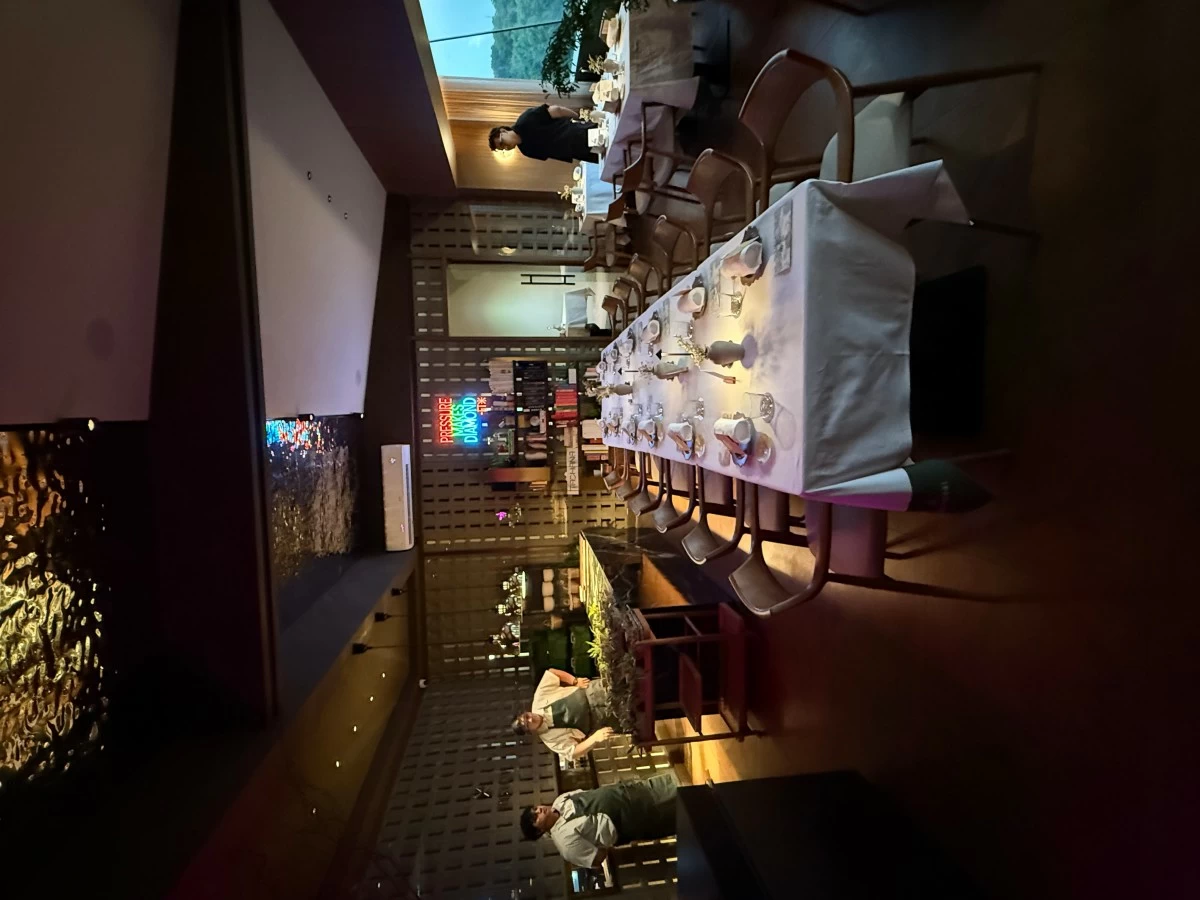
Tadhana, all ready for your reservation (Photo: Philip Cu Unjieng)