







Proposed Anti-Political Dynasty Law gets penultimate House nod
Published May 20, 2026 06:13 pm


At A Glance
- The House passes HB No. 8389 on second reading, bringing the Anti-Political Dynasty Law closer to enactment with support from 173 co-authors.
- The bill bans spouses and relatives within the second degree from simultaneously holding or running for elective posts in the same locality.
- Lawmakers stress it regulates power concentration without permanent disqualification, requiring sworn statements from candidates and Comelec rules within 90 days.
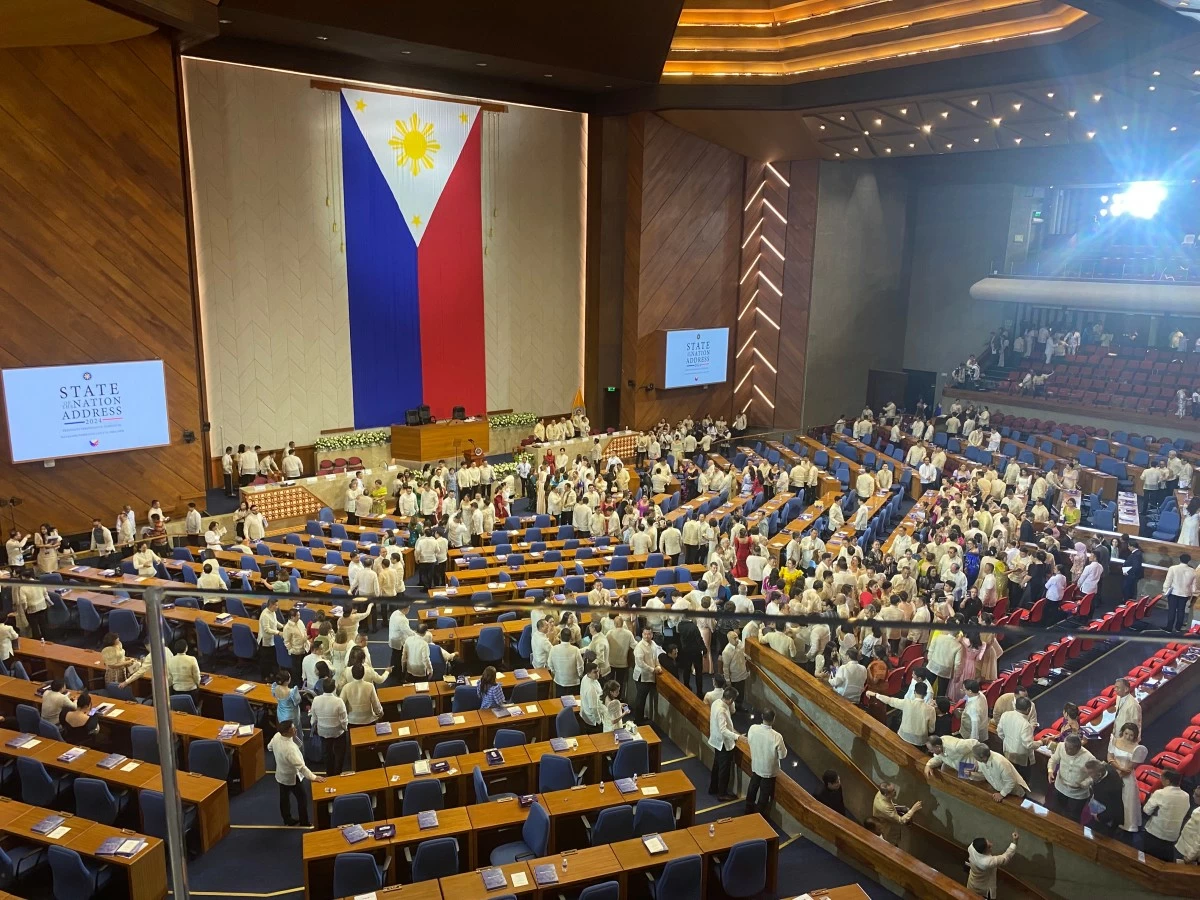
The House plenary (Contributed photo)
The long-sought Anti-Political Dynasty Law, which eyes a second degree of consanguinity or affinity as limit on political families, has moved a step closer to enactment on late Wednesday afternoon, May 20 following its second-reading passage in the House of Representatives.
Embodied in House Bill (HB) No. 8389, the landmark measure being pushed by no less than House Speaker Faustino "Bojie" Dy III and Majority Leader Sandro Marcos gained its penultimate approval via simple voice vote (ayes vs. nayes).
The bill--which could attain its historic third and final reading passage next week--has 173 co-authors in the 300-plus strong legislative chamber.
The bill defines a political dynasty as the concentration, consolidation, or dominance of elective political power by spouses or relatives within the second degree of consanguinity or affinity. If and when enacted, the bill will finally implement the anti-political dynasty provision in the 1987 Constitution.
The measure prohibits spouses or relatives within the second degree from simultaneously holding or running for elective posts in the same national, provincial, city, municipal or barangay government, or from seeking seats in the House of Representatives within the same legislative district.
HB No. 8389 attained second reading passage after roughly a week's worth of debates in plenary. It was defended by Committee on Suffrage and Electoral Reforms Chairman Lanao del Sur 1st district Rep. Zia Alonto Adiong.
Following some minor amendments to the measure, Assistant Majority Leader FPJ Panday Bayanihan Party-list Rep. Brian Poe moved to have the bill approved on second reading.
The presiding officer at that time, Deputy Speaker Misamis Oriental 2nd district Rep. Yevgeny Vincente Emano, declared the HB No. 8389 as approved after the aye votes drowned out the nayes in plenary.
Earlier this month, Speaker Dy rallied his fellow congressmen and reiterated the significance of passing the measure, particularly for the purpose of strengthening public trust in government.
“Kung tunay nating nais palakasin ang tiwala ng taumbayan sa ating institusyon, ipasa na natin ang Anti-Political Dynasty Bill,” Dy told his House colleagues.
(If we truly want to strengthen the people’s trust in our institution, then let us pass the Anti-Political Dynasty Bill.)
The HB No. 8389 was the product of 25 anti-political dynasty bills that was referred to the suffrage panel this 20th Congress. The measure that reached plenary last week was a substitute bill.
Extensive consultations
The second-degree coverage reflects consultations across Luzon, Visayas and Mindanao, where stakeholders raised both support and concerns about implementation.
Article II, Section 26 of the 1987 Constitution directs the State to prohibit political dynasties as may be defined by law, but Congress has never enacted an enabling statute.
In sponsoring the measure, Adiong said the substitute bill was crafted after extensive consultations nationwide and careful consideration of legal, constitutional and practical concerns surrounding the regulation of political dynasties.
He stressed during plenary debates that the second-degree limitation was adopted to ensure the measure remains enforceable and reasonable, as he noted that broader prohibitions could create serious administrative burdens for the Commission on Elections (Comelec).
Adiong also emphasized that the bill does not permanently disqualify individuals from seeking public office, but merely regulates simultaneous or successive concentration of elective positions within the same locality among close relatives.
During interpellations, lawmakers discussed the constitutional basis of the measure, its impact on local political structures, enforcement mechanisms for the Comelec, and safeguards to protect the right to seek elective office while upholding the Constitution’s clear directive against political dynasties.
The proposed law will apply beginning in the next elections once enacted.
The bill also requires candidates for elective office to submit a sworn statement to the Comelec declaring that their candidacy will not result in a prohibited dynastic relationship.
If relatives file candidacies that could create a prohibited dynasty, the bill provides a mechanism for resolving the situation, including voluntary withdrawal or the drawing of lots if the concerned parties fail to agree who among them may assume office.
The measure further directs the Comelec to issue implementing rules and regulations within 90 days from the law’s effectivity.