







Philippine President Marcos to give Diet speech on May 28
By Betheena Unite and JIJI PRESS
Published May 20, 2026 11:21 am
|
Updated May 20, 2026 02:26 pm


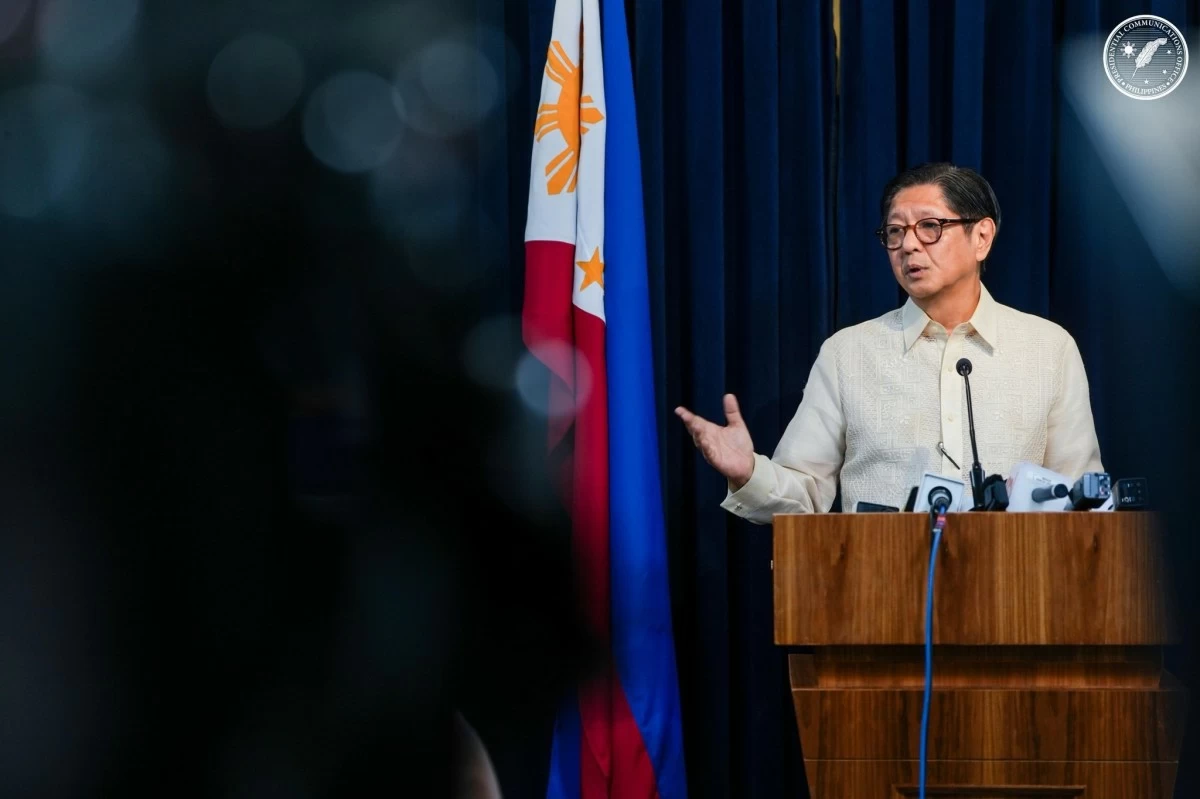
President Ferdinand "Bongbong" Marcos Jr. (Photo courtesy of the Presidential Communications Office)
TOKYO, May 20--Philippine President Ferdinand Marcos Jr. will deliver a speech to the Diet, Japan's parliament, on May 28, it was learned Wednesday.
Executives of the steering committee of the House of Councillors, the upper chamber of the Diet, decided Wednesday to schedule the speech in the chamber for the afternoon of May 28.
Marcos is slated to visit Japan as a state guest from May 26 to 29.
Security and energy cooperation are on top of the President’s agenda during his meeting with Japan’s Prime Minister Sanae Takaichi.
"I expect that we will be talking about many things, but of course, security cooperation will be a very important part of that discussion,” Marcos said in a roundtable with Japanese media in Malacañang on Monday, May 18.
The President further said that Japan’s new approach to security and defense, especially in the region, will also be discussed to clarify further cooperation and assistance.
He noted that Japan taking an active role in the Balikatan exercises for the first time this year is a significant development in the ongoing cooperation and personnel training for better interoperability.
Marcos also expects to discuss the assistance Manila is receiving from Tokyo for the modernization of the Armed Forces of the Philippines (AFP), as well as Tokyo's official security assistance to the Philippines, including radar and support systems, information and technology sharing, and personnel training.
Marcos also plans to propose to Japanese officials the exploration of alternative sources of petroleum products, noting that the impacts of the conflict in the Middle East should not be repeated if another crisis arises in the future.
Marcos said he will try to engage Japan on energy supply, citing the ongoing Middle East conflict that has hampered oil shipments to the Philippines.
"I think that is what I will propose when I get to Japan is that let us not wait for it to happen again," he said.
"Let us assume that such a thing will happen again. It may not be exactly the same thing, I don't think, but certainly there will be aspects of it that will be similar to what we are facing now. So we have to find ways to prepare for that," he added.
The President said the ongoing crisis underscored the need to explore alternative options rather than relying solely on supplies passing through the Strait of Hormuz.
He further said that the energy situation at present "is very much like the pandemic," which will prompt various changes, such as how people work and do business, as well as in supply chains.
"I don't think that we will go back to the old system where the majority of the petroleum products that are coming out of the Strait of Hormuz are going to Asia," he said.
"I think Asia is going to start looking for alternative measures in case this happens again, in case, for whatever reason, maybe not Strait of Hormuz but somewhere else, and the supply and delivery of petroleum products become, again, become disturbed and we cannot find – we find again that we're going to have to start looking for, shall we say, non-traditional sources," he added.
"We are actually very grateful to Japan because Japan has been of great assistance to us in trying to find different solutions for the supply of the different kinds of fuel. And that has become a critical part of our policy," the President added.
Marcos said Japan has offered a response mechanism to provide up to $10 billion in assistance through the Partnership on Wide Energy and Resources Resilience (POWERR Asia), which the Japanese Prime Minister launched last April.
It aims to help Asian nations secure crude oil, diversify critical minerals, and build sustainable, zero-emission supply chains to protect economies from Middle East-related supply shocks.