






Manila Bulletin
 Environment and Sustainability
Coral bleaching: How vibrant reefs turn into a white graveyard
Environment and Sustainability
Coral bleaching: How vibrant reefs turn into a white graveyard
Environment and Sustainability
Coral bleaching: How vibrant reefs turn into a white graveyard
Coral bleaching: How vibrant reefs turn into a white graveyard
Published May 20, 2026 12:39 pm
|
Updated May 20, 2026 10:59 am


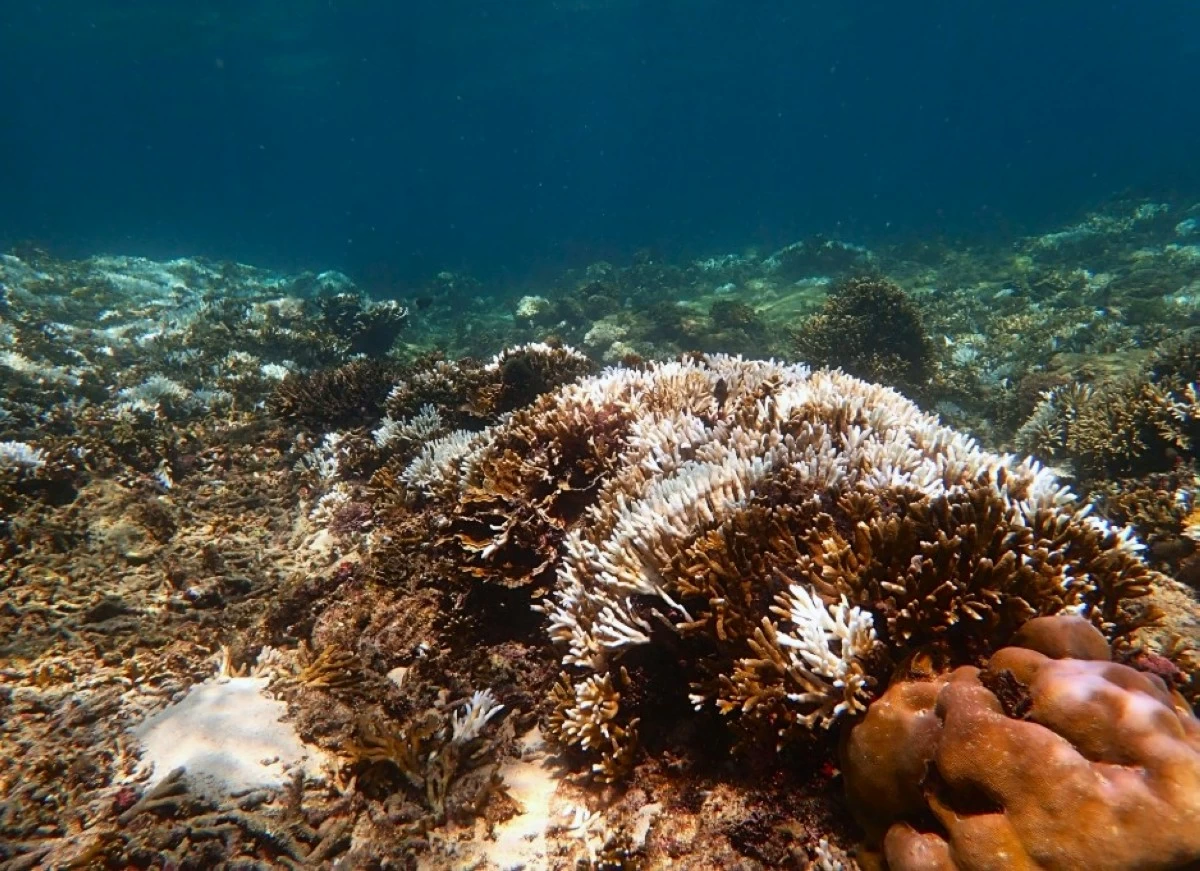
Coral bleaching is a stress response where corals expel symbiotic algae living in their tissues, causing them to turn white. (Photo courtesy of National Oceanic and Atmospheric Administration)
The Philippines is made up of over 7,100 islands, many of which are surrounded by fringing coral reefs. With a total reef area of around 25,000 square kilometers, the country is ranked as having the third largest reef system in the world, and its waters are known for having the highest coral biodiversity.
Overfishing, destructive fishing practices, and years of pollution have adversely affected the nation’s coral reefs. This has resulted in significant ecological damage. In recent years, however, the primary concern has shifted to climate change, which refers to a long-term alteration in the average weather patterns that characterize Earth’s local, regional, and global climates.
Coral reefs are particularly vulnerable to the effects of climate change. A sudden or drastic change in temperature is detrimental to corals. It induces stress that leads to coral bleaching, a phenomenon that turns the colorful sea gardens into white graveyards.
“Bleaching is not a good thing,” explained Dr. Terry Hughes, a distinguished professor at James Cook University, in an interview with the Manila Bulletin. “Thermal stress due to global warming is not good.”
Thermal stress refers to the mechanical stress induced in corals by changes in temperature. As global warming intensifies, coral bleaching is expected to increase at an unprecedented level.
“Bleaching events are expected to increase in frequency,” said Dr. Hughes, a fellow of the Australian Academy of Science.
“The surface of the world’s oceans has warmed by 0.7 degrees Centigrade, resulting in unprecedented coral bleaching and mortality events,” said a statement drafted by a working group of eminent scientists, released during the International Coral Reef Symposium (ICRS) in Cairns, Australia several years ago.
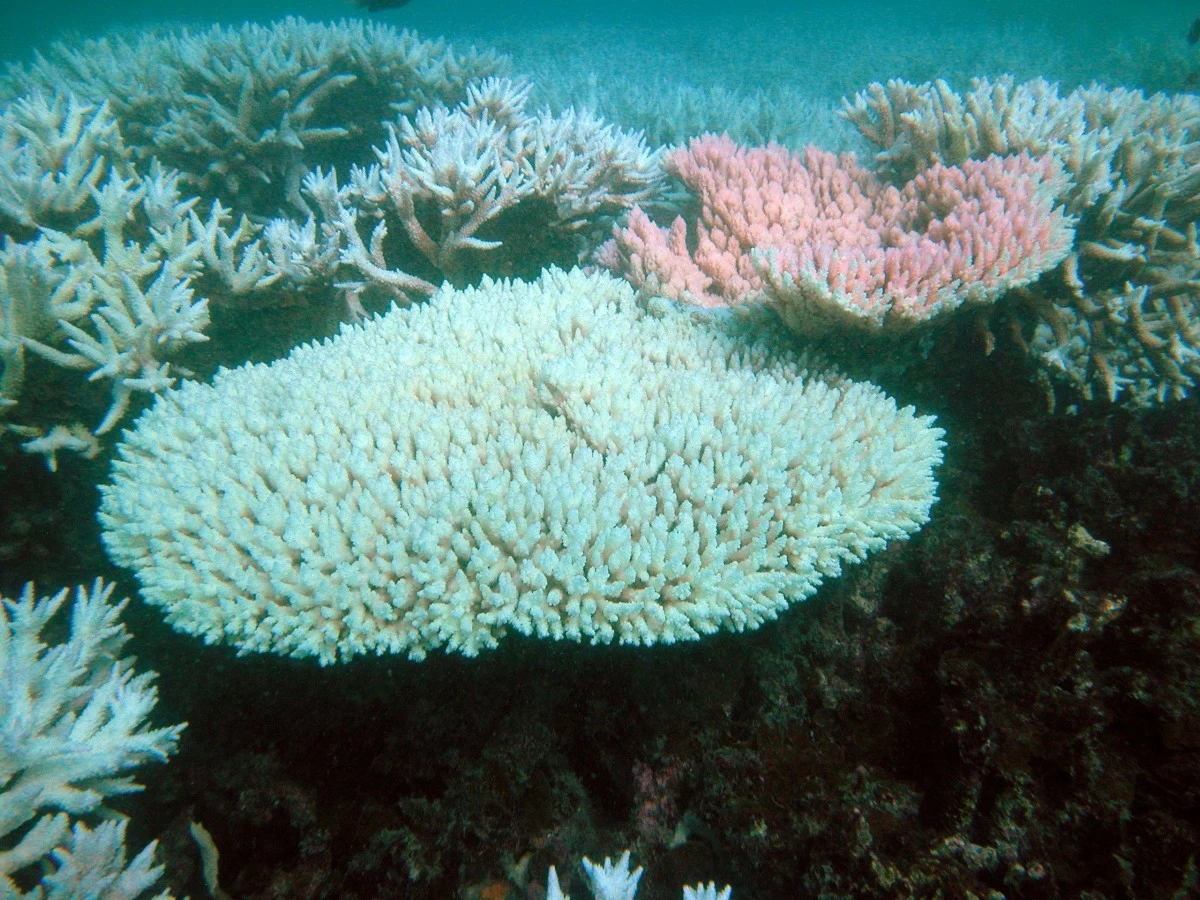
A bleached coral reef in the West Philippine Sea. (Photo credit: Lowell Jay Tupaz)
In a series of journals, Science reported that climate change could trigger the death of coral reefs, with coral bleaching being the clearest sign.
Corals thrive in warm waters; however, many are already close to their thermal tolerance limits. Bleaching represents a disruption of the “complex biological system” that corals have developed for survival. Each coral structure consists of a colony of hundreds or thousands of minute organisms, known as polyps, which collectively construct the skeleton that forms the reef.
The outer layer of each coral polyp is home to tiny single-celled plants referred to as zooxanthellae. These organisms are responsible for the vibrant colors of corals. When they are expelled due to elevated water temperatures or other stressors, the coral appears bleached, resulting in a pale or snowy-white appearance.
Marine scientists say that without zooxanthellae, the coral cannot survive for long. “When subjected to extreme stress (like high temperature of surface water),” explained Worldwatch Institute’s John C. Ryan, “corals jettison the colorful algae they live in symbiosis with, exposing the white skeleton of dead coral beneath a single layer of clear living tissue. If the stress persists, the coral dies.”
The publication Management of Bleached and Severely Damaged Coral Reefs traced coral bleaching as far back as 1870. However, since the 1980s, bleaching events have become more frequent, widespread and severe.
In the Philippines, the first recorded instance of widespread coral bleaching occurred in 1998. The phenomenon originated in Batangas and spread throughout the country, occurring simultaneously with unusual sea surface temperatures.
In 2010, as much as 95 percent of the corals in the Philippines experienced bleaching after a warming event. “The bleaching has been observed at many other sites around the Philippines, featuring mass mortality of corals,” a news report said.
Recovery of severely damaged reefs caused by bleaching can take a long time, even in relatively healthy reefs. In addition, “the corals that repopulate a damaged reef may be significantly different from what existed before bleaching,” according to a fact sheet circulated during the ICRS gathering.
Recovery is even slower if there are other stressors, such as poor water quality, overfishing or disease. “Where reefs are already stressed, recovery can take many decades, or even centuries,” the fact sheet said. “But a healthy, resilient reef will recover more quickly from bleaching.”
In the Philippines, researchers have identified certain corals that exhibit greater resilience to bleaching than others.
By observing coral reefs in the West Philippine Sea from 2022 to 2025, scientists from the University of the Philippines Marine Science Institute (UP MSI) found that the impacts of coral bleaching vary by location.
In Bolinao and Anda, Pangasinan, as well as Iba, Zambales, between 60 percent and 77 percent of hard corals experienced bleaching, with most cases classified as severe. Conversely, in Lobo, Batangas, and Puerto Galera, Oriental Mindoro, bleaching was less severe, affecting only 20 percent to 43 percent of corals.
This situation highlights the significant impact of the unprecedented sea surface temperatures recorded during the 2024 Global Coral Bleaching Event. The occurrence of severe coral bleaching and mortality is expected to result in substantial long-term changes in the composition of reef communities.
The study stemmed from the project, “Impacts of Marine Heatwaves in Select West Philippine Sea Reefs,” which highlights the connection between increasing ocean temperatures and coral reef health. This project is funded by the Philippine Council for Agriculture, Aquatic and Natural Resources Research and Development of the Department of Science and Technology (DOST-PCAARRD).
In evaluating the condition of corals in the West Philippine Sea, the UP MSI researchers led by Dr. Maria Vanessa Baria-Rodriguez conducted regular underwater reef surveys over a span of three years. These surveys enabled them to assess and quantify the proportions of hard corals, soft corals, macroalgae, algal assemblages, and dead corals within a specific reef area.
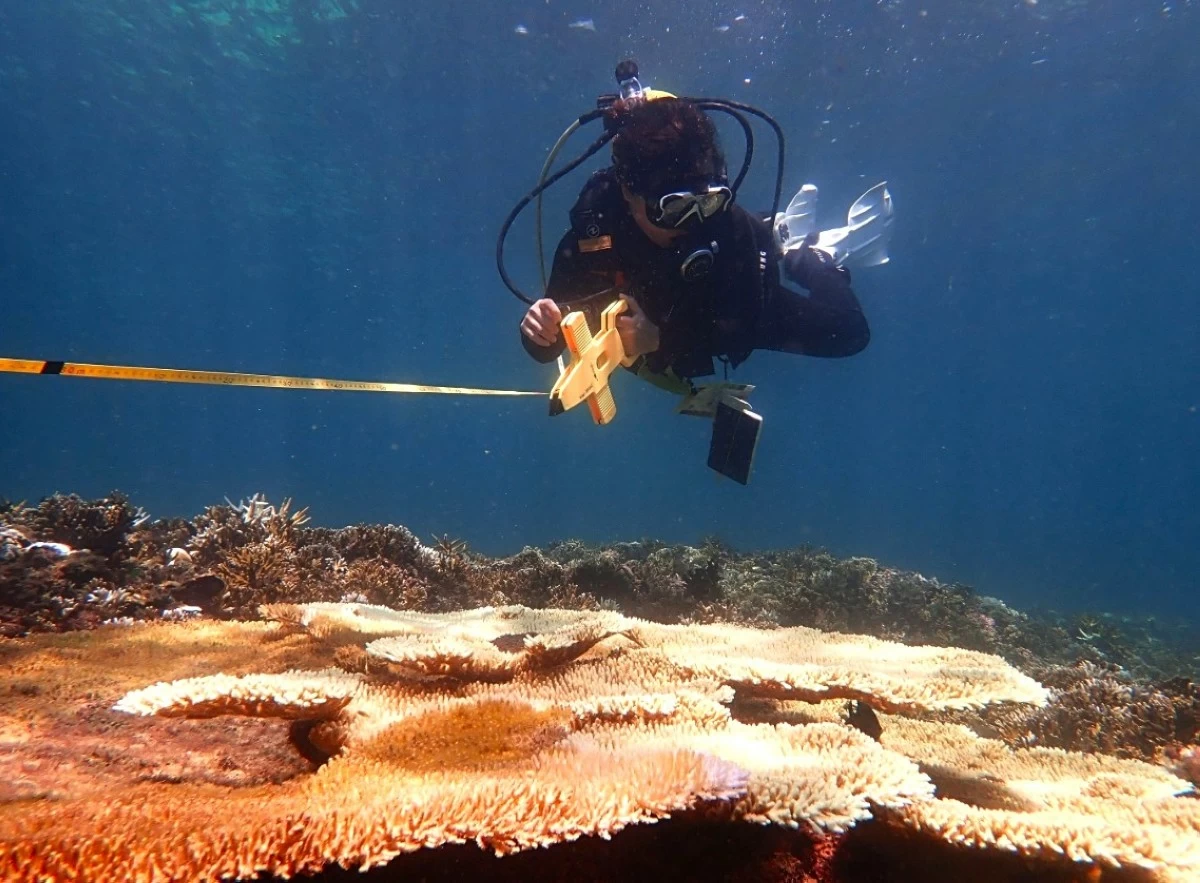
A researcher laying the transect line for the photoquadrat method used to conduct an ecological survey of the corals. (Photo credit: Lowell Jay Tupaz)
Locations experiencing severe coral bleaching, such as the reef sites in Bolinao, Anda, and Iba, recorded a 51 to 59 percent reduction in hard coral cover within just two years.
In contrast, areas where bleaching was less severe experienced significantly milder declines. In Puerto Galera, the reduction was only 2 percent. Lobo also recorded a 20 percent increase in hard coral cover.
Across the world, coral reefs are facing destruction not only from bleaching but also from other causes. Before it becomes too late for the world to wake up one day without coral reefs, Dr. Simon Donner urged that decisive action must be taken. He compared the global community to passengers aboard the Titanic heading toward oblivion.
“We have to hit the brakes to slow down before hitting the iceberg,” urged Dr. Donner, a Canadian scientist based at the University of British Columbia. “We have to find ways to lessen the impact of coral bleaching and other stressors from destroying coral reefs.”
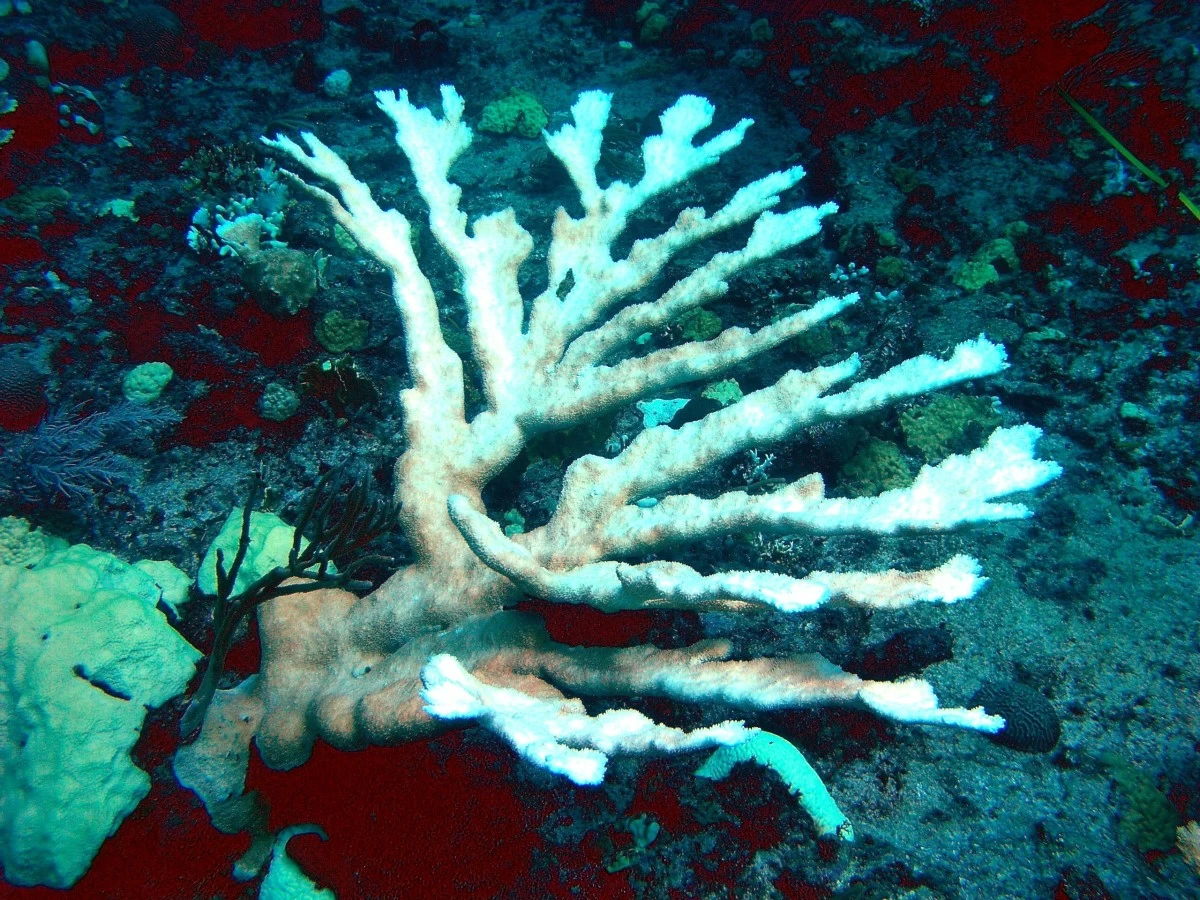
Bleached corals are alive, but under extreme stress. They are more vulnerable to disease and death. (Photo courtesy of National Oceanic and Atmospheric Administration)