ADVERTISEMENT

Building economic resilience beyond OFW remittances

Published May 20, 2026 12:05 am  |  Updated May 19, 2026 05:57 pm
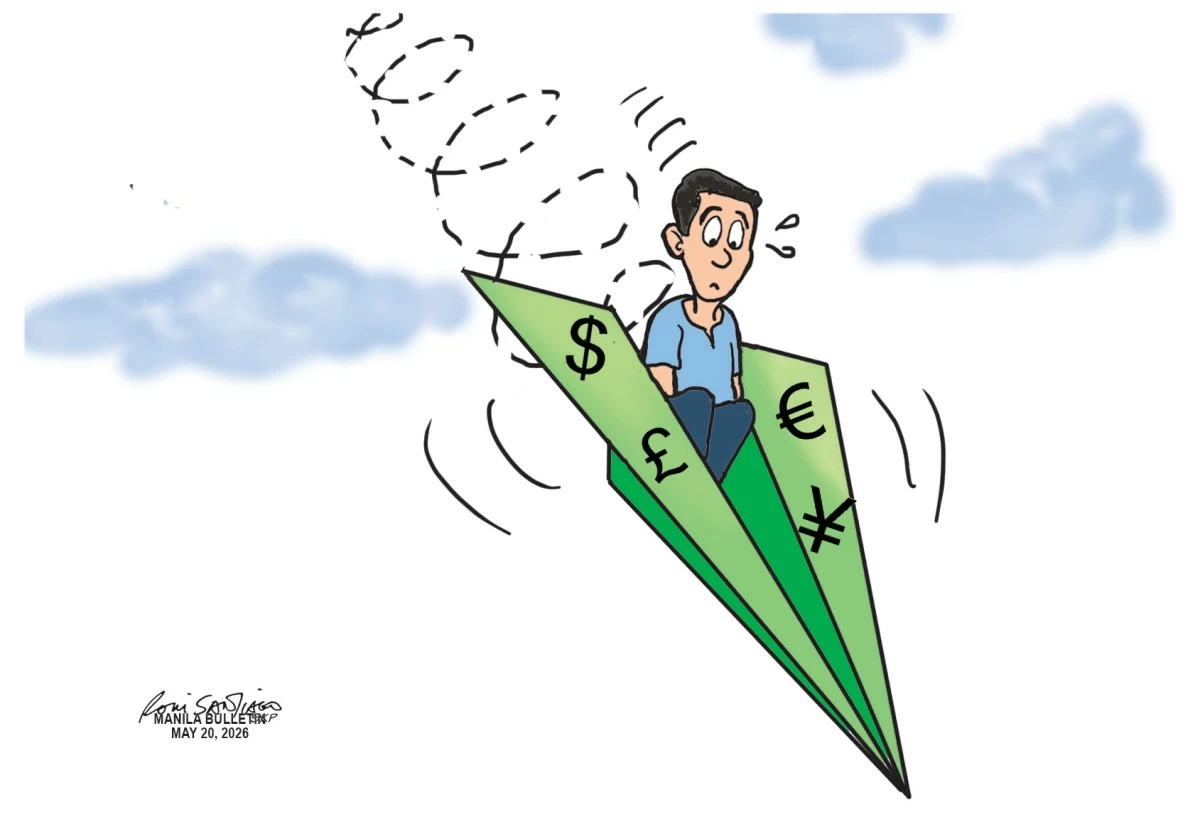
Overseas Filipino workers (OFWs) have carried the Philippine economy on their backs for decades. This is why they are branded as our modern-day heroes. Their sacrifices built homes, paid tuition, kept businesses alive, and shielded the country during recessions, pandemics, and political instability. But the warning from the International Labor Organization (ILO) about the growing risks from the Middle East conflict should prompt a reality check. An economy too dependent on remittances is also an economy permanently vulnerable to crises beyond its control.
While the Bangko Sentral ng Pilipinas (BSP) reported that remittances grew by 2.3 percent in March, it was clear there is a growth slowdown. And it has exposed how fragile the country’s economic safety net can become when external shocks intensify. Wars disrupt labor markets. Oil prices surge. Supply chains tighten. Tourism weakens. Jobs disappear. And when host countries suffer, Filipino families suffer with them.
We cannot continue treating remittances as an endless cushion. They are lifelines, but they should never become the foundation of national survival.
The government must begin by treating economic resilience as urgently as disaster preparedness. Just as the country prepares for typhoons and earthquakes, it must also prepare for global economic disruptions. That means accelerating the creation of quality jobs at home, especially in manufacturing, agriculture, technology, renewable energy, and infrastructure. The most sustainable protection for Filipino families is not dependence on overseas employment but the availability of dignified, stable local job.
The state must also strengthen reintegration programs for returning OFWs. Too many workers come home after years abroad with savings that quickly disappear because they lack investment guidance, financial literacy, or access to viable business opportunities. Government agencies should provide accessible livelihood financing, skills retraining, mental health support, and entrepreneurship mentoring—not as token seminars, but as long-term economic programs tied to measurable outcomes.
Equally critical is expanding social protection. Emergency assistance systems for displaced migrant workers must become faster, more coordinated, and less bureaucratic. Families should not be left scrambling when conflict suddenly erupts in host nations. A dedicated crisis-response fund for OFWs in high-risk regions could spell the difference between temporary hardship and long-term poverty.
The private sector has an equally important role to play. Banks, fintech firms, insurers, and businesses should develop products specifically designed to help OFW families build resilience rather than merely facilitate consumption. Affordable insurance, investment tools, savings programs, and emergency credit lines can help families withstand economic shocks.
Employers, meanwhile, should recognize the enormous potential of returning OFWs. Many come home with global experience, technical expertise, discipline, and leadership skills that remain underutilized.
Public-private collaboration is where meaningful change can happen. The government can provide policy direction and safety nets, while private institutions can bring efficiency, innovation, and capital. Together, they can establish nationwide financial literacy campaigns, expand digital banking access in rural areas, create OFW investment cooperatives, and build stronger pathways for overseas workers to transition into entrepreneurship or local employment.
Yet resilience does not rest solely on institutions. Every Filipino also carries responsibility.
Families must move beyond the cycle of dependence where remittances are spent entirely on short-term consumption. Savings, insurance, education, and investments must become priorities even during stable times. Communities can strengthen local support systems by helping vulnerable families during crises instead of leaving them isolated.
The Middle East conflict, which has brought about a geopolitical crisis, should serve as a warning. And perhaps the greatest danger is not the slowdown in remittances itself, but the possibility that the country continues acting as though remittances alone will always save it. The government must ensure sustainable protection for Filipino families at home.
ADVERTISEMENT
.most-popular .layout-ratio{ padding-bottom: 79.13%; } @media (min-width: 768px) and (max-width: 1024px) { .widget-title { font-size: 15px !important; } }

{{ articles_filter_1561_widget.title }}

.most-popular .layout-ratio{ padding-bottom: 79.13%; } @media (min-width: 768px) and (max-width: 1024px) { .widget-title { font-size: 15px !important; } }

{{ articles_filter_1562_widget.title }}

.most-popular .layout-ratio{ padding-bottom: 79.13%; } @media (min-width: 768px) and (max-width: 1024px) { .widget-title { font-size: 15px !important; } }

{{ articles_filter_1563_widget.title }}

{{ articles_filter_1564_widget.title }}

.mb-article-details { position: relative; } .mb-article-details .article-body-preview, .mb-article-details .article-body-summary{ font-size: 17px; line-height: 30px; font-family: "Libre Caslon Text", serif; color: #000; } .mb-article-details .article-body-preview iframe , .mb-article-details .article-body-summary iframe{ width: 100%; margin: auto; } .read-more-background { background: linear-gradient(180deg, color(display-p3 1.000 1.000 1.000 / 0) 13.75%, color(display-p3 1.000 1.000 1.000 / 0.8) 30.79%, color(display-p3 1.000 1.000 1.000) 72.5%); position: absolute; height: 200px; width: 100%; bottom: 0; display: flex; justify-content: center; align-items: center; padding: 0; } .read-more-background a{ color: #000; } .read-more-btn { padding: 17px 45px; font-family: Inter; font-weight: 700; font-size: 18px; line-height: 16px; text-align: center; vertical-align: middle; border: 1px solid black; background-color: white; } .hidden { display: none; }
function initializeAllSwipers() { // Get all hidden inputs with cms_article_id document.querySelectorAll('[id^="cms_article_id_"]').forEach(function (input) { const cmsArticleId = input.value; const articleSelector = '#article-' + cmsArticleId + ' .body_images'; const swiperElement = document.querySelector(articleSelector); if (swiperElement && !swiperElement.classList.contains('swiper-initialized')) { new Swiper(articleSelector, { loop: true, pagination: false, navigation: { nextEl: '#article-' + cmsArticleId + ' .swiper-button-next', prevEl: '#article-' + cmsArticleId + ' .swiper-button-prev', }, }); } }); } setTimeout(initializeAllSwipers, 3000); const intersectionObserver = new IntersectionObserver( (entries) => { entries.forEach((entry) => { if (entry.isIntersecting) { const newUrl = entry.target.getAttribute("data-url"); if (newUrl) { history.pushState(null, null, newUrl); let article = entry.target; // Extract metadata const author = article.querySelector('.author-section').textContent.replace('By', '').trim(); const section = article.querySelector('.section-info ').textContent.replace(' ', ' '); const title = article.querySelector('.article-title h1').textContent; // Parse URL for Chartbeat path format const parsedUrl = new URL(newUrl, window.location.origin); const cleanUrl = parsedUrl.host + parsedUrl.pathname; // Update Chartbeat configuration if (typeof window._sf_async_config !== 'undefined') { window._sf_async_config.path = cleanUrl; window._sf_async_config.sections = section; window._sf_async_config.authors = author; } // Track virtual page view with Chartbeat if (typeof pSUPERFLY !== 'undefined' && typeof pSUPERFLY.virtualPage === 'function') { try { pSUPERFLY.virtualPage({ path: cleanUrl, title: title, sections: section, authors: author }); } catch (error) { console.error('ping error', error); } } // Optional: Update document title if (title && title !== document.title) { document.title = title; } } } }); }, { threshold: 0.1 } ); function showArticleBody(button) { const article = button.closest("article"); const summary = article.querySelector(".article-body-summary"); const body = article.querySelector(".article-body-preview"); const readMoreSection = article.querySelector(".read-more-background"); // Hide summary and read-more section summary.style.display = "none"; readMoreSection.style.display = "none"; // Show the full article body body.classList.remove("hidden"); } document.addEventListener("DOMContentLoaded", () => { let loadCount = 0; // Track how many times articles are loaded const offset = [1, 2, 3, 4, 5, 6, 7, 8, 9, 10]; // Offset values const currentUrl = window.location.pathname.substring(1); let isLoading = false; // Prevent multiple calls if (!currentUrl) { console.log("Current URL is invalid."); return; } const sentinel = document.getElementById("load-more-sentinel"); if (!sentinel) { console.log("Sentinel element not found."); return; } function isSentinelVisible() { const rect = sentinel.getBoundingClientRect(); return ( rect.top < window.innerHeight && rect.bottom >= 0 ); } function onScroll() { if (isLoading) return; if (isSentinelVisible()) { if (loadCount >= offset.length) { console.log("Maximum load attempts reached."); window.removeEventListener("scroll", onScroll); return; } isLoading = true; const currentOffset = offset[loadCount]; window.loadMoreItems().then(() => { let article = document.querySelector('#widget_1690 > div:nth-last-of-type(2) article'); intersectionObserver.observe(article) loadCount++; }).catch(error => { console.error("Error loading more items:", error); }).finally(() => { isLoading = false; }); } } window.addEventListener("scroll", onScroll); });

Sign up by email to receive news.