







BARMM under state of calamity due to dry spell, oil crisis
Published May 20, 2026 05:27 pm


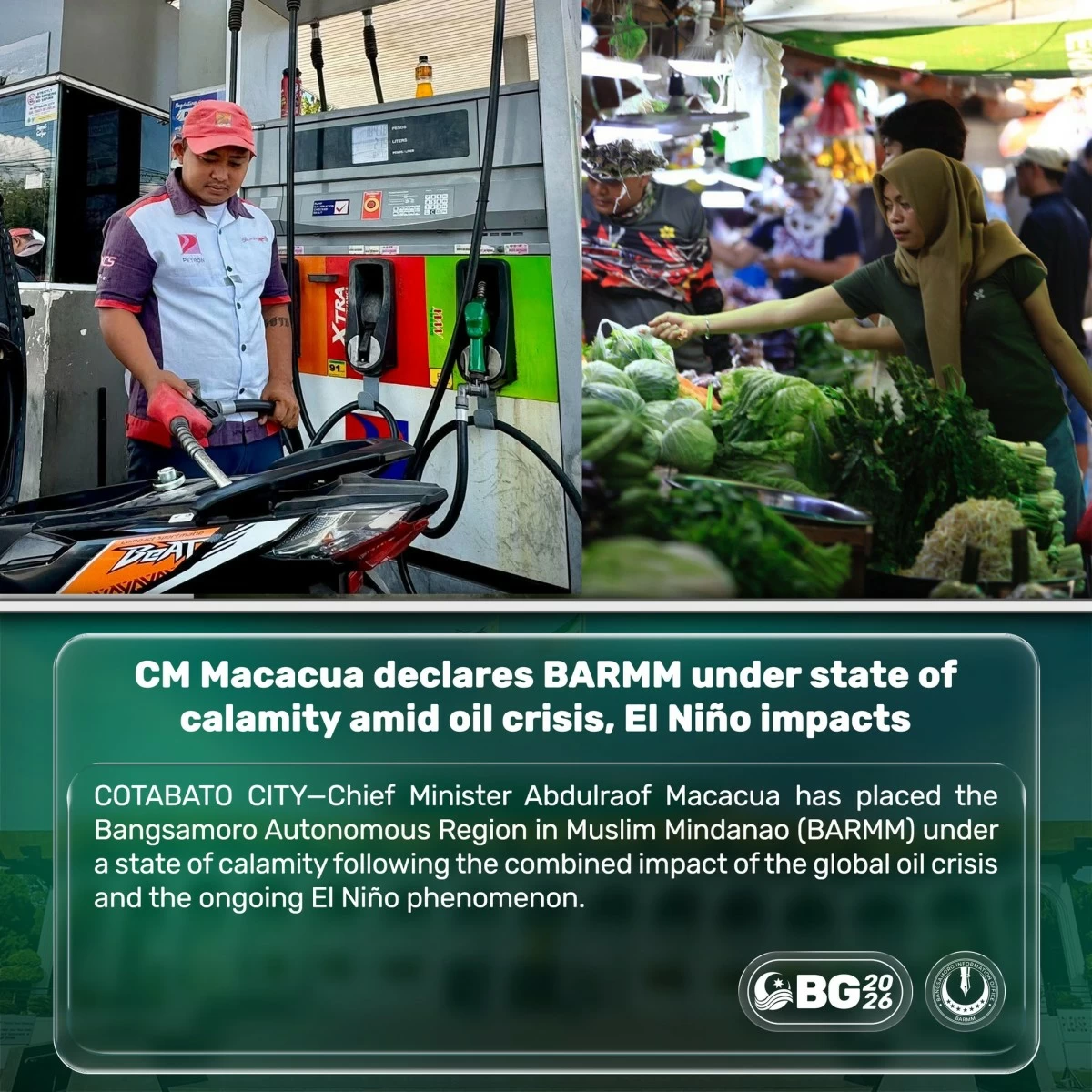
DAVAO CITY – Bangsamoro Autonomous Region in Muslim Mindanao (BARMM) interim Chief Minister Abdulraof Macacua has placed the region under a state of calamity due to the impact of the dry spell and global oil crisis.
Macacua signed Proclamation No. 2 dated May 14 but released to the public on May 19 to address worsening socioeconomic disruptions.
The declaration of the state of calamity, he added, could hasten the rescue, recovery, relief, and rehabilitation efforts of the government and the private sector to affected communities.
Macacua directed concerned ministries, offices, and agencies to continuously undertake urgent and critical disaster response to mitigate the impact in the region.
The proclamation cited that the El Niño-Southern Oscillation (ENSO)-neutral conditions prevailing over the tropical Pacific have triggered an El Niño alert since April 22, 2026, with climate models projecting the phenomenon to continue until early 2027.
“The Bangsamoro government and local government units may immediately access calamity and emergency funds for rescue, relief, recovery, and rehabilitation efforts, including the delivery of essential services to affected communities,” Macacua added.
The Ministry of Agriculture, Fisheries, and Agrarian Reform (MAFAR) said ENSO has affected around 800 rice and corn farmers in Maguindanao del Sur and Maguindanao del Norte.
MAFAR Minister Abunawas Maslamama said that as of April 24, about 851 hectares of farmland in 36 municipalities and 167 barangays were damaged. Around 1,500 metric tons of rice and corn were lost in the dry spell, according to MAFAR.
The Bangsamoro government acknowledged the adverse impact of the steep fuel hikes to the local economy, food security, livelihood, and transportation in the region.