






Manila Bulletin
 Philippines
National
'Amin ang West Philippine Sea!' DND rejects China's protest over Pag-asa, Lawak development works
Philippines
National
'Amin ang West Philippine Sea!' DND rejects China's protest over Pag-asa, Lawak development works
Philippines
National
'Amin ang West Philippine Sea!' DND rejects China's protest over Pag-asa, Lawak development works
'Amin ang West Philippine Sea!' DND rejects China's protest over Pag-asa, Lawak development works
Published May 20, 2026 01:05 pm


At A Glance
- The Department of National Defense (DND) rejected China's latest objections to infrastructure projects on Pag-asa (Thitu) and Lawak (Nanshan) Islands, insisting these areas are under Philippine sovereignty and part of Kalayaan, Palawan.
- The DND said development efforts are meant to support civilians and military personnel stationed in the Kalayaan Island Group, where the Philippines maintains control over several features in the West Philippine Sea, including Pag-asa Island, which serves as the municipal center, and Lawak Island, a military outpost.
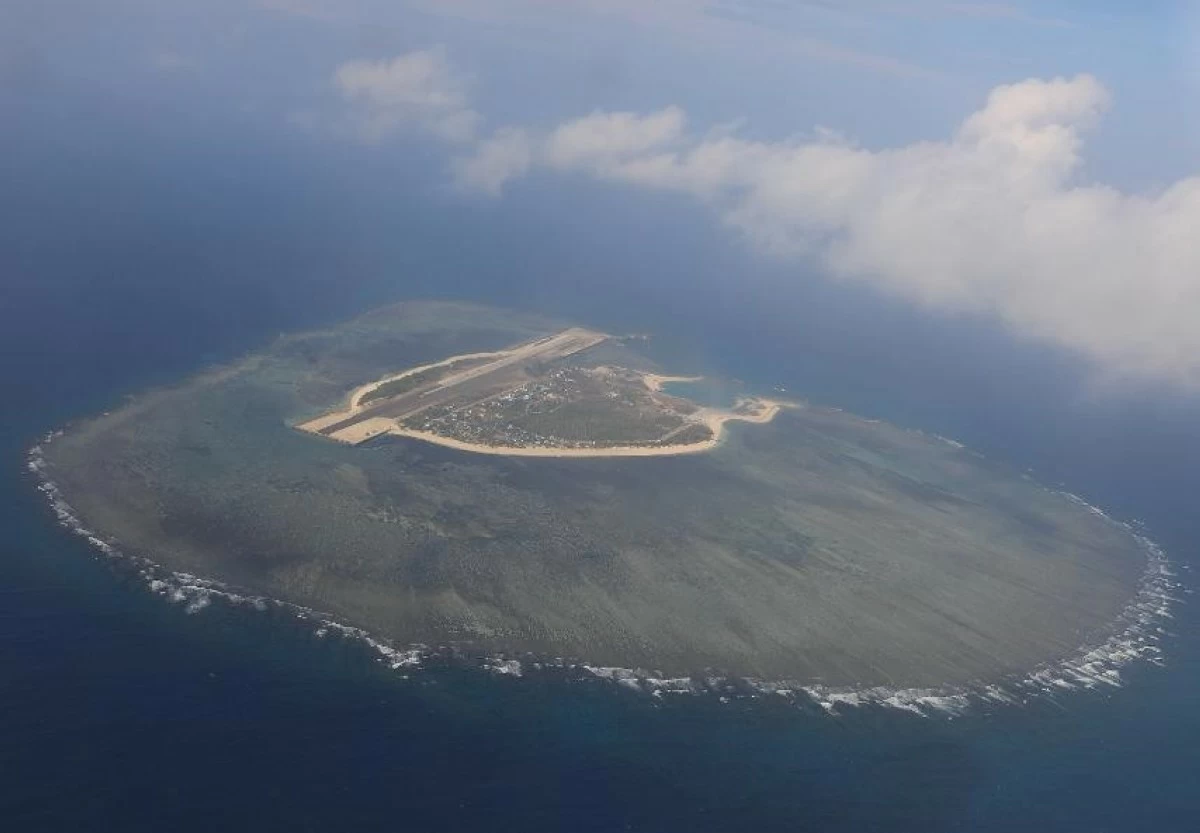
Pag-asa Island (File photo: Armed Forces of the Philippines)
The Department of National Defense (DND) on Wednesday, May 20, dismissed the latest complaints from China regarding ongoing infrastructure projects on Pag-asa (Thitu) Island and Lawak (Nanshan) Island in the West Philippine Sea (WPS) as it maintained that all activities within these features are well within the country's sovereign rights.
DND spokesperson Asst. Sec. Arsenio Andolong said Pag-asa and Lawak islands belong to the municipality of Kalayaan in Palawan, thus, government improvement and development projects in the area are meant to support Filipinos living and working there.
“The Department of National Defense categorically rejects the latest statements of the Chinese Ministry of National Defense concerning Pag-asa Island and Lawak Island,” Andolong said.
Pag-asa and Lawak islands are part of the Kalayaan Island Group (KIG), a cluster of features in the Spratly chain that has long been administered by Manila.
In total, there are nine Philippine-held features in the area which also include Ayungin (Second Thomas) Shoal, Parola Island (Northeast Cay), Likas (West York) Island, Kota (Loaita) Island, Patag (Flat) Island, Panata (Melchora Aquino Cay/ Loaita Cay) Island, and Rizal (Commodore) Reef.
Pag-asa Island serves as the seat of government of Kalayaan municipality and hosts both civilians and military personnel while Lawak Island functions mainly as an outpost of the Armed Forces of the Philippines (AFP) in the WPS.
Development works
Reports said the Armed Forces of the Philippines (AFP) has been improving infrastructure on Pag-asa Island, backed by a P1.65 billion allocation in the 2025 budget to extend its 1.3-kilometer runway to 1.5 kilometers.
The upgrade is intended to allow the island to handle light combat and transport aircraft, strengthening logistics and emergency response operations. An additional P300 million has also been reportedly set aside to build a sheltered port.
At the same time, Lawak Island is also seeing port development, with around P1 billion reportedly allocated for a new sheltered port facility. The project aims to replace the island’s shallow existing port and enhance the Philippine Coast Guard’s (PCG) capacity to dock vessels and maintain sustained operations in the area.
However, China's Ministry of National Defense spokesperson Jiang Bin said China strongly opposes Manila’s infrastructure activities on islands and reefs in the South China Sea that Beijing claims and says are “illegally occupied.”
The Chinese official reiterated China’s claim of “indisputable sovereignty” over the area and warned that Beijing would take necessary steps to defend its territorial and maritime claims.
‘Indisputable sovereignty’ disputed
In response, Andolong emphasized that China’s “indisputable sovereignty” claim over the South China Sea lacks any legal standing, pointing to the 2016 Arbitral Award which invalidated its expansive “nine-dash line.”
He said the ruling remains final and binding on both nations under the United Nations Convention on the Law of the Sea (UNCLOS).
"The Tribunal likewise found that China’s large-scale land reclamation and construction activities on several features at the South China Sea caused severe harm to the marine environment," Andolong noted, adding that Chinese interference in Philippine waters, particularly near Bajo de Masinloc or Scarborough Shoal, continues to threaten regional stability.
‘No approval required’
Meanwhile, AFP spokesperson for WPS retired rear admiral Roy Vincent Trinidad confirmed that there are ongoing development works on Pag-asa and Likas islands but he emphasized that Manila does not require approval from foreign powers to develop its own territory.
"First and foremost, I'd like to say that the Philippines has absolute sovereignty and complete jurisdiction over our nine features on the West Philippine Sea," Trinidad, a Philippine Navy reservist, said.
“We have initiated the repair of structures and facilities on Pag-asa Island. Recently, this will also involve the other features of the West Philippine Sea. As to the percentage of completion, I will have to give you a more detailed report on where we are right now. But rest assured, yes, we have received funds for that and the enhancements are ongoing," he added.
When asked if the current developments are intended to be offensive in nature, the retired admiral maintained that the primary goal remains support for deployed personnel and local residents.
"We have been doing improvements, enhancements, development, repair, and fortification to ensure that these islands will be able to support any deployed troops and the local community, Kalayaan community, on Pag-asa Island," he said.