







Stocks sink below 5,900 as oil spikes, peso weakens
Published May 19, 2026 05:59 pm


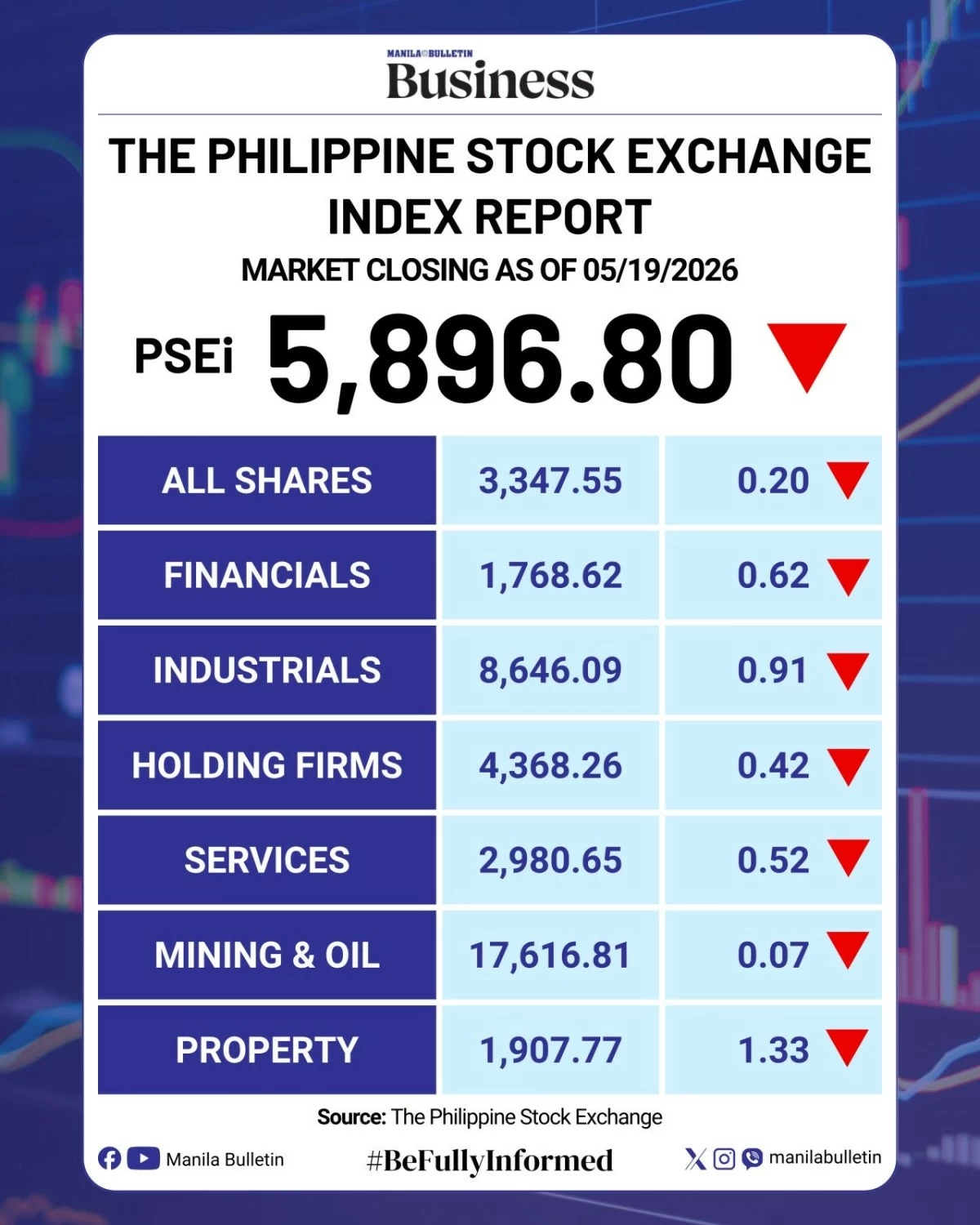
Local equities fell for a consecutive session, with the benchmark index slipping below a key psychological support level as rising global oil prices and sputtering peso triggered the selloff.
The Philippine Stock Exchange index (PSEi) dropped 44.72 points, or 0.75 percent, to finish at 5,896.8 on Tuesday, May 19. The Property gauge led the broad-based decline across all sector counters.
While trading volume showed a marginal uptick from the previous session, overall market participation remained anemic. About 1.21 billion shares valued at ₱5.36 billion changed hands. Decliners outnumbered advancers 107 to 63, while 74 stocks remained unchanged.
"The local bourse ended below the 5,900 level as trading activity remained thin amid persistent uncertainty over economic conditions, elevated oil prices, and the maintained depreciation of the local currency," said Luis Limlingan, managing director at Regina Capital Development Corp.
Domestic market sentiment has turned increasingly cautious, with fund managers adopting a defensive stance. The prolonged weakness of the peso, which is currently testing historic lows against the greenback, threatens to import further inflation and complicate the central bank’s monetary policy trajectory.
Japhet Tantiangco, research manager at Philstocks Financial Inc., noted that elevated global oil prices and the peso’s precarious position have amplified downside risks, keeping aggregate market volume subdued throughout the trading window.
The immediate catalyst for the market's anxiety stems from escalating geopolitical tensions affecting energy supply lines.
“The PSEi was lower amid higher global crude oil prices as the Strait of Hormuz remains practically closed,” said Michael Ricafort, chief economist at Rizal Commercial Banking Corp.
On the New York Mercantile Exchange, West Texas Intermediate crude futures advanced to the $108-per-barrel level, up from $105 the previous day.
Market analysts warn that if crude prices sustain this upward momentum, it will inevitably exert upward pressure on consumer prices globally, compounding the economic challenges for import-dependent nations like the Philippines.