ADVERTISEMENT

Radenta Academy offers TESDA accredited courses

Published May 19, 2026 10:39 am
Radenta Academy now offers TESDA-accredited courses.
Radenta Academy now offers 7 TESDA accredited courses like Cyber Threat Monitoring I, Contact Center Services NC II, and Data Analytics Level III. All courses are open to college students and professionals.
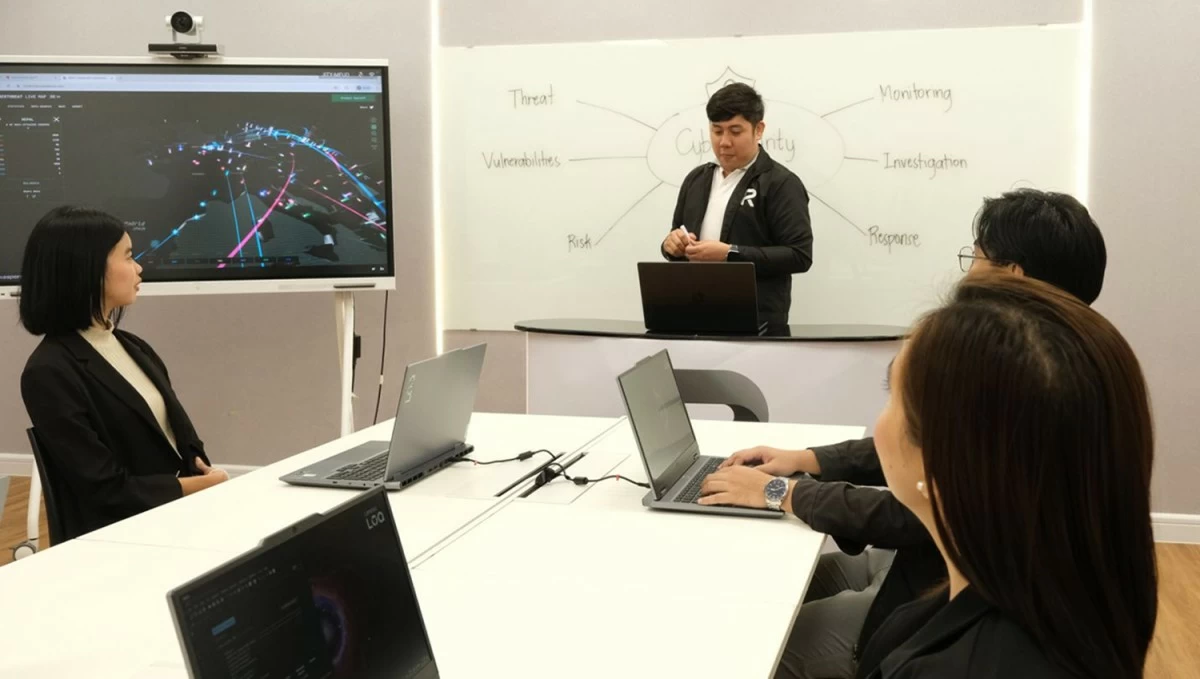
Cyber Threat Monitoring provides the skills to proactively monitor networks from threats, analyze security alerts, and conduct vulnerability scanning of assets using industry-standard tools and protocols. The course provides entry level cybersecurity qualification using institution and enterprise-based training modalities for the ICT sector. The 144 hour-program earns a Certificate of Competency (COC) and National Certification upon assessment. Graduates can land career opportunities as Cybersecurity Analyst (LI), Cybersecurity Support Staff, and Cybersecurity Help Desk Staff.
Contact Center Services NC II is designed to develop the essential communication, customer-handling, and computer-based operational skills required by modern contact center environments. Trainees will learn to manage inbound and outbound calls, identify customer needs, document interactions accurately, and engage professionally using English as the primary medium. The course covers 144 hours. A student can look into work opportunities as Inbound/Outbound Contact Center Agent, Customer Service Representative, Entry Level Technical Support Representative, Customer Support Staff and Service Desk Support Personnel.
The Data Analytics Level III program is designed to transform beginners into competent Junior Data Analysts. Applicants are required to have had completed at least 10 years of basic education or ALS Grade 10 equivalent, have basic computer literacy, and possess good written and oral communication skills.
The 144-hour course covers the end-to-end data process: from gathering and cleaning "dirty" data to crunching numbers with statistics, and finally, telling compelling stories
through interactive dashboards. Trainees will learn practical job-ready skills using Microsoft Excel, Google Sheets, and Google Looker Studio.
The course has four modules. Module 1 is applying Basic Statistical Concepts and Analysis. A student will learn to distinguish between categorical, numerical, nominal, and ordinal data. Learn to answer ‘what happened’ using historical data. Master the calculation of Mean, Mode, Standard Deviation, and Quartiles. The student will also understand the Data Privacy Act of 2012 and how to protect sensitive information.
Module 2 is Preparing Data Sets. The course concept is ‘Garbage In, Garbage Out. Learn to Fix broken data.’ Included are Data Importing on how to connect to CSVs, databases and web tables; Data Cleaning which is the most critical skill for analysts like fixing missing values, removing duplicates and standardizing formats; Data Transformation is how to convert text to numbers and handle date formats; Data Filtering is how to use slicers and tables to isolate specific information.
Module 3 is Summarizing Data Sets or how to crunch the numbers and turn thousands of rows into a single summary. Pivot Tables lead to mastering the most powerful tool in spreadsheet applications. Data Aggregation involves performing complex calculations (sum, count, average, max/min) instantly. Frequency Analysis is how to group data by age, price ranges, or dates (months/years) to find patterns. Pivot Charts teaches how to create dynamic charts that update automatically as filler data.
Module 4 is Preparing Data Visualization. It teaches how to tell the story and present the findings to stakeholders. Details include Dashboards vs. Reports to learn when to use interactive dashboards versus static reports. Data Storytelling is design principles for clear, uncluttered and eTactive visualizations. Interactive Dashboards tells how to build live dashboards using Google and Looker Studio. Publishing is sharing reports securely to management and teams via PDF or live web links.
The program will give skills on the use of tools and technologies that employers use to include spreadsheet applications like Microsoft Excel, Google Sheets; data visualization tools like Google Looker Studio, introductory Microsoft Power BI; and presentation tools like Powerpoint and Google Slides.
The trainee, upon completion of the course, will receive a Certificate of Training for Data Analytics Level III and then undergo the National Assessment by TESDA to earn the National Certificate (NC).
Radenta’s Enterprise-Based Education and Training (EBET) also feature an 80-Hour Robotics and Virtual Reality Integration course. The key robotics programs under this are Collaborative Robot Programming Level III to include programming and maintaining collaborative robots. Mobile Robotics System Servicing Level II involves installing, testing, and maintaining mobile robots. Artificial Intelligence (AI) Prompting for Automation Level III focuses on configuring automation workflows, a key component of modern robotic systems.
Radenta Academy is a TESDA-accredited Technical Vocational Institute and is the brainchild of Radenta Technologies, one of the country’s leading solutions integrators. To learn more, call 0998-577-2613 or log on to www.radenta.com.

Related Tags

Radenta TESDA accredited courses
ADVERTISEMENT
.most-popular .layout-ratio{ padding-bottom: 79.13%; } @media (min-width: 768px) and (max-width: 1024px) { .widget-title { font-size: 15px !important; } }

{{ articles_filter_1561_widget.title }}

.most-popular .layout-ratio{ padding-bottom: 79.13%; } @media (min-width: 768px) and (max-width: 1024px) { .widget-title { font-size: 15px !important; } }

{{ articles_filter_1562_widget.title }}

.most-popular .layout-ratio{ padding-bottom: 79.13%; } @media (min-width: 768px) and (max-width: 1024px) { .widget-title { font-size: 15px !important; } }

{{ articles_filter_1563_widget.title }}

{{ articles_filter_1564_widget.title }}

.mb-article-details { position: relative; } .mb-article-details .article-body-preview, .mb-article-details .article-body-summary{ font-size: 17px; line-height: 30px; font-family: "Libre Caslon Text", serif; color: #000; } .mb-article-details .article-body-preview iframe , .mb-article-details .article-body-summary iframe{ width: 100%; margin: auto; } .read-more-background { background: linear-gradient(180deg, color(display-p3 1.000 1.000 1.000 / 0) 13.75%, color(display-p3 1.000 1.000 1.000 / 0.8) 30.79%, color(display-p3 1.000 1.000 1.000) 72.5%); position: absolute; height: 200px; width: 100%; bottom: 0; display: flex; justify-content: center; align-items: center; padding: 0; } .read-more-background a{ color: #000; } .read-more-btn { padding: 17px 45px; font-family: Inter; font-weight: 700; font-size: 18px; line-height: 16px; text-align: center; vertical-align: middle; border: 1px solid black; background-color: white; } .hidden { display: none; }
function initializeAllSwipers() { // Get all hidden inputs with cms_article_id document.querySelectorAll('[id^="cms_article_id_"]').forEach(function (input) { const cmsArticleId = input.value; const articleSelector = '#article-' + cmsArticleId + ' .body_images'; const swiperElement = document.querySelector(articleSelector); if (swiperElement && !swiperElement.classList.contains('swiper-initialized')) { new Swiper(articleSelector, { loop: true, pagination: false, navigation: { nextEl: '#article-' + cmsArticleId + ' .swiper-button-next', prevEl: '#article-' + cmsArticleId + ' .swiper-button-prev', }, }); } }); } setTimeout(initializeAllSwipers, 3000); const intersectionObserver = new IntersectionObserver( (entries) => { entries.forEach((entry) => { if (entry.isIntersecting) { const newUrl = entry.target.getAttribute("data-url"); if (newUrl) { history.pushState(null, null, newUrl); let article = entry.target; // Extract metadata const author = article.querySelector('.author-section').textContent.replace('By', '').trim(); const section = article.querySelector('.section-info ').textContent.replace(' ', ' '); const title = article.querySelector('.article-title h1').textContent; // Parse URL for Chartbeat path format const parsedUrl = new URL(newUrl, window.location.origin); const cleanUrl = parsedUrl.host + parsedUrl.pathname; // Update Chartbeat configuration if (typeof window._sf_async_config !== 'undefined') { window._sf_async_config.path = cleanUrl; window._sf_async_config.sections = section; window._sf_async_config.authors = author; } // Track virtual page view with Chartbeat if (typeof pSUPERFLY !== 'undefined' && typeof pSUPERFLY.virtualPage === 'function') { try { pSUPERFLY.virtualPage({ path: cleanUrl, title: title, sections: section, authors: author }); } catch (error) { console.error('ping error', error); } } // Optional: Update document title if (title && title !== document.title) { document.title = title; } } } }); }, { threshold: 0.1 } ); function showArticleBody(button) { const article = button.closest("article"); const summary = article.querySelector(".article-body-summary"); const body = article.querySelector(".article-body-preview"); const readMoreSection = article.querySelector(".read-more-background"); // Hide summary and read-more section summary.style.display = "none"; readMoreSection.style.display = "none"; // Show the full article body body.classList.remove("hidden"); } document.addEventListener("DOMContentLoaded", () => { let loadCount = 0; // Track how many times articles are loaded const offset = [1, 2, 3, 4, 5, 6, 7, 8, 9, 10]; // Offset values const currentUrl = window.location.pathname.substring(1); let isLoading = false; // Prevent multiple calls if (!currentUrl) { console.log("Current URL is invalid."); return; } const sentinel = document.getElementById("load-more-sentinel"); if (!sentinel) { console.log("Sentinel element not found."); return; } function isSentinelVisible() { const rect = sentinel.getBoundingClientRect(); return ( rect.top < window.innerHeight && rect.bottom >= 0 ); } function onScroll() { if (isLoading) return; if (isSentinelVisible()) { if (loadCount >= offset.length) { console.log("Maximum load attempts reached."); window.removeEventListener("scroll", onScroll); return; } isLoading = true; const currentOffset = offset[loadCount]; window.loadMoreItems().then(() => { let article = document.querySelector('#widget_1690 > div:nth-last-of-type(2) article'); intersectionObserver.observe(article) loadCount++; }).catch(error => { console.error("Error loading more items:", error); }).finally(() => { isLoading = false; }); } } window.addEventListener("scroll", onScroll); });

Sign up by email to receive news.