






Manila Bulletin
 Philippines
National
PH Navy cites longer sea endurance, more assets at sea amid WPS patrol buildup
Philippines
National
PH Navy cites longer sea endurance, more assets at sea amid WPS patrol buildup
Philippines
National
PH Navy cites longer sea endurance, more assets at sea amid WPS patrol buildup
PH Navy cites longer sea endurance, more assets at sea amid WPS patrol buildup
Published May 19, 2026 03:16 pm


At A Glance
- The Philippine Navy (PN) said its modernization program is significantly improving its ability to sustain longer and wider patrols, especially in the West Philippine Sea (WPS).
- Philippine Fleet commander Rear Adm. Joe Anthony C. Orbe said newer naval platforms now allow ships to stay at sea for 20 days to over a month without needing refueling or reprovisioning—compared to only about one to two weeks in the past.
- He added that the fleet has grown to more than 80 platforms and continues to expand, including the acquisition of six offshore patrol vessels, with two already in service and four more expected by 2028.
- Naval aviation capabilities have also improved with the operational deployment of AW159 Wildcat helicopters, which are now used alongside frigates and corvettes for missions such as anti-submarine warfare.
- The Navy is also planning to acquire six more units within the next few years.
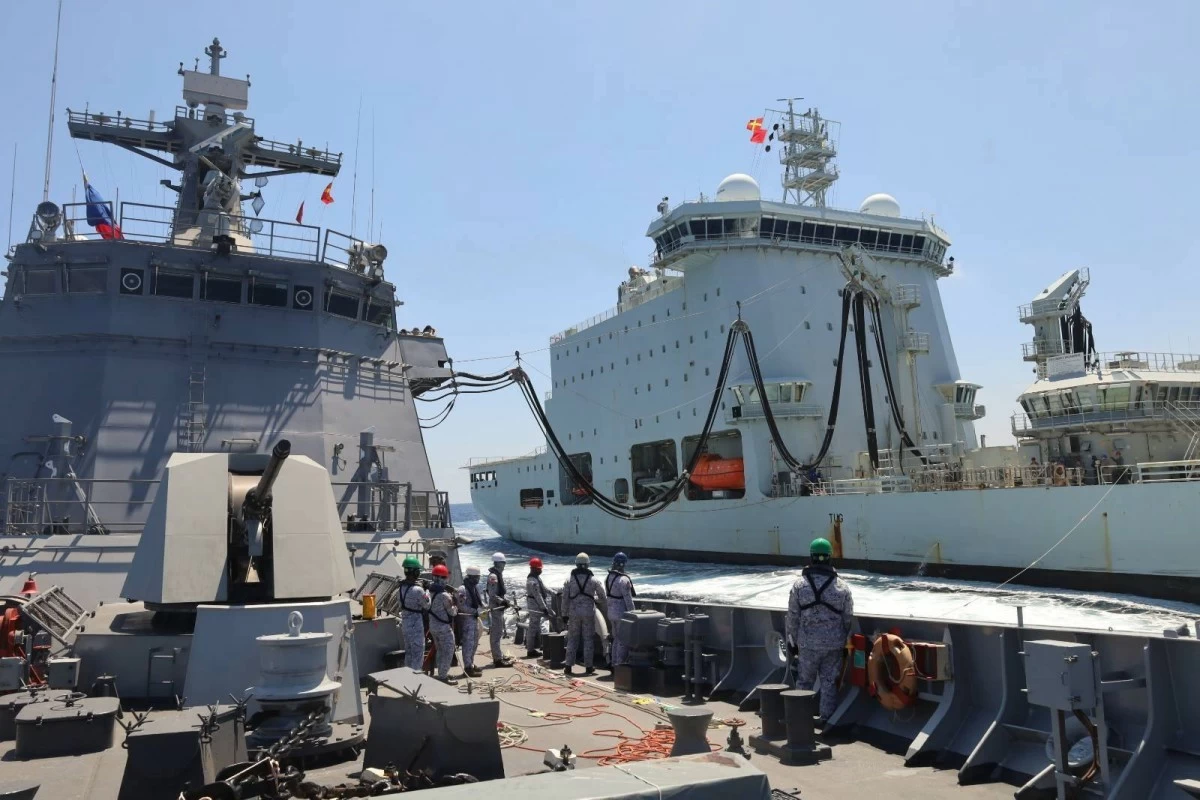
The Philippine Navy and Royal Canadian Navy conduct a successful Replenishment at Sea (RAS) exercise on April 28, 2026 during Exercise Balikatan in the West Philippine Sea (WPS). The drill involved transferring about 30,000 liters of diesel fuel from the Canadian auxiliary ship MV Asterix to the Philippine Navy frigate BRP Antonio Luna (FFG15) while both vessels were underway. (Photo: PN, Naval Defense Command)
The Philippine Navy (PN) on Tuesday, May 19, highlighted longer endurance at sea and growing fleet strength as it steps up its presence in the West Philippine Sea (WPS), noting that modern platforms now allow sustained patrols and wider maritime coverage compared to previous years.
PN-Philippine Fleet commander Rear Adm. Joe Anthony C. Orbe said ongoing modernization has significantly extended how long naval vessels can remain on station.
“The thing that we can readily see with this modernization program is that we have a longer presence in our maritime areas,” Orbe said.
“Before, our ships were limited in endurance. A week, at the most two weeks, perhaps. But now, with the modern platforms that we have, we can stay 20 [days], even more than a month at sea without the need for refueling or reprovisioning. So, what that translates into is that we have more presence in our maritime areas compared to before,” he added.
The PN marks its 128th anniversary this month under the theme “Philippine Navy at 128, modern and ready, strong and steady, credible in mission, always mission ready,” framing its modernization push as central to maritime operations.
Orbe said the fleet now fields more than 80 platforms, including smaller patrol assets, as it continues to expand its capital ships under ongoing acquisition programs.
He added that six offshore patrol vessels are in the pipeline, with two already in service, the BRP Rajah Sulayman (PS-20) that was commissioned last February and BRP Rajah Lakandula (PS-21) which will be commission on May 29 during the Philippine Navy Day.
“The four will be arriving until 2028,” Orbe said, adding that the additional vessels will significantly boost sea presence across the country’s vast maritime zones.
PH Navy operationalizes AW159 Wildcats
Meanwhile, on naval aviation, Capt. Ariel Joseph V. Coloma, superintendent of the Naval Air Warfare Training and Doctrine Center 50, confirmed the operational status of the AW159 Wildcat helicopters, which have been deployed in fleet missions across the archipelago.
“Yes, it's already operationalized and it has been deployed several times already, together with our frigates and corvettes,” Coloma said.
He said the aircraft is capable of anti-submarine warfare “so they can detect, identify, and prosecute subsurface targets,” which essentially means it can hunt submarines through special sensors and equipment.
“We are actually looking forward for additional six AW159 helicopters in the next four to five years,” he said.
Alongside surface and air modernization, the Navy also pointed to emerging drone and electronic warfare capabilities, though officials declined to detail operational limits.
Orbe said the service now has additional electronic warfare capacity but avoided specifics.
“We do have those capabilities that we didn't have before in terms of electronic warfare, whether it's offensive or defensive, let me just place it at that,” he said.
Navy SEALs training in asymmetric warfare
Elite PN units, such as Navy SEALs, are also upgrading asymmetric warfare and unmanned systems capabilities while maintaining their role in maritime security and disaster response, according to Capt. Tirso C. Binasoy, commander of the Naval Special Warfare Force.
“We do upgrade our equipment, our capabilities in terms of our drone warfare, our asymmetric warfare capabilities,” Binasoy said.
He added that operational details remain restricted but confirmed continued modernization of special operations forces.
The PN also linked its capability buildup to multinational exercises such as Balikatan, where lessons on coastal defense and maritime strike were emphasized, alongside interoperability training with foreign forces.
It said the combined improvements in endurance, ship numbers, aviation assets, and special operations capability are aimed at sustaining longer and more persistent patrols in the WPS, where tensions and maritime incidents have increased in recent years.