






Manila Bulletin
 Philippines
National
NMC condemns presence of Chinese maritime surveillance research vessels in Luzon waters
Philippines
National
NMC condemns presence of Chinese maritime surveillance research vessels in Luzon waters
Philippines
National
NMC condemns presence of Chinese maritime surveillance research vessels in Luzon waters
NMC condemns presence of Chinese maritime surveillance research vessels in Luzon waters
Published May 19, 2026 07:20 pm


At A Glance
- The Philippines, through the National Maritime Council, has flagged the presence of Chinese maritime surveillance research vessels in Batanes, Pangasinan, and Palawan.
- One of the vessels monitored has the capacity to conduct deep scientific research activities.
- The NMC said the acions taken by the Philippines over the monitored presence of Chinese research vessels were neither dangerous nor misguided.
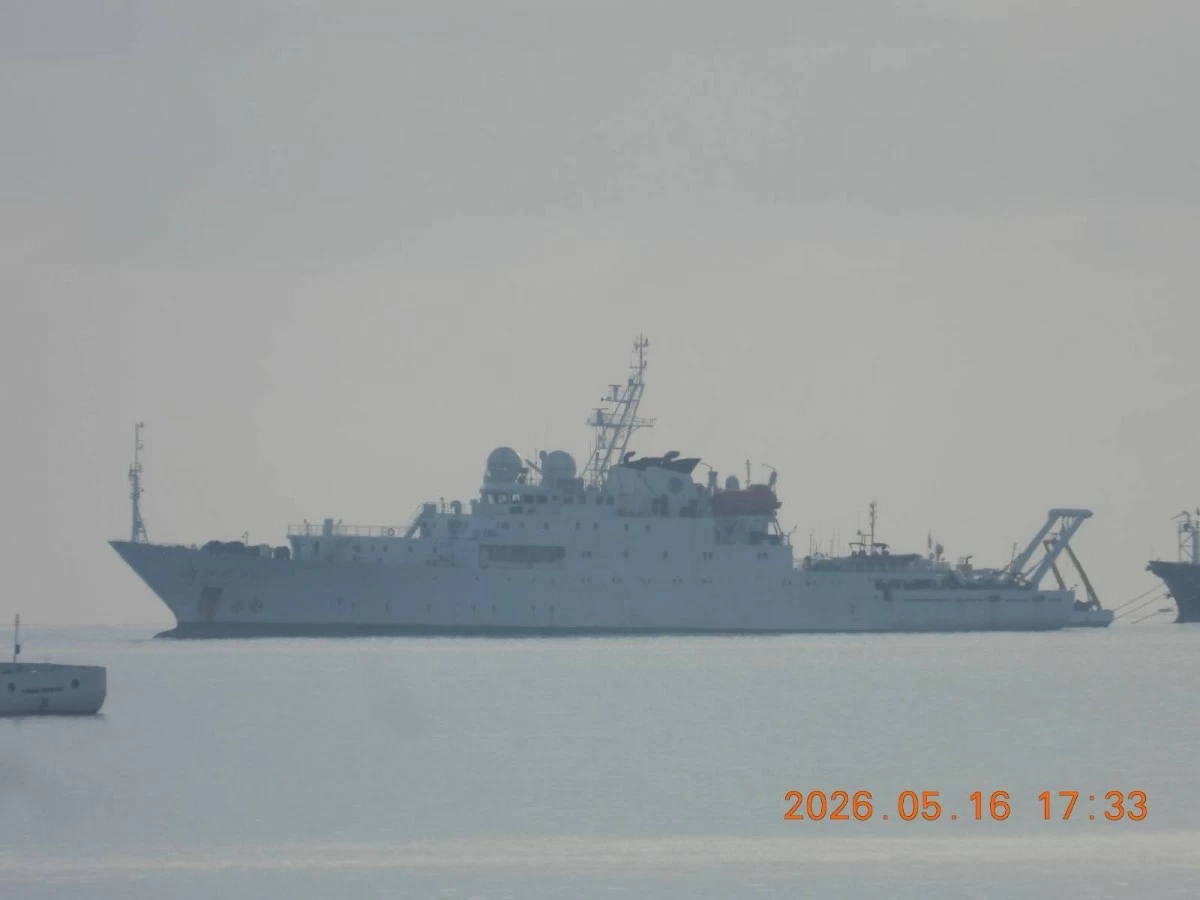
Photo of a Chinese maritime surveillance research vessel spotted in the vicinity of Pag-asa Sandy Cay 2 at 3 (Photo courtesy of PCG Spokesperson for the West Philippine Sea Jay Tarriela)
The National Maritime Council (NMC) flagged the presence of Chinese maritime surveillance research vessels in three areas off Luzon, particularly those allegedly conducting scientific research near Pag-asa Cay.
"Kinokondena ng National Maritime Council ang presensya ng mga MSR vessels na ito especially sa isinagawang marine scientific research ng Xiangyanghong 33 sa vicinity ng Pag-asa Sandy Cays 2 at 3 (The National Maritime Council condemned the presence of these MSR vessels, especially the marine scientific research conducted by Xiangyanghong 33 in the vicinity of Pag-asa Sandy Cays 2 and 3)," NMC Undersecretary Alexander Lopez said in an interview on Tuesday, May 19.
According to Lopez, they monitored the presence of Chinese research vessels in Batanes, Pangasinan, and Palawan.
Two Chinese maritime research vessels —Shi Yan 1 and Jia Geng—were spotted in Itbayat, Batanes; a maritime surveillance research vessel, Zhuhaiyun, was monitored 171 nautical miles away from Bolinao, Pangasinan; and a Chinese research vessel, Xiangyanghong 33, about 140 nautical miles from Rizal, Palawan.
These activities, Lopez stressed, are illegal and violate the provisions of the United Nations Convention on the Law of the Sea (UNCLOS).
He explained that a foreign state or organization must first obtain permission from the concerned coastal state, such as the Philippines, before conducting any scientific research or activities in its waters.
"Ang kanila diumanong research ay ginawa sa vicinity ng Pag-asa Sandy Cay 2 at 3 na nakapaloob sa 12-nautical-mile territorial sea ng Pag-asa Island at malinaw naman na mayroon tayong soberanya at hurisdiksyon sa lugar na ito (Their alleged research was conducted in the vicinity of Pag-asa Sandy Cay 2 and 3, which lie within the 12-nautical-mile territorial sea of Pag-asa Island, where we clearly have sovereignty and jurisdiction)," Lopez said.
The NMC spokesperson further explained that "conducting marine scientific research activities is not actually prohibited," there is simply a requirement that they first obtain permission or request authority from the coastal state before carrying them out.
"So, without that authority or clearance from the coastal state anumang research na gagawin nila sa ating karagatan ay tinatawag na illegal. So, iyan ang naka-anchor sa UNCLOS actually (So, without that authority or clearance from the coastal state, any research they conduct in our waters is considered illegal. That is actually anchored in the provisions of the UNCLOS)," Lopez stressed.
Deep scientific research activities
According to Lopez, the Xiangyanghong 33, which was monitored in Pag-asa Sandy Cay, has the capacity to conduct "deep scientific research activities."
He added that this is an advanced oceanographic survey vessel capable of conducting comprehensive maritime ecological surveys, bathymetric mapping, hydrographic data collection and deep-sea exploration.
"In short, ito ay may kakayahang gumawa ng intelligence gathering activities sa ating karagatan kaya ito ay minu-monitor natin at hindi natin pinapahintulutan especially kung wala silang authority or clearance sa ating pamahalaan (In short, it has the capability to conduct intelligence-gathering activities in our waters, which is why we are monitoring it and do not allow such activities, especially if they do not have authority or clearance from our government)," Lopez pointed out.
While the vessel's presence in the area is concerning, Lopez said they are "actually not worried," citing the ongoing Maritime Domain Awareness Inter-Agency Operations of the Area Task Force-West under the National Task Force on the West Philippine Sea.
Last May 17, the Philippine Coast Guard (PCG) conducted a Maritime Domain Awareness Flight to challenge their presence and tell them to stop their illegal activities and leave the area.
Lopez said they observed an increase in the presence of Chinese maritime research vessels in Philippine waters in recent days, especially in the northern and western areas.
The most they can do, he said, is monitor them and document their illegal activities, while the area task forces in the West Philippine Sea prepare reports that will serve as the basis for the Department of Foreign Affairs (DFA) to file the appropriate diplomatic protest.
"Actually, hanggang doon lang tayo, wala na tayong puwedeng gawing iba, kung hindi i-monitor at i-challenge at paalisin, at least mado-document natin, ipapakita natin sa ating transparent initiative what we are trying to do in a peaceful and non-escalatory approach (Actually, that is the extent of what we can do for now — monitor them, challenge them, and direct them to leave. At the very least, we are able to document these activities and demonstrate through our transparency initiative what we are trying to do in a peaceful and non-escalatory approach)," Lopez said.
Not dangerous, not misguided
The NMC official also refuted the Chinese Embassy in Manila's statement that the action taken by the Philippines over the incident was dangerous and misguided.
"Hindi po dangerous or misguided ang pagsasabi ng katotohanan at pagpapatupad ng ating mandato bilang isang sovereign coastal state (It is neither dangerous nor misguided to speak the truth and carry out our mandate as a sovereign coastal state)," Lopez said.
"This is against what the Chinese embassy or Chinese officials are conveying to the public," he added.
He further pointed out that it is the responsibility of the Philippines to protect its maritime zones, uphold the rules-based international order, and ensure its people are aware of the true situation in the West Philippine Sea.
"We are not the ones raising the tension, nor are we inciting anyone to raise the tension in our area. Our Coast Guard, AFP and BFAR are merely doing their jobs and sworn duties to patrol our seas and make sure that our fisherfolk, ang ating mga mangingisda ay makapangisda ng mapayapa (our fishermen can fish peacefully) and for our people to utilize our marine resources freely," Lopez said.
He also encouraged Filipino fishermen to maintain their presence in Philippine waters, assuring them that the government supports them.
"Sa ating mga mangingisdang Pilipino, huwag po kayong maghunos-dili at tuluy-tuloy pa rin po ang ating pangingisda sa ating karagatan dahil unang-una ito ay atin, lahat ng isda doon, lahat ng yamang-dagat ay tayo lang ang dapat makinabang (To our Filipino fishermen, do not hesitate and continue fishing in our waters because, first and foremost, these are ours. All the fish there and all the marine resources should benefit only us)," Lopez said.